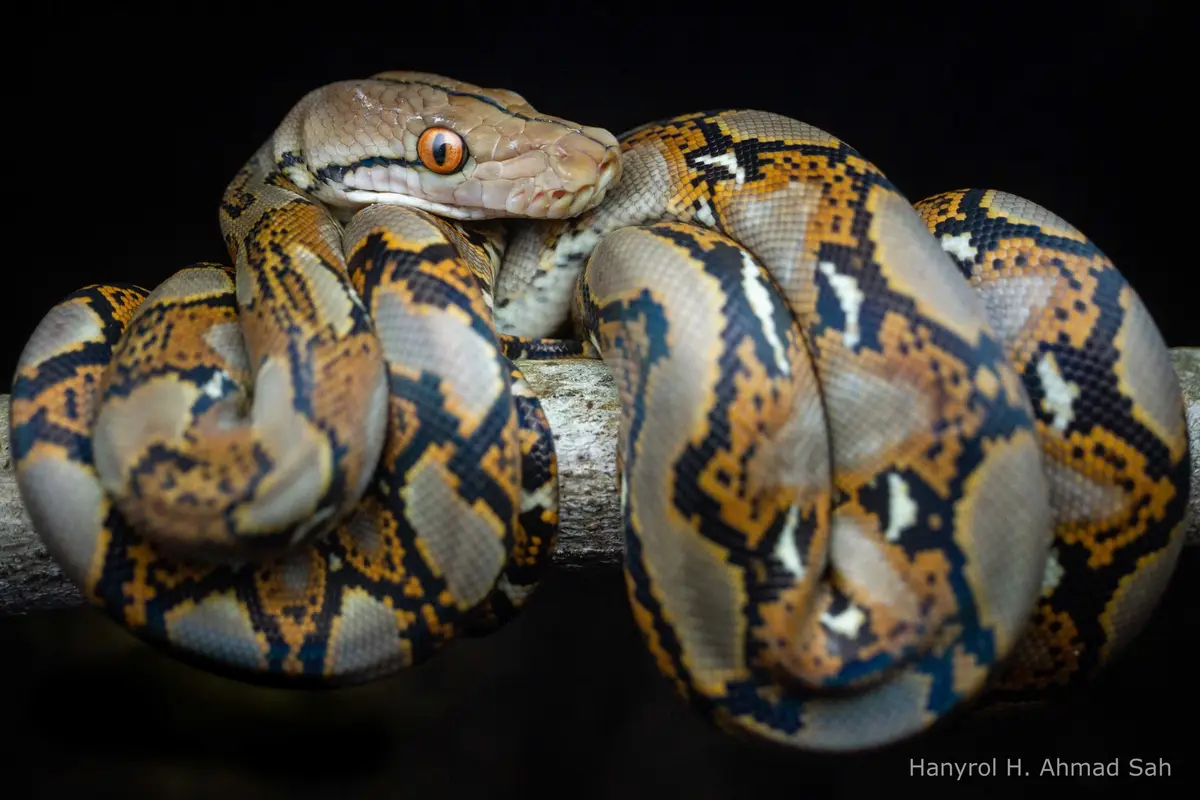
SPECIES GUIDEPYTHON
Pythonidae · Family Pythonidae
KEY TAKEAWAYS
A python is a non-venomous snake of the family Pythonidae that lays eggs and kills its prey by constriction. Pythons live in Africa, southern Asia, New Guinea and Australia, and one species is now invasive in South Florida. Most pythons are no threat to people, but the very largest have killed adults.
- Pythons have no venom. They bite to grip prey, then coil around it and squeeze.
- All pythons lay eggs, and most mothers coil around the clutch until it hatches. That is the simplest way to tell them from boas, which mostly give birth to live young.
- The Reptile Database lists 38 python species. The smallest, the pygmy python, is about 23 in (60 cm) long; the reticulated python is the longest snake in the world.
- Pythons are not native to the Americas. The Burmese python has been breeding in South Florida since the 1980s.
Python quick facts
| Common name | Python |
|---|---|
| Family | Pythonidae (pythons) |
| Venomous | No, all pythons are constrictors |
| Species | 38 in 11 genera listed by the Reptile Database |
| Best-known species | Ball python (Python regius Shaw, 1802), Burmese python (Python bivittatus Kuhl, 1820), reticulated python (Malayopython reticulatus Schneider, 1801) |
| Adult length | About 23 in (60 cm) in the pygmy python to more than 20 ft (6 m) in the reticulated python |
| Weight | From about 7 oz (200 g) to about 250 lb (113 kg) |
| Range | Sub-Saharan Africa, South and Southeast Asia, New Guinea, Australia; introduced to Florida |
| Habitat | Rainforest, savanna, grassland, swamp, rocky outcrops, desert sand hills |
| Diet | Rodents, birds, lizards and other snakes; large species take deer, pigs, monkeys and antelope |
| Reproduction | Egg-laying; 2 to about 100 eggs per clutch, usually guarded by the female |
| Conservation | Mixed: ball and reticulated pythons Least Concern, Burmese python Vulnerable |
Common types of python
Short answer: the pythons people ask about most are the ball python, Burmese python, reticulated python, African rock python, green tree python, blood python and black-headed python. The family has 38 species in 11 genera, and more than half of them live in Australia, New Guinea and nearby islands.
Not every python belongs to the genus Python. That genus holds the large African and Asian species, such as the ball python and the Burmese python. The reticulated python now sits in its own genus, Malayopython, and the Australian and New Guinea pythons are split among Morelia (carpet and green tree pythons), Antaresia (small children's and spotted pythons), Aspidites (black-headed python and woma), Liasis (water and olive pythons), Simalia (amethystine and its relatives) and a few others.
| Python | Scientific name | Where it lives | Typical adult size |
|---|---|---|---|
| Ball python (royal python) | Python regius | West and Central Africa, east to Uganda and South Sudan | 3.3-5 ft (1-1.5 m) |
| Burmese python | Python bivittatus | Southeast Asia, southern China, Java, Bali, Sulawesi; invasive in Florida | 10-16 ft (3-5 m) |
| Reticulated python | Malayopython reticulatus | Southeast Asia, the Philippines and Indonesia | Often 10-20 ft (3-6 m) |
| African rock python | Python sebae | West, Central and East Africa | 10-16 ft (3-5 m) |
| Indian python | Python molurus | Pakistan, India, Nepal, Bangladesh | Large, similar build to the Burmese |
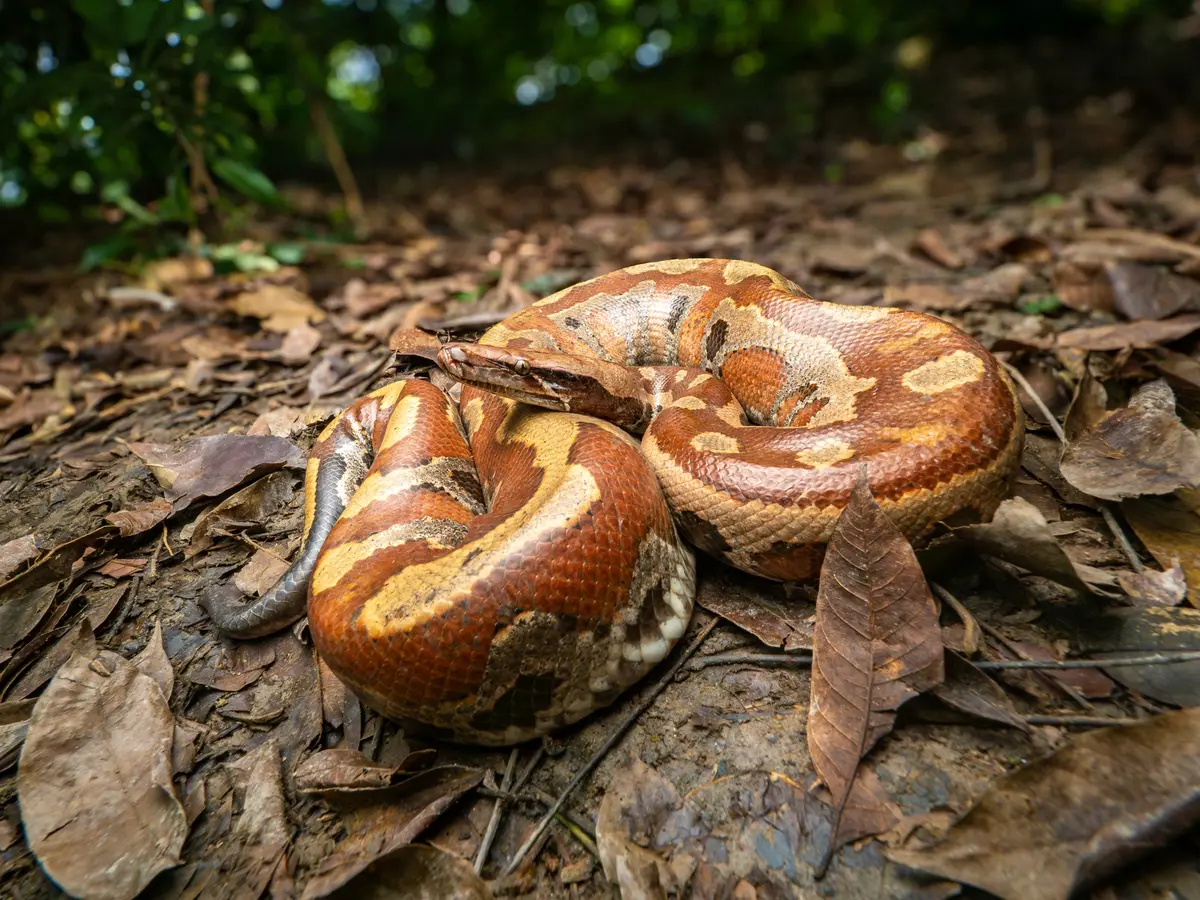
| Blood python | Python brongersmai | Sumatra, peninsular Malaysia, Thailand, Vietnam | 4-6 ft (1.2-1.8 m), thick-bodied |
| Green tree python | Morelia viridis | New Guinea and Cape York, Australia | About 5 ft (1.5 m) |
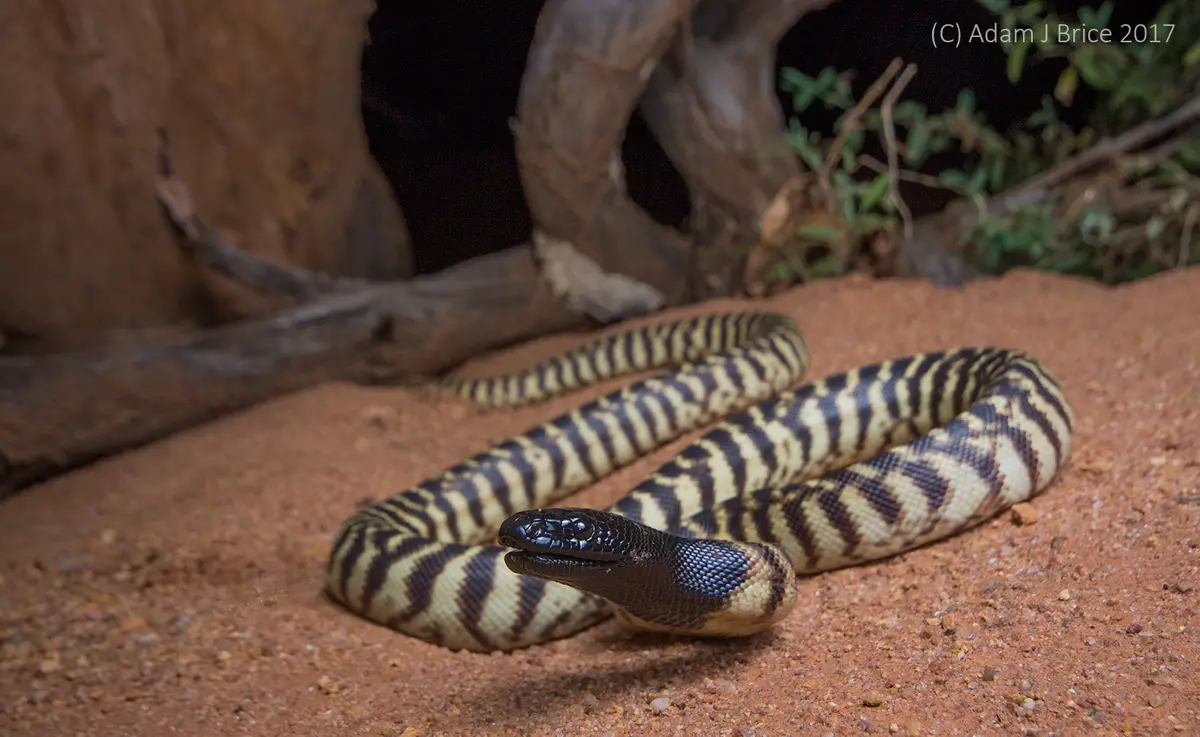
| Black-headed python | Aspidites melanocephalus | Northern Australia | 5-6 ft (1.5-2 m) |
| Pygmy python | Antaresia perthensis | Northwestern Australia | About 23 in (60 cm) |
How to identify a python
A python is a heavy, muscular snake with smooth scales, a head a little wider than its neck, and vertical pupils. Where you are matters as much as what the snake looks like: a wild python in the Americas is almost always an escaped pet or a Burmese python in South Florida.
- 1Thick body: the body is broad for its length and the tail is short. Even a small ball python feels heavy in the hand.
- 2Heat pits on the lips: most pythons have a row of heat-sensing pits along the jaws. A pit viper such as the eastern diamondback rattlesnake has a single pit on each side, between the eye and the nostril.
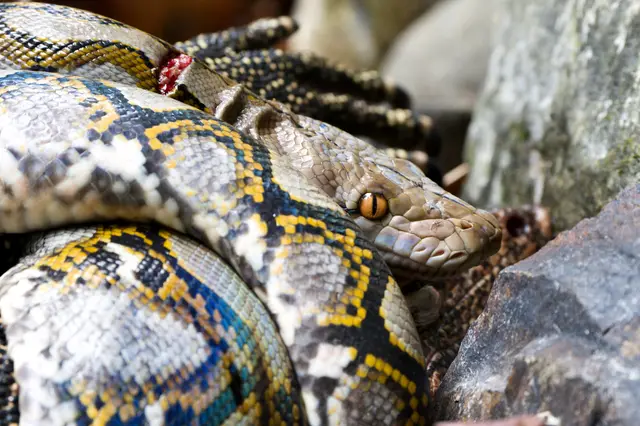
- 3Blotched pattern: the Burmese python has dark brown, black-edged blotches on a tan or cream body and a dark arrowhead shape on top of the head, according to the Florida Museum.
- 4Rolling into a ball: a frightened ball python coils into a tight ball with its head tucked in the middle. Few other snakes do this as reliably.
- 5Bright green in trees: a green tree python rests coiled over a branch. Babies hatch yellow or brick red and turn green at 6 to 12 months, according to Animal Diversity Web.
How big do pythons get?
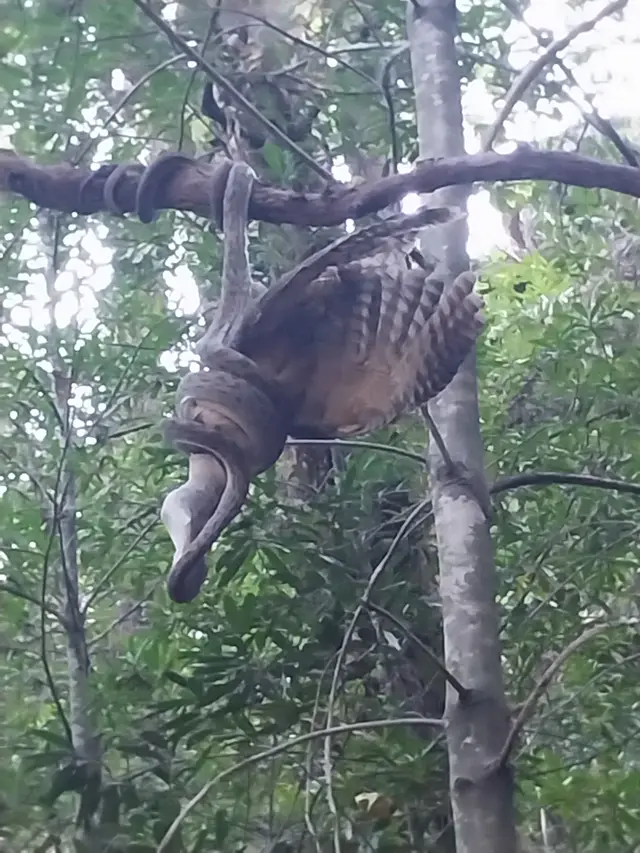
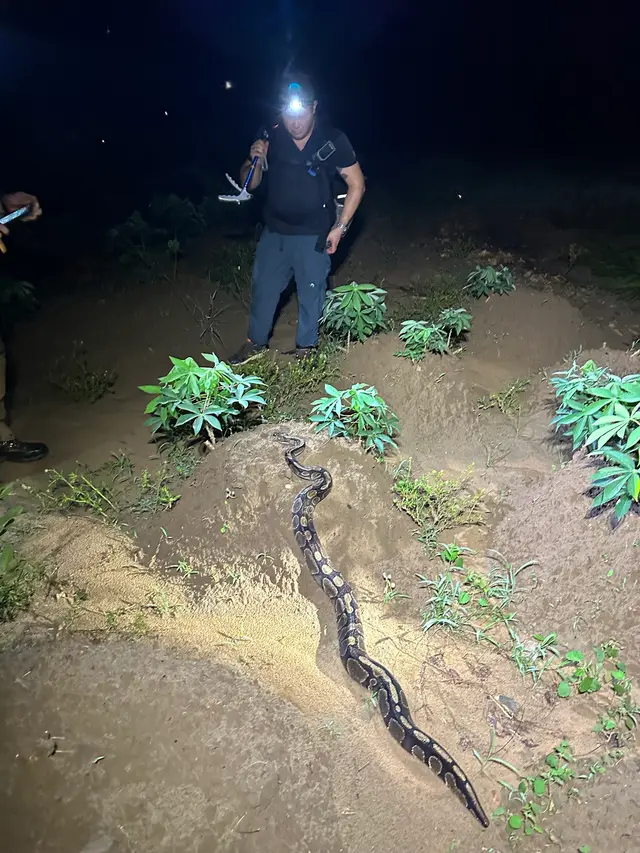
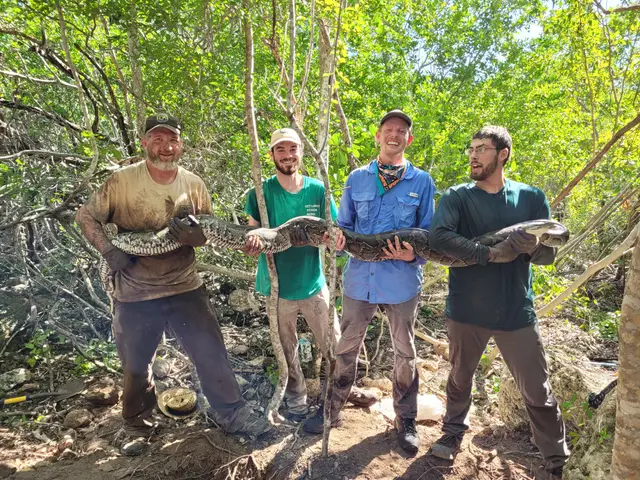
Short answer: pythons range from about 2 feet to more than 20 feet. Most pet ball pythons stay under 5 feet, wild Burmese pythons usually reach 10 to 16 feet, and the reticulated python is the longest snake on Earth.
Reticulated python records are hard to pin down. Animal Diversity Web gives a maximum of about 29.5 ft (9 m), and the San Diego Zoo Wildlife Alliance puts it at up to 33 ft (10 m) and 250 lb (113 kg). The Reptile Database cites a length of up to 10 m but marks it as unverified. Most adults are much shorter. Length is not the same as bulk, though: the green anaconda, a boa, is heavier than any python.
| Python | Typical adult length | Notes |
|---|---|---|
| Pygmy python | About 23 in (60 cm) | Smallest python; about 7 oz (200 g) |
| Ball python | 3.3-5 ft (1-1.5 m) | Wild maximum about 6 ft (1.83 m) |
| Green tree python | About 5 ft (1.5 m) | Largest recorded 7.2 ft (2.2 m) |
| Black-headed python | 5-6 ft (1.5-2 m) | Up to about 8 ft (2.5 m) and 35 lb (16 kg) |
| Burmese python | 10-16 ft (3-5 m) | Florida record 16.8 ft (5.12 m) |
| African rock python | 10-16 ft (3-5 m) | Reported specimen of 24.6 ft (7.5 m) from Ivory Coast |
| Reticulated python | Often 10-20 ft (3-6 m) | Longest snake in the world |
Where do pythons live?
Short answer: pythons live in sub-Saharan Africa, South and Southeast Asia, Indonesia, the Philippines, New Guinea and Australia. None are native to the Americas or Europe, but the Burmese python has a large wild population in South Florida.
In Africa, the ball python lives in the grasslands and open forest of West and Central Africa, and the African rock python ranges across much of the continent south of the Sahara. Asia has the Indian, Burmese, reticulated, blood and short-tailed pythons. Australia and New Guinea hold the most species, from the green tree python of the rainforest to the black-headed python of the dry north.
Burmese pythons in Florida
The Burmese python has been established in Florida since the 1980s, according to the Florida Museum. It lives in the southern peninsula, from Lake Okeechobee south to Key Largo and Florida Bay, with Everglades National Park as its stronghold. The US Geological Survey estimates that tens of thousands now live in the greater Everglades. A 2012 study found sharp drops in raccoons, opossums and bobcats in the park as pythons spread, and a later experiment found that pythons ate 77% of radio-tracked marsh rabbits that died there.
For where every snake group lives, see our world snake map.
Habitat
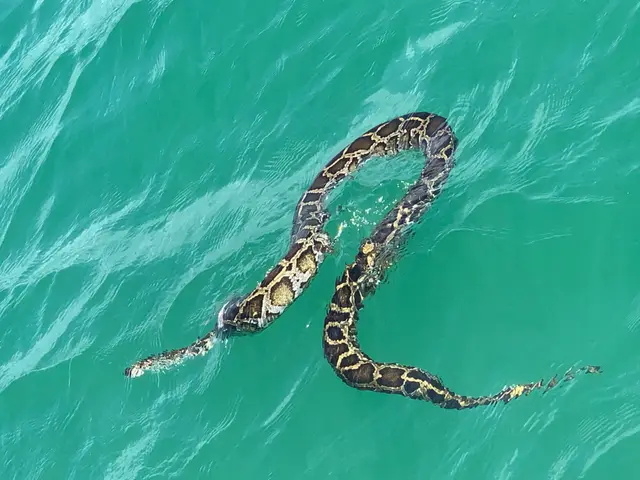
Pythons use almost every warm habitat in their range. Ball pythons live in grassland and open woodland and spend much of the day in rodent burrows. Burmese pythons favor marshes, swamps and river edges and swim well. Reticulated pythons live in rainforest and along rivers, and often turn up in towns and farmland where rats are common; the San Diego Zoo Wildlife Alliance notes they have been seen swimming at sea. Green tree pythons rarely leave the trees, while womas and black-headed pythons live on the ground in dry scrub and sand hills.
Behavior
Pythons are ambush hunters. Most wait for prey at night, often beside a trail, burrow or water's edge, then strike, grab with backward-curving teeth and throw coils around the animal. Older books say the prey suffocates. Research on the related boa constrictor, led by Scott Boback and published in 2015, found that constriction stops blood flow within seconds, which is the faster cause of death.
A green tree python can wait at one ambush spot for up to 14 days, Animal Diversity Web reports, and young ones wave the tip of the tail to lure lizards. The black-headed python hunts other reptiles. To warm up without being exposed, it often buries its body and leaves only its dark head in the sun, the Smithsonian's National Zoo says.
What do pythons eat?
| Python | Main prey |
|---|---|
| Ball python | African giant rats, black rats, grass mice and other rodents |
| Burmese python (Florida) | Mammals from marsh rabbits to deer, birds; occasionally alligators |
| Reticulated python | Rats, tree shrews, bats, birds; large adults take deer, pigs and even sun bears |
| African rock python | Rats when young; monkeys, antelope, crocodiles and livestock as adults |
| Green tree python | Lizards when young; rodents and birds as adults |
| Black-headed python | Skinks, geckos, dragons and other snakes, including venomous species |
Pythons swallow prey whole, usually head first. The black-headed python is an odd one out: it eats mostly reptiles and resists the venom of Australian snakes, so it can prey on some of the most venomous snakes in the world.
Are pythons venomous or dangerous?
No, pythons are not venomous. No species in the family Pythonidae produces venom. Pythons bite to hold prey and to defend themselves, and they kill by constriction.
Most pythons are harmless to people. A ball python bite is a row of small pinpricks. A large Burmese or African rock python is different: its teeth are long and sharp, and the Florida Museum warns that a big one can cause severe cuts and can eat cats and dogs. Nearly all bites happen when someone grabs, corners or keeps the snake.
Only the largest species are a real threat to adults. Animal Diversity Web reports six fatal reticulated python attacks between 1934 and 1974, and a study of the Agta, forest hunter-gatherers in the Philippines, found that about 26% of adult men had survived a python attack. African rock pythons have also killed people on rare occasions, usually after being startled. In Everglades National Park, USGS and park researchers rate the risk to visitors as low.
Clean any python bite well and see a doctor for deep cuts, since bites can become infected. Our snake safety FAQ covers what to do around any snake you cannot identify.
Python vs boa: how to tell them apart
Pythons and boas are both heavy, non-venomous constrictors, and they can look almost the same. The San Diego Zoo Wildlife Alliance gives the clearest difference: pythons lay eggs, while boas give birth to live young. Pythons live only in Africa, Asia and Australia, while boas also live throughout the Americas. Pythons also have one extra bone in the skull and some extra teeth.
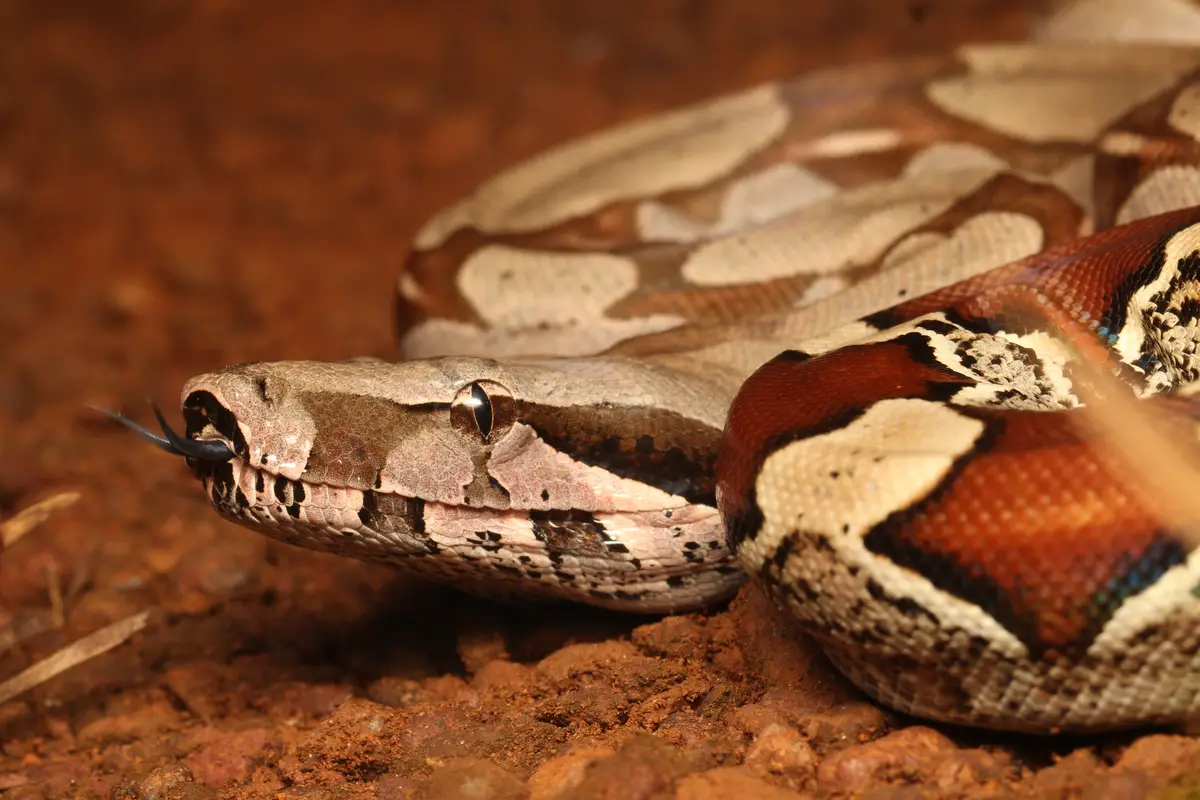
Boa constrictor
Boa constrictor · Harmless
Gives birth to live young and lives in Central and South America. Tan to gray with dark saddles that turn reddish near the tail. See our boa constrictor guide.
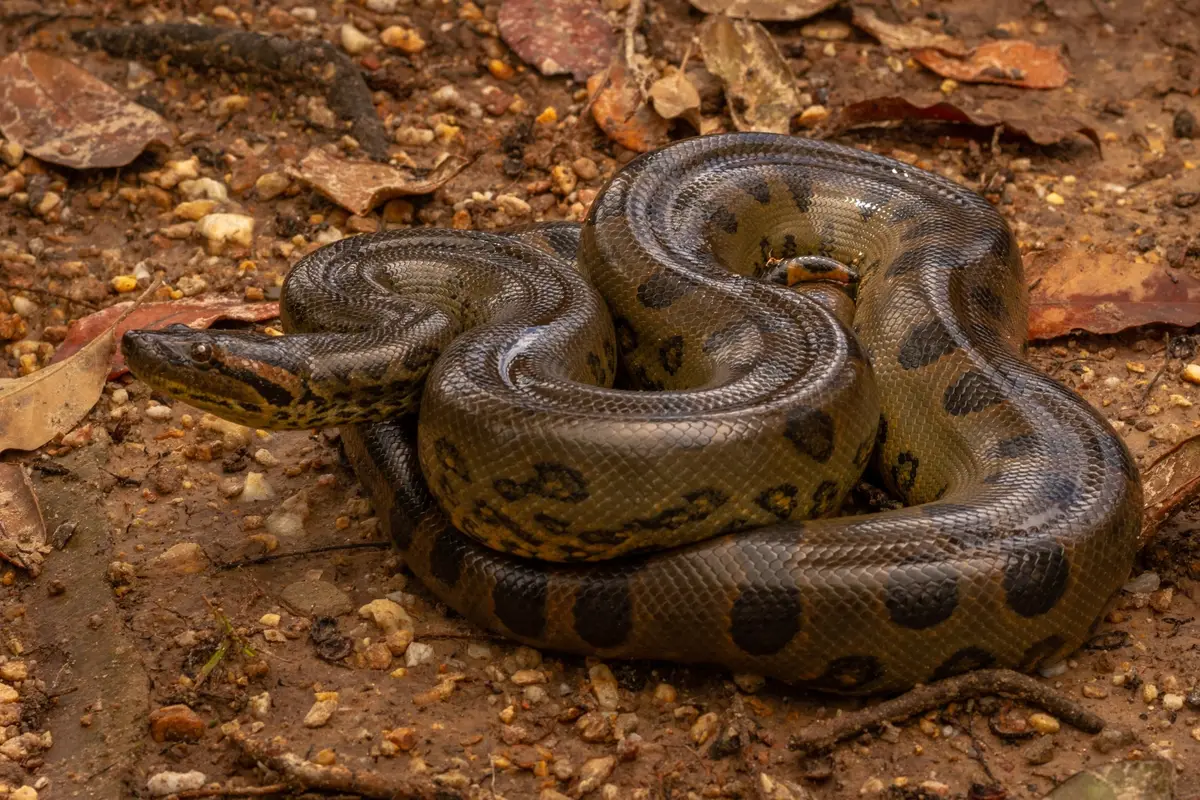 Photo: (c) Luis F. C. de Lima, all rights reserved, uploaded by Luis F. C. de Lima · via iNaturalist
Green anaconda
Eunectes murinus · Harmless
A South American boa, olive green with black oval spots and nearly always in or near water. Heavier than any python, though not as long as the longest reticulated pythons. See our anaconda guide.
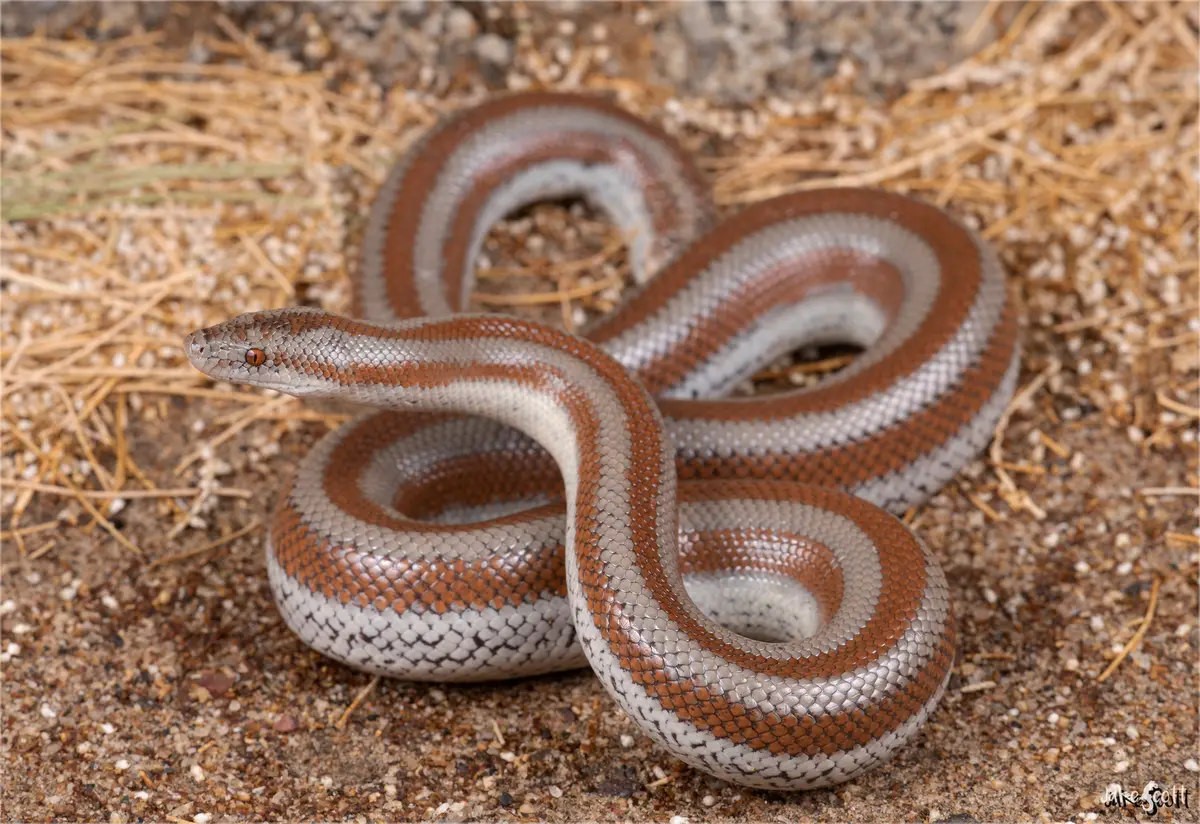
Rosy boa
Lichanura trivirgata · Harmless
A small desert boa of California and Arizona that, like the ball python, may roll into a ball when handled. It has three long stripes instead of blotches. See our rosy boa guide.
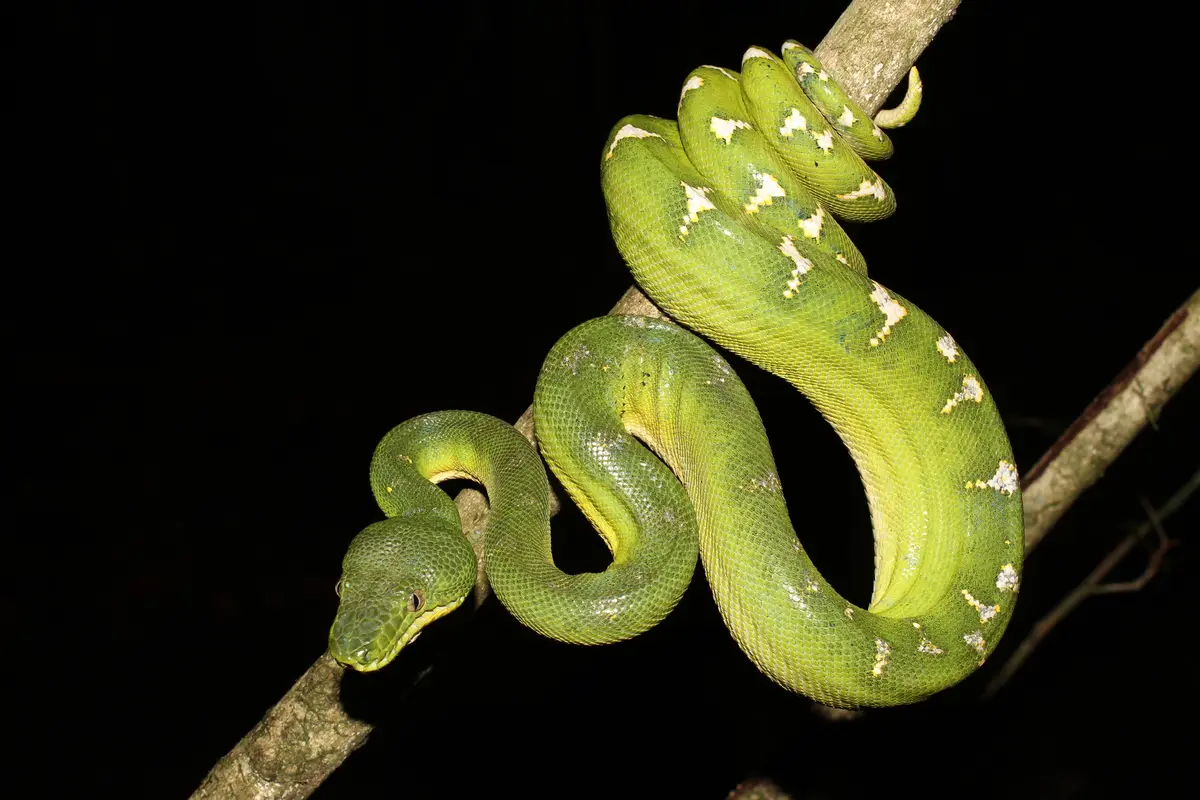
Emerald tree boa
Corallus caninus · Harmless
The South American double of the green tree python: also green, also coiled over branches. The emerald tree boa lives in South America and gives birth to live young; the green tree python lives in New Guinea and Australia and lays eggs. See our emerald tree boa guide.
Do pythons lay eggs?
Yes, every python lays eggs. Clutches range from 2 to about 100 eggs depending on the species, and the eggs hatch after 40 to 100 days, according to the San Diego Zoo Wildlife Alliance.
Most python mothers coil around their eggs until they hatch. Some, including the Burmese python, twitch their muscles in rhythm to make heat and keep the clutch a few degrees warmer on cool nights. Burmese pythons in Florida lay 11 to 87 eggs and go without food for about two months while they brood. Ball pythons lay smaller clutches of 1 to 11 eggs, about 7 on average. A female may skip two or three years after laying while she regains weight.
Pythons mature at 2 to 8 years old and can live up to 35 years. Wild ball pythons average about 10 years, and captive ones often live 20 or more.
Conservation status
| Python | IUCN status | Notes |
|---|---|---|
| Ball python | Least Concern | One of the most popular pet snakes |
| Burmese python | Vulnerable | Declining in Asia; invasive in Florida |
| Indian python | Near Threatened | Habitat loss and hunting across South Asia |
| African rock python | Near Threatened | Status for the northern species, Python sebae |
| Reticulated python | Least Concern | Large skin trade in Malaysia and Indonesia |
| Blood python | Least Concern | Also sold as the red blood python |
Pythons are traded in huge numbers. The Reptile Database cites exports of about 1.2 million wild reticulated pythons each from Malaysia and Indonesia between 2000 and 2007, mostly for leather. In Australia pythons are legally protected, but the San Diego Zoo Wildlife Alliance notes that many are still taken illegally for the pet trade.
The Burmese python is threatened in one place and a pest in another. The Reptile Database lists it as Vulnerable in its native Asian range, while in Florida it is an invasive predator blamed for steep losses of native mammals.
Python FAQ
Are pythons venomous?
No. No python has venom. Pythons are constrictors that grip prey with their teeth and squeeze until its blood stops flowing. A large python can still bite hard enough to cause deep cuts, so clean any bite well and have deep wounds checked by a doctor, since they can become infected.
Can a python kill a human?
Yes, but it is very rare and only the largest species can do it. Reticulated and African rock pythons have killed people. Animal Diversity Web lists six fatal reticulated python attacks between 1934 and 1974. Ball pythons and other small pythons cannot harm an adult beyond a minor bite.
What is the biggest python?
The reticulated python of Southeast Asia is the longest python and the longest snake in the world. Animal Diversity Web gives a maximum of about 29.5 ft (9 m), though most adults are 10 to 20 ft (3 to 6 m). The heaviest snake is the green anaconda, which is a boa.
What is the difference between a ball python and a royal python?
There is none. Ball python and royal python are two common names for the same species, Python regius, according to the Reptile Database. It is a small West and Central African python, usually 3.3 to 5 ft (1 to 1.5 m) long, named for its habit of rolling into a ball.
Are there pythons in the United States?
No pythons are native to the US, but the Burmese python has been established in South Florida since the 1980s. It lives from Lake Okeechobee south to Key Largo, with Everglades National Park as its stronghold. The USGS estimates tens of thousands live in the greater Everglades.
How big does a Burmese python get?
Most adult Burmese pythons are 10 to 16 ft (3 to 5 m) long. The Florida record, reported by the Florida Museum, is 16.8 ft (5.12 m). Hatchlings are about 26 in (65 cm) long when they leave the egg.
Do pythons lay eggs or give birth?
Pythons lay eggs, from 2 to about 100 per clutch depending on the species. Most mothers coil around the clutch until it hatches, and some shiver to keep the eggs warm. Boas, their closest look-alikes, mostly give birth to live young.
Python species on SnakesWiki
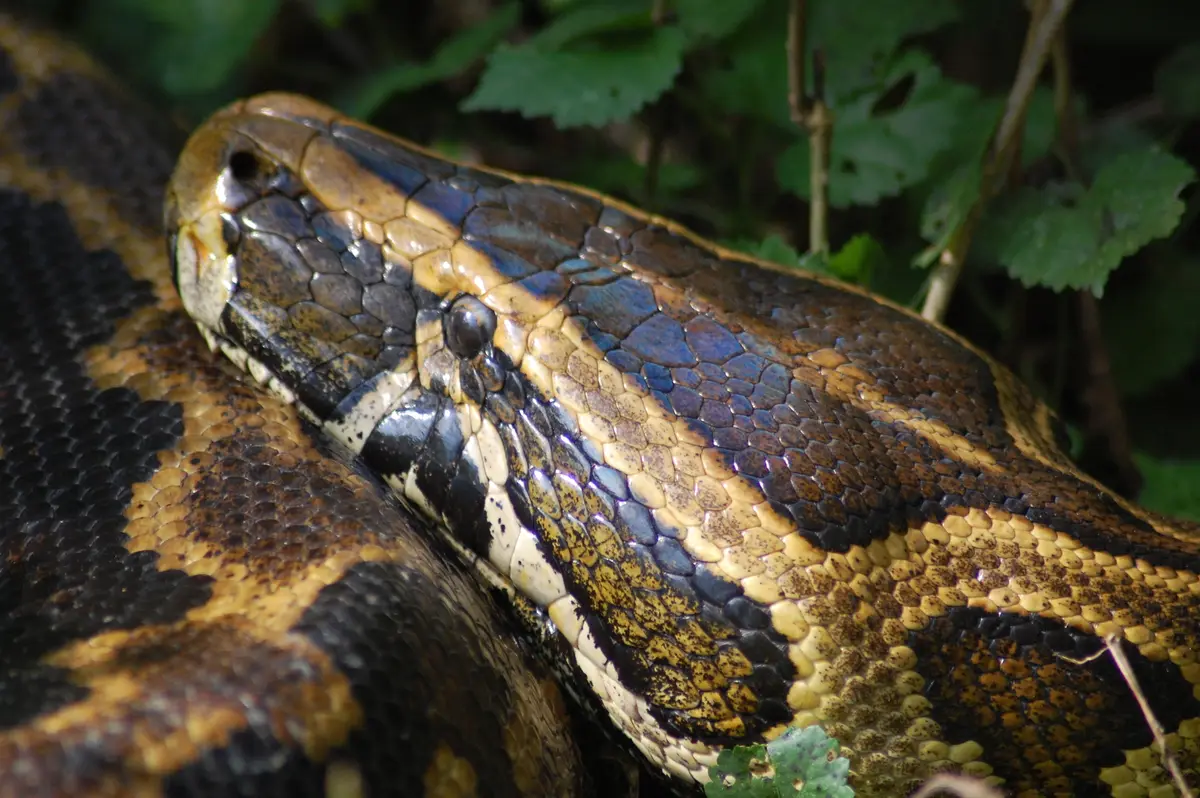
African Rock Python
Python sebae
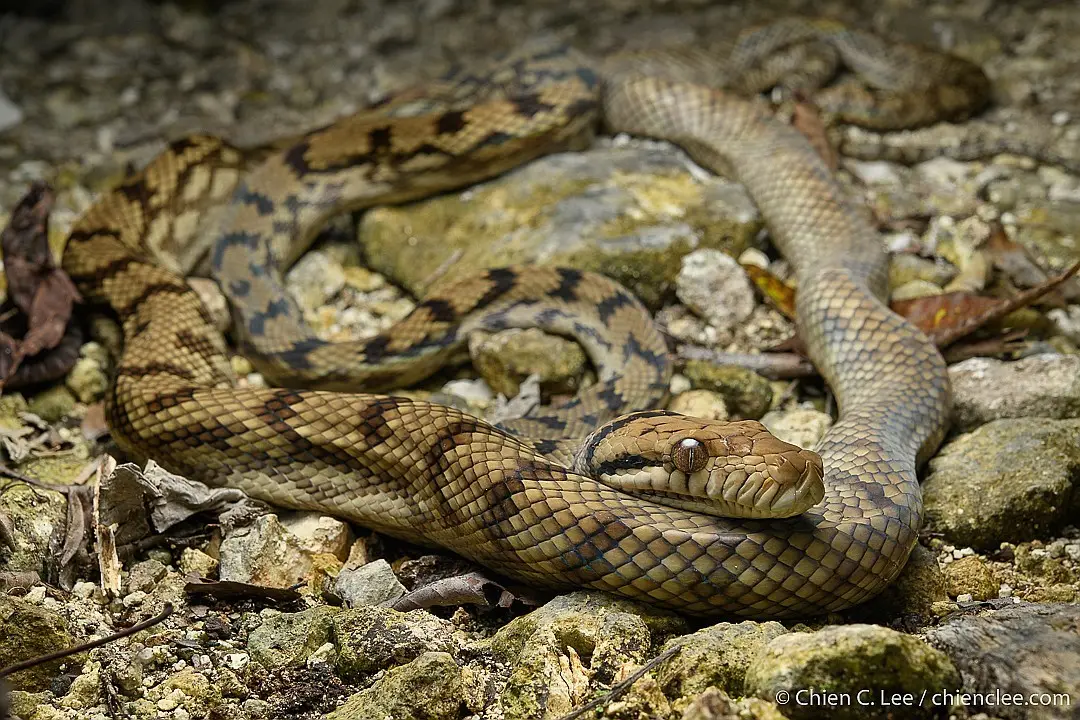
Amethystine Python
Simalia amethistina
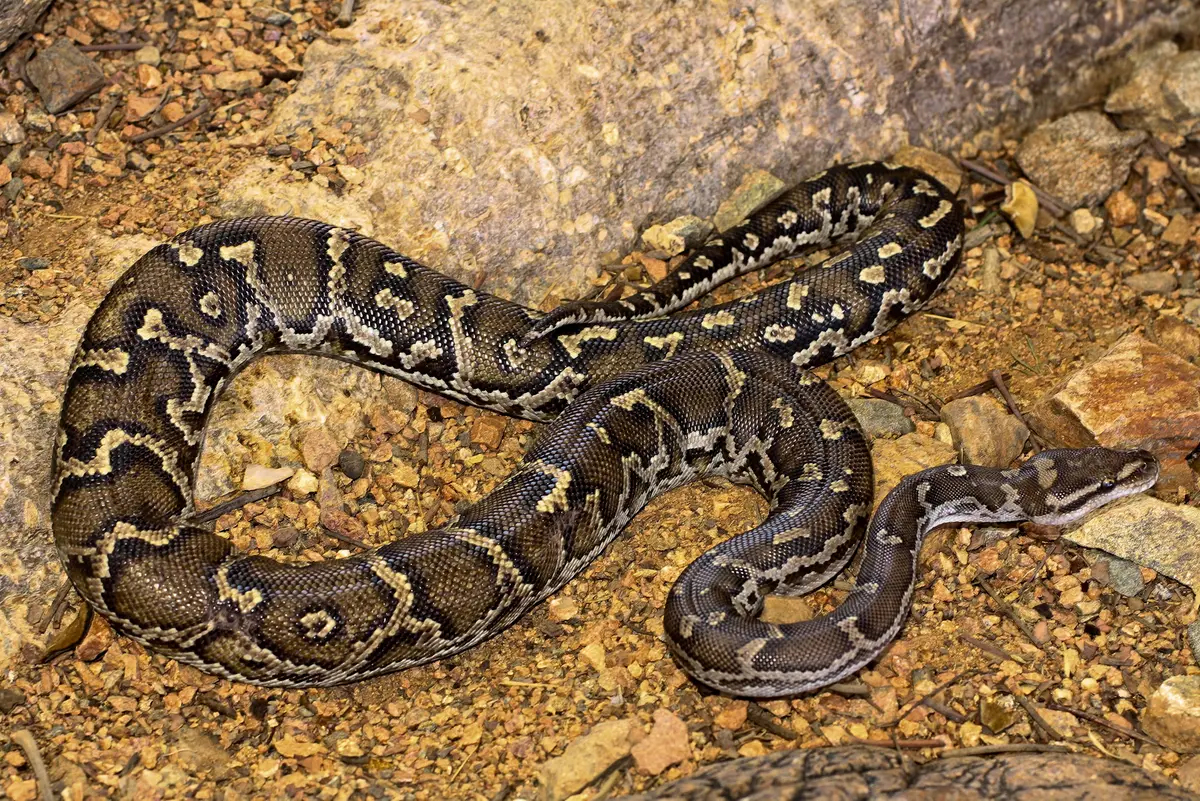
Angolan Python
Python anchietae
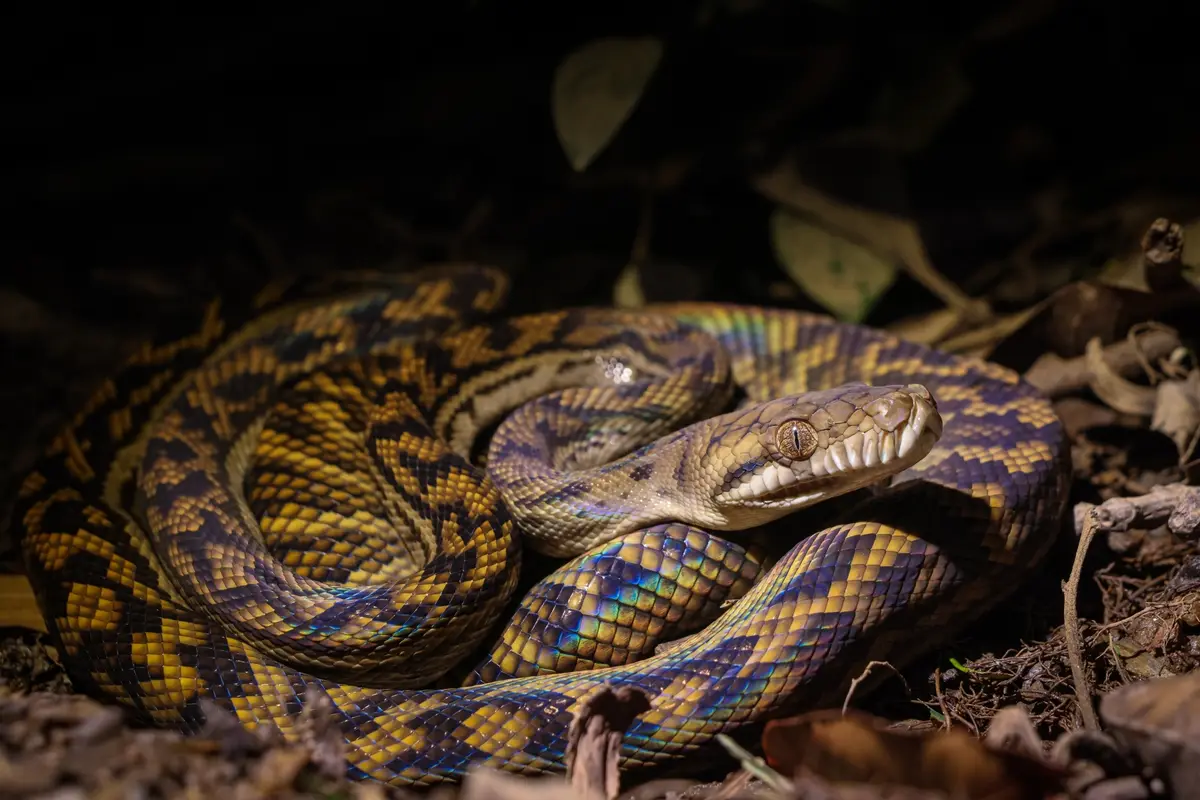
Australian Scrub Python
Simalia kinghorni
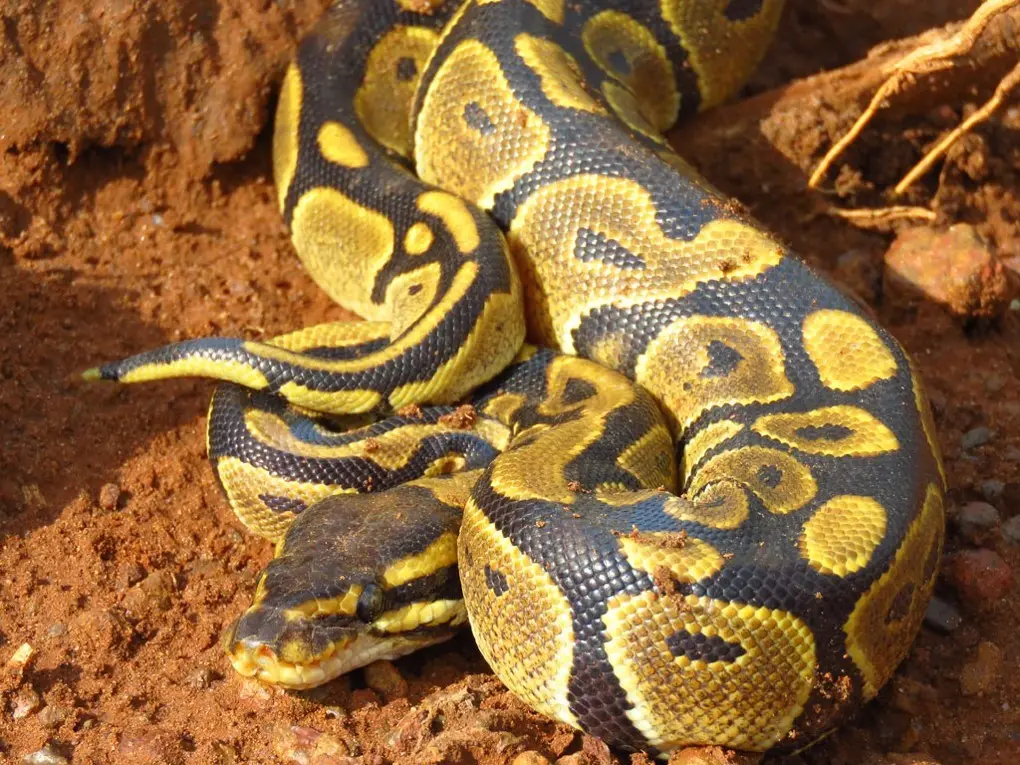
Ball Python
Python regius
Black-headed Python
Aspidites melanocephalus
Blood Python
Python brongersmai
Boelen's Python
Simalia boeleni
Bredl's Python
Morelia bredli
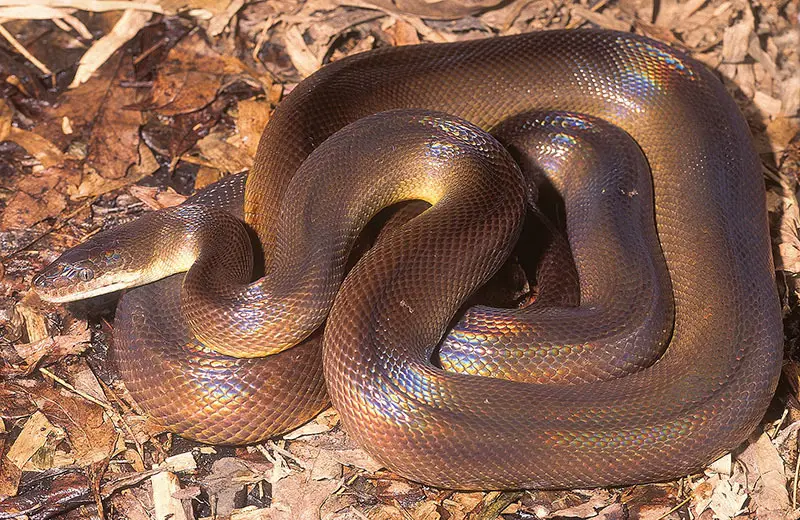
Brown Water Python
Liasis fuscus
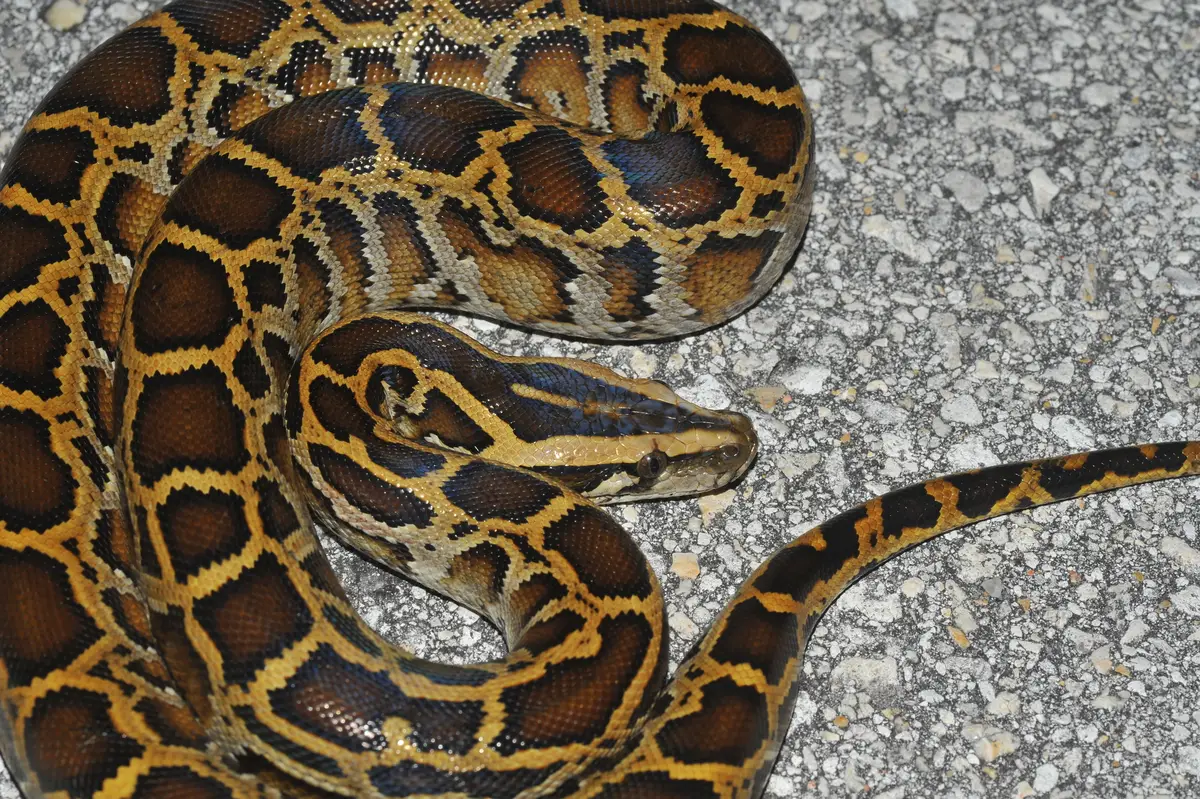
Burmese Python
Python bivittatus
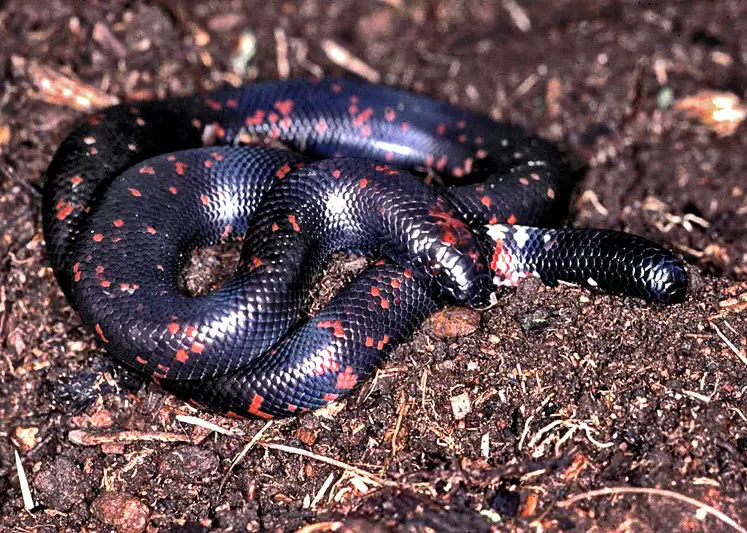
Calabar Python
Calabaria reinhardtii
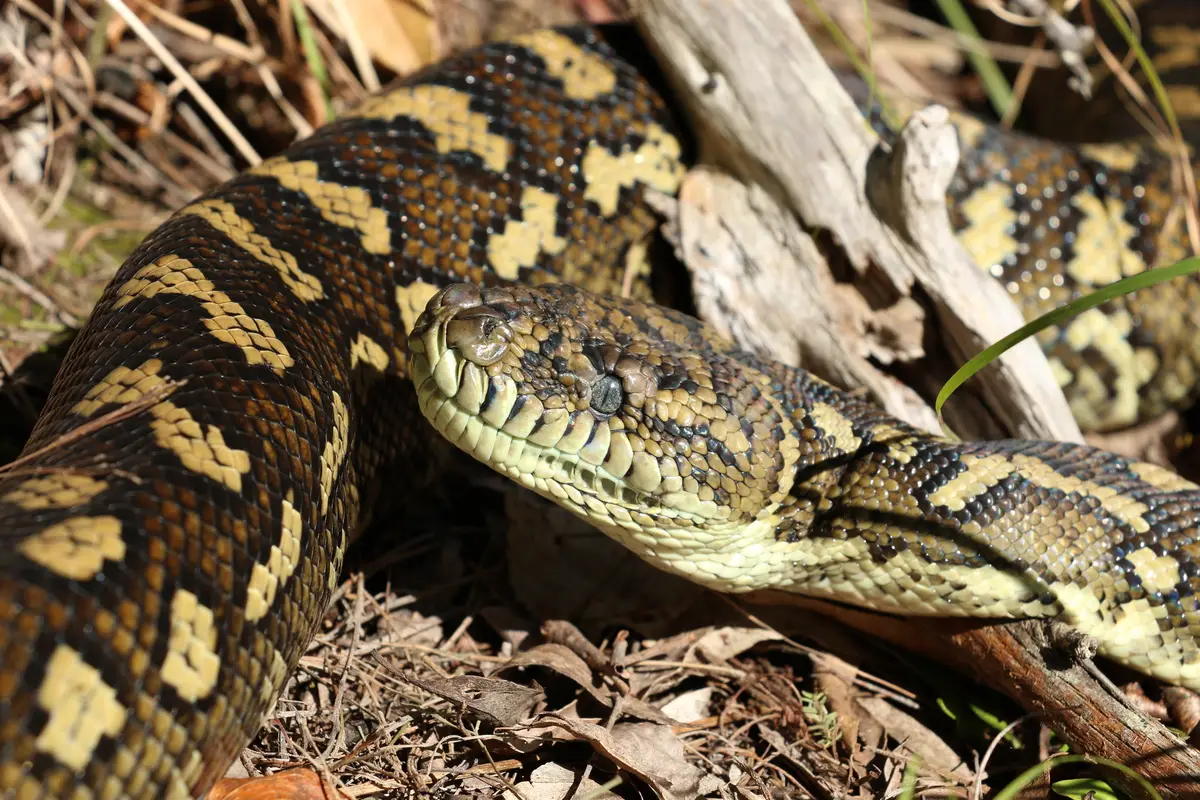
Coastal Carpet Python
Morelia spilota mcdowelli
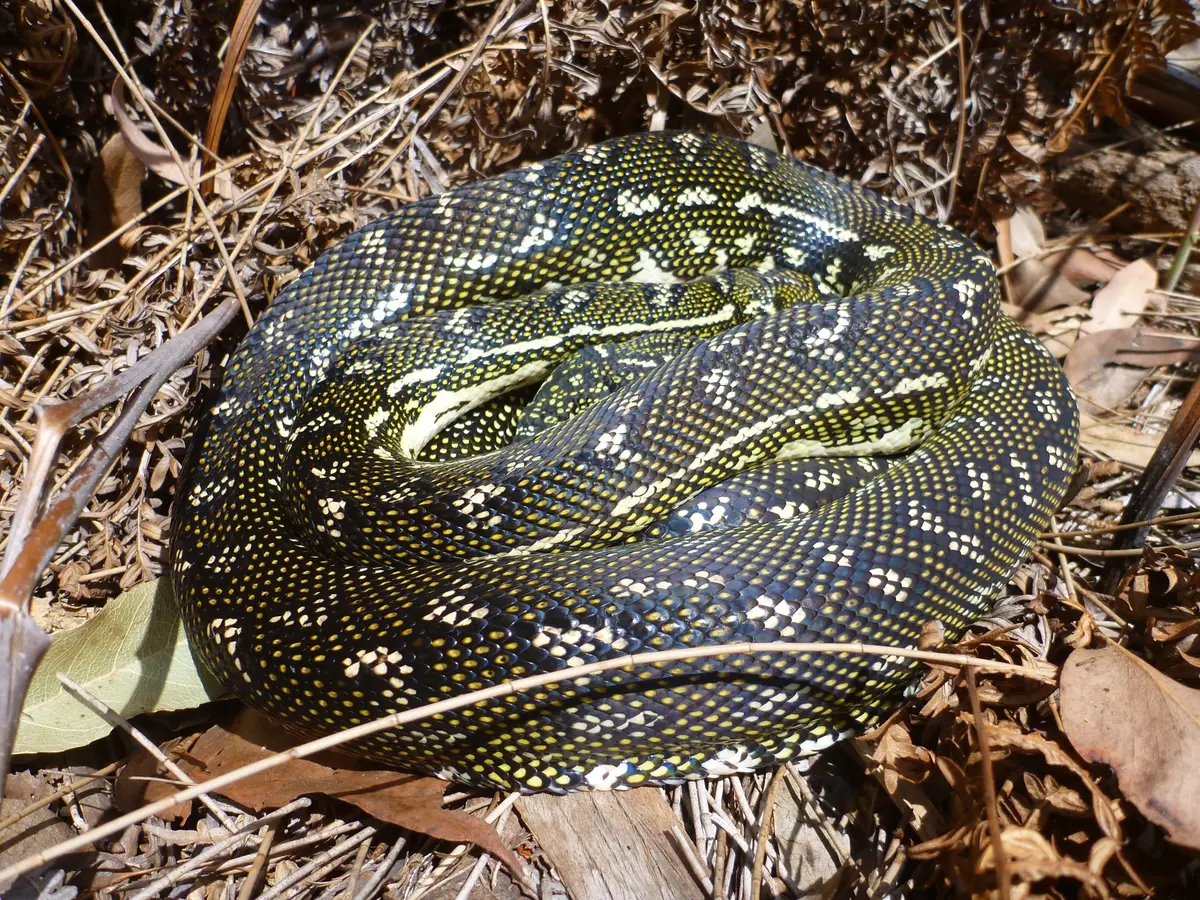
Diamond Python
Morelia spilota spilota
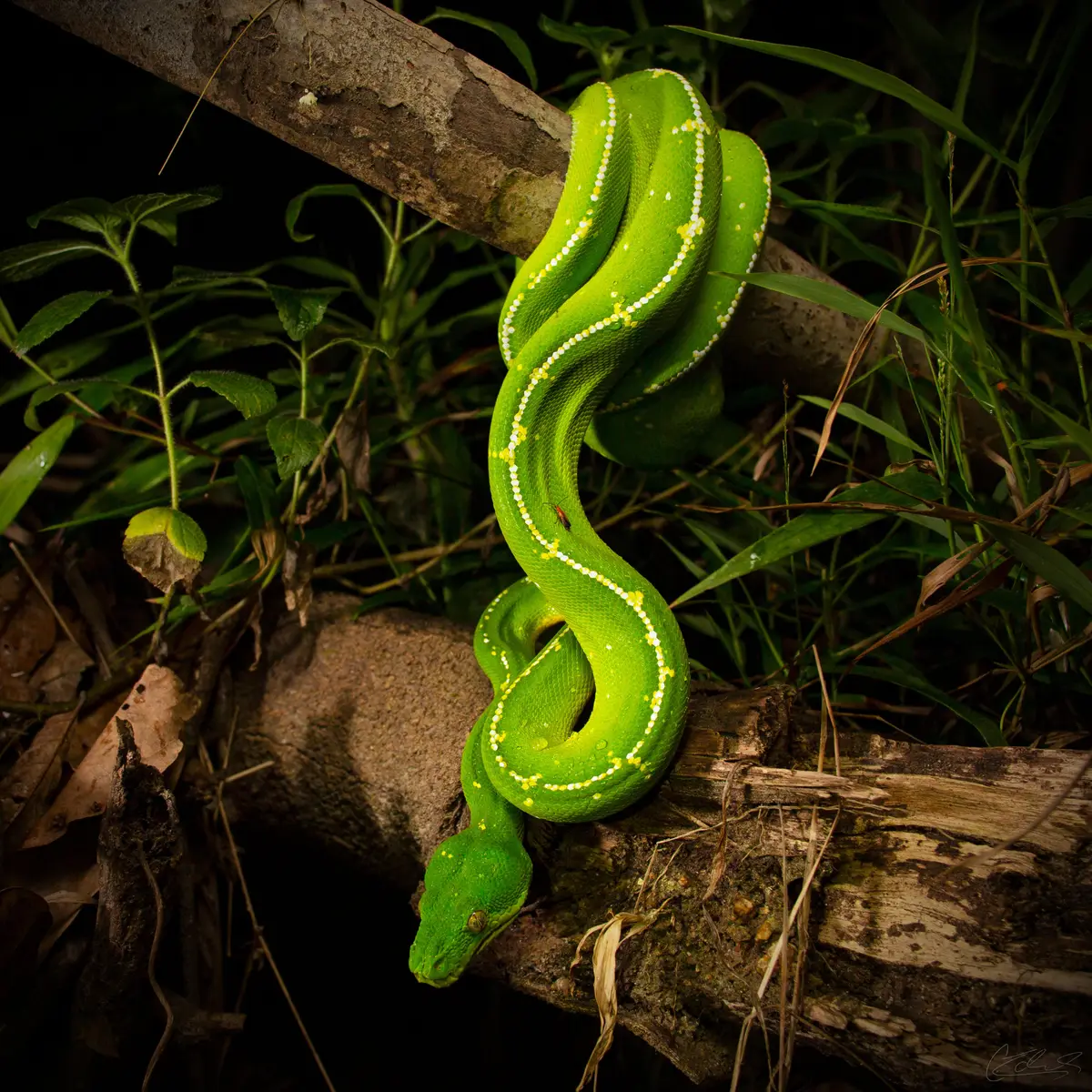
Green Tree Python
Morelia viridis
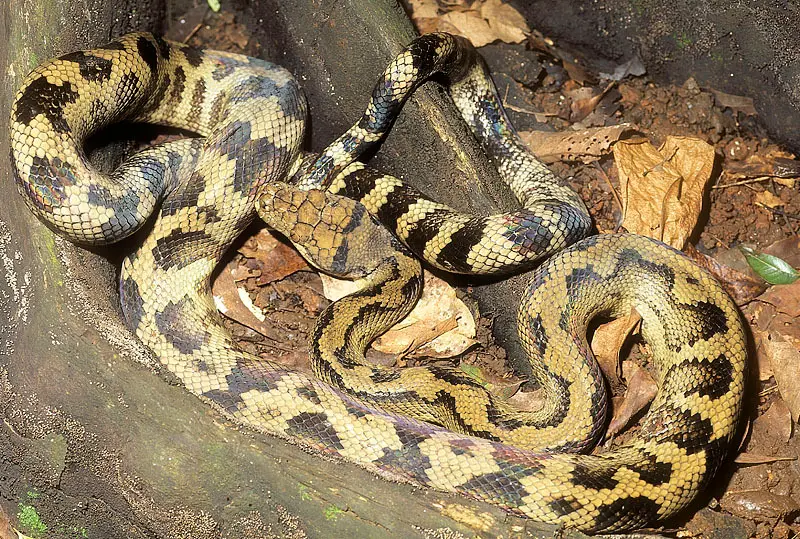
Halmahera Python
Simalia tracyae
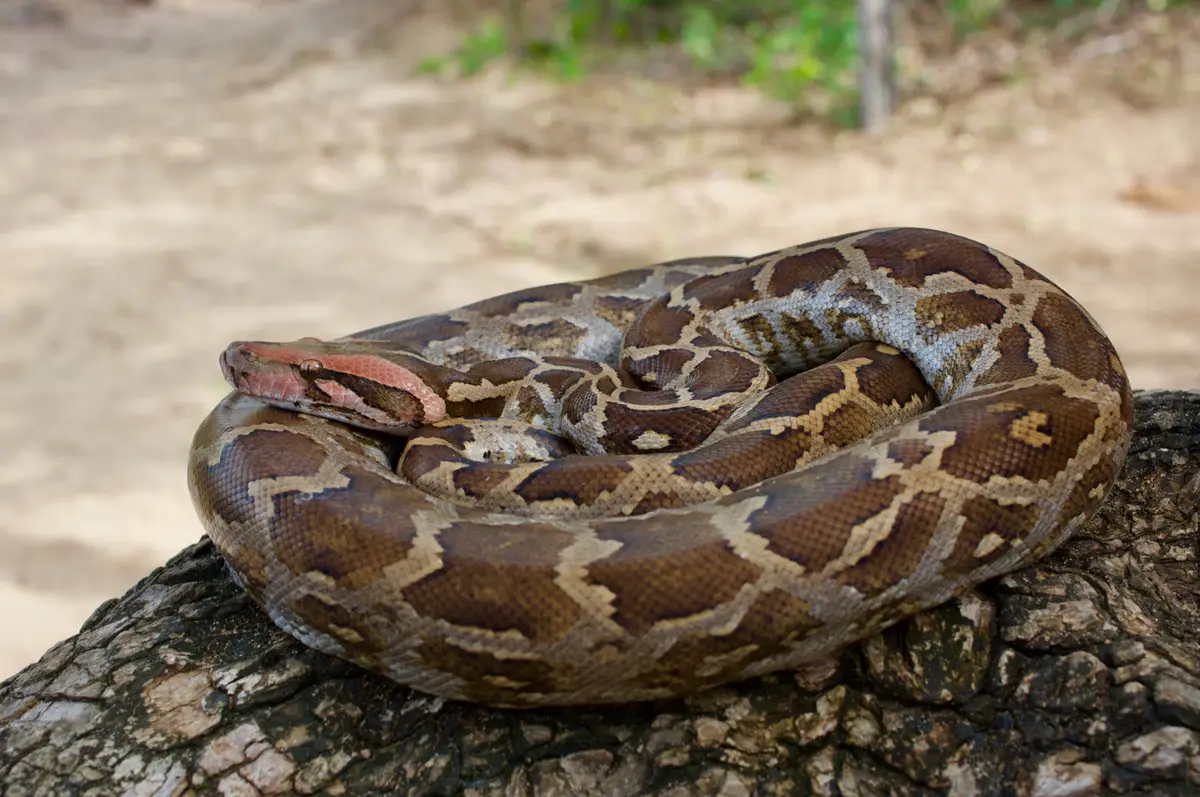
Indian Python
Python molurus
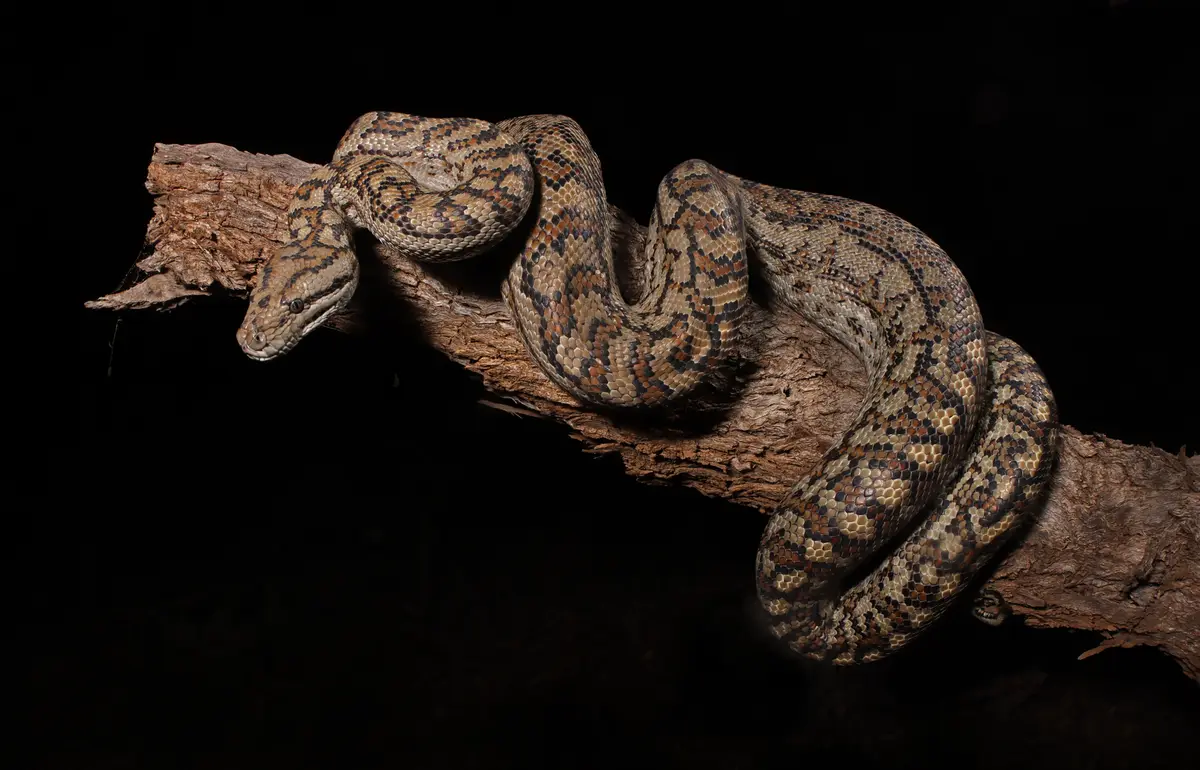
Inland Carpet Python
Morelia spilota metcalfei
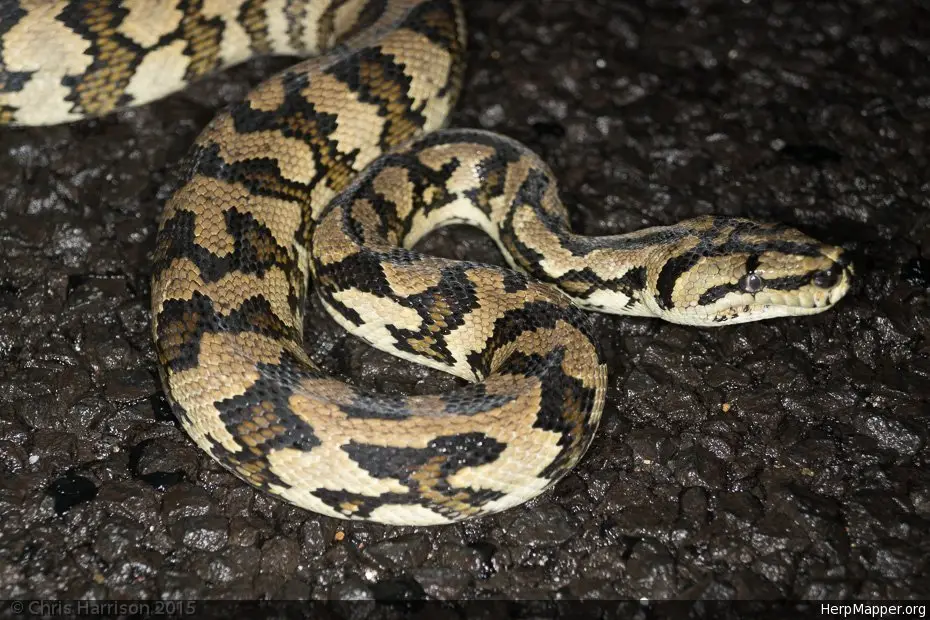
Jungle Carpet Python
Morelia spilota cheynei
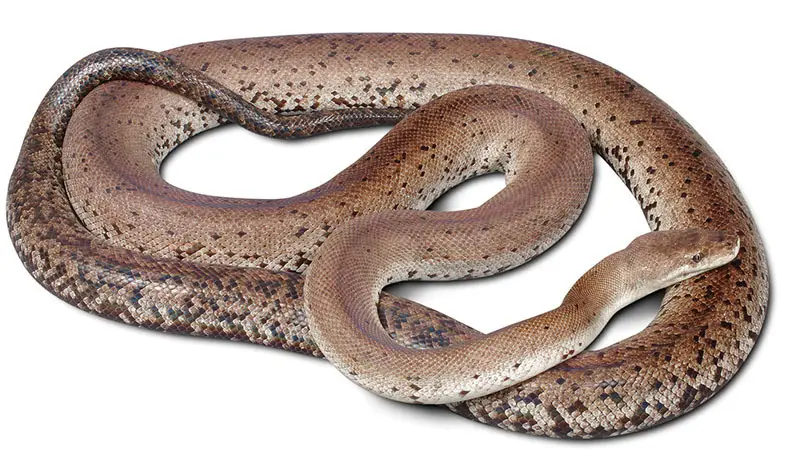
Macklot's Python
Liasis mackloti
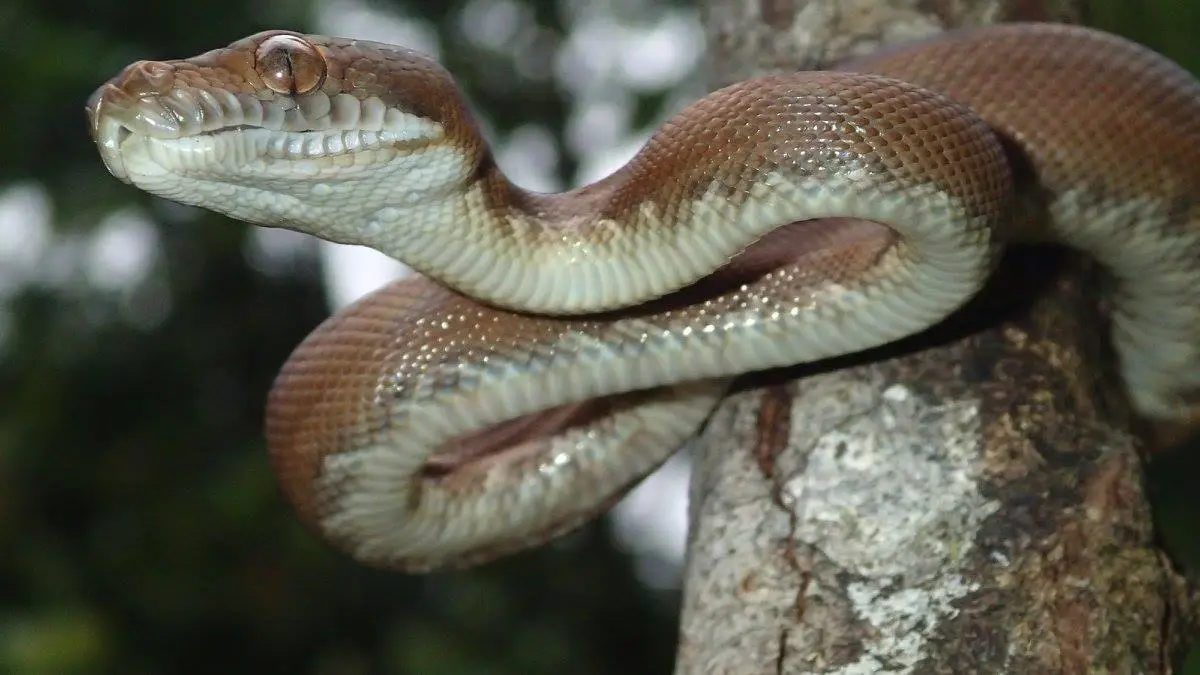
Moluccan Python
Simalia clastolepis
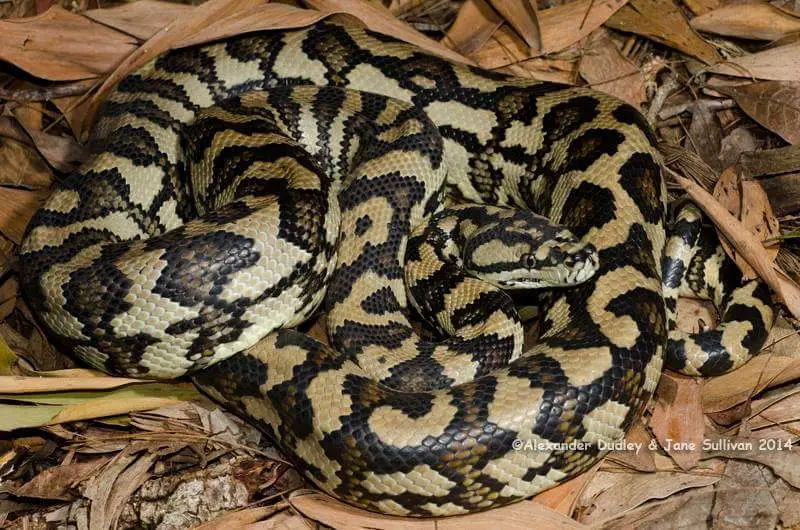
New Guinea Carpet Python
Morelia spilota harrisoni
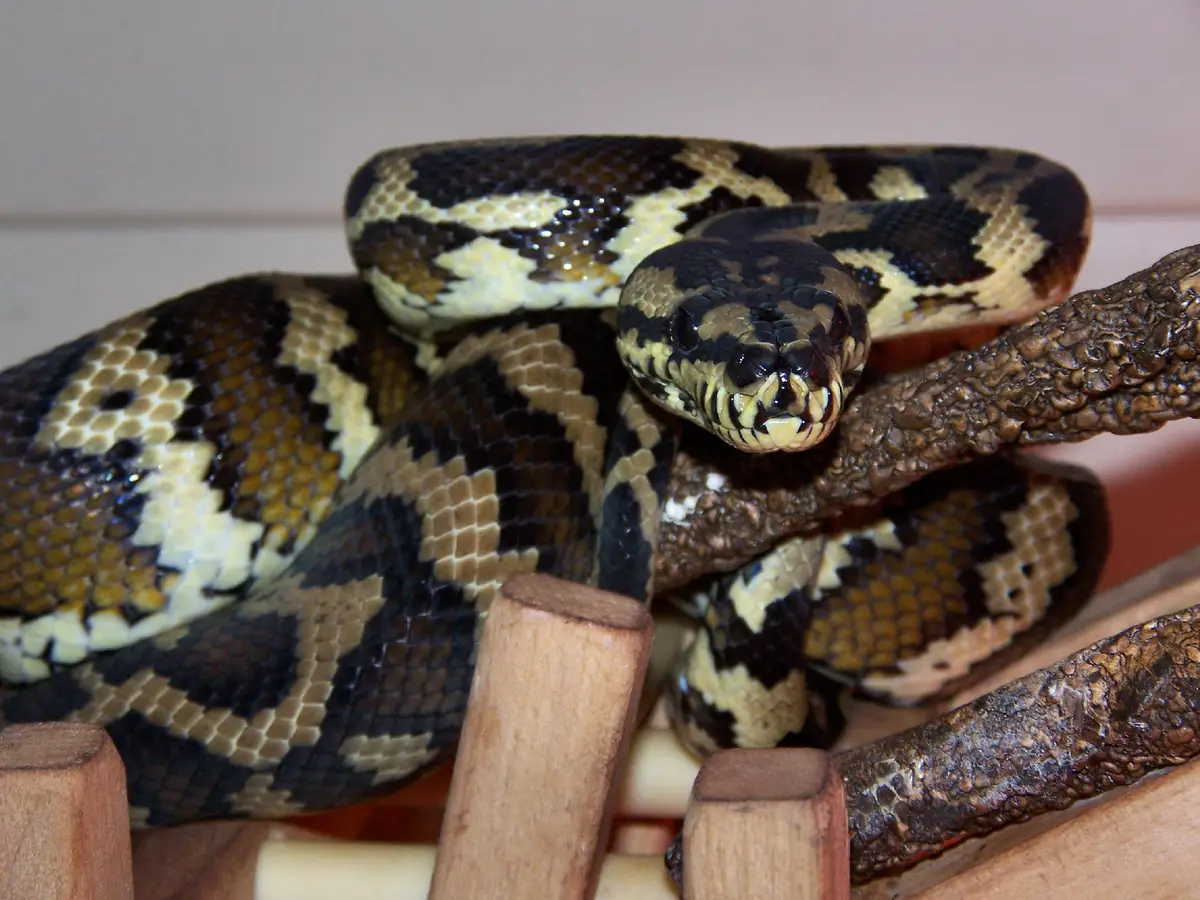
Northwestern Carpet Python
Morelia spilota variegata
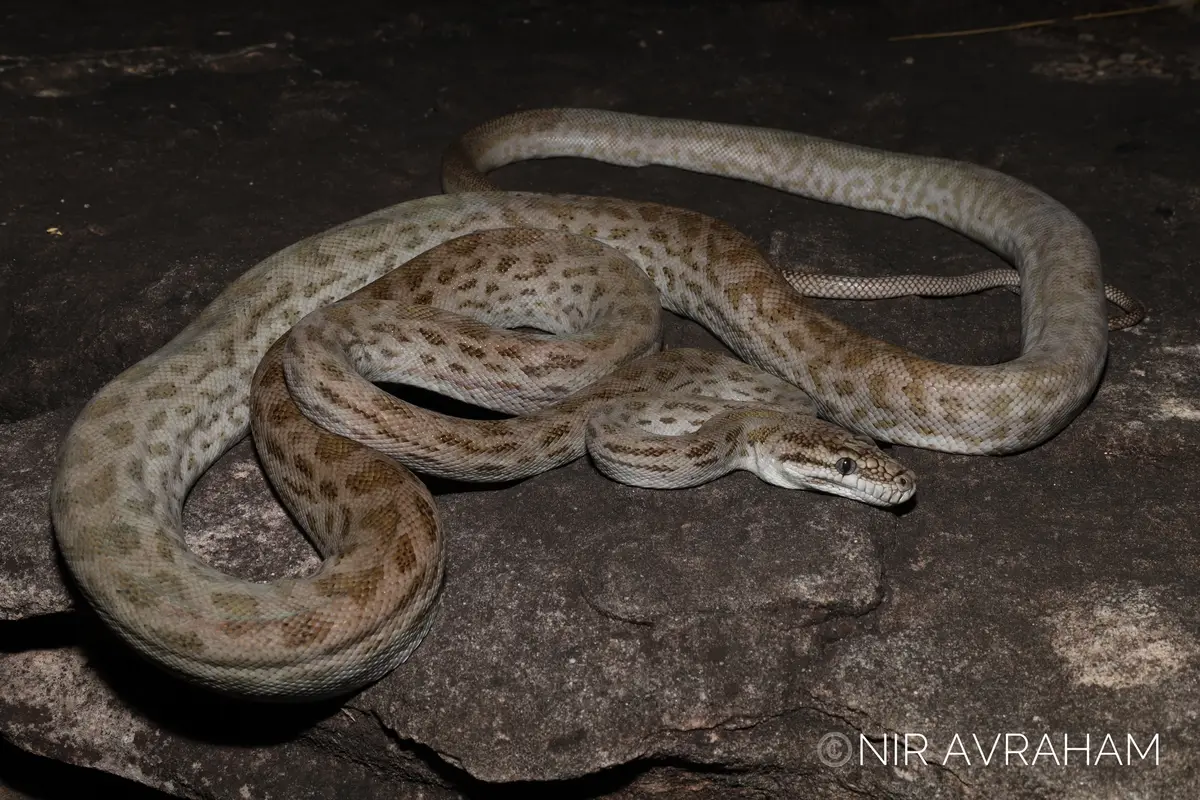
Oenpelli Python
Simalia oenpelliensis
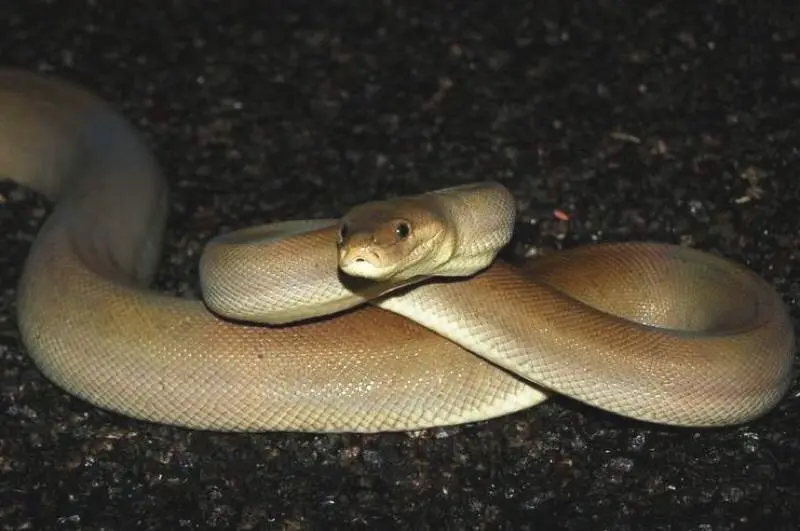
Olive Python
Liasis olivaceus
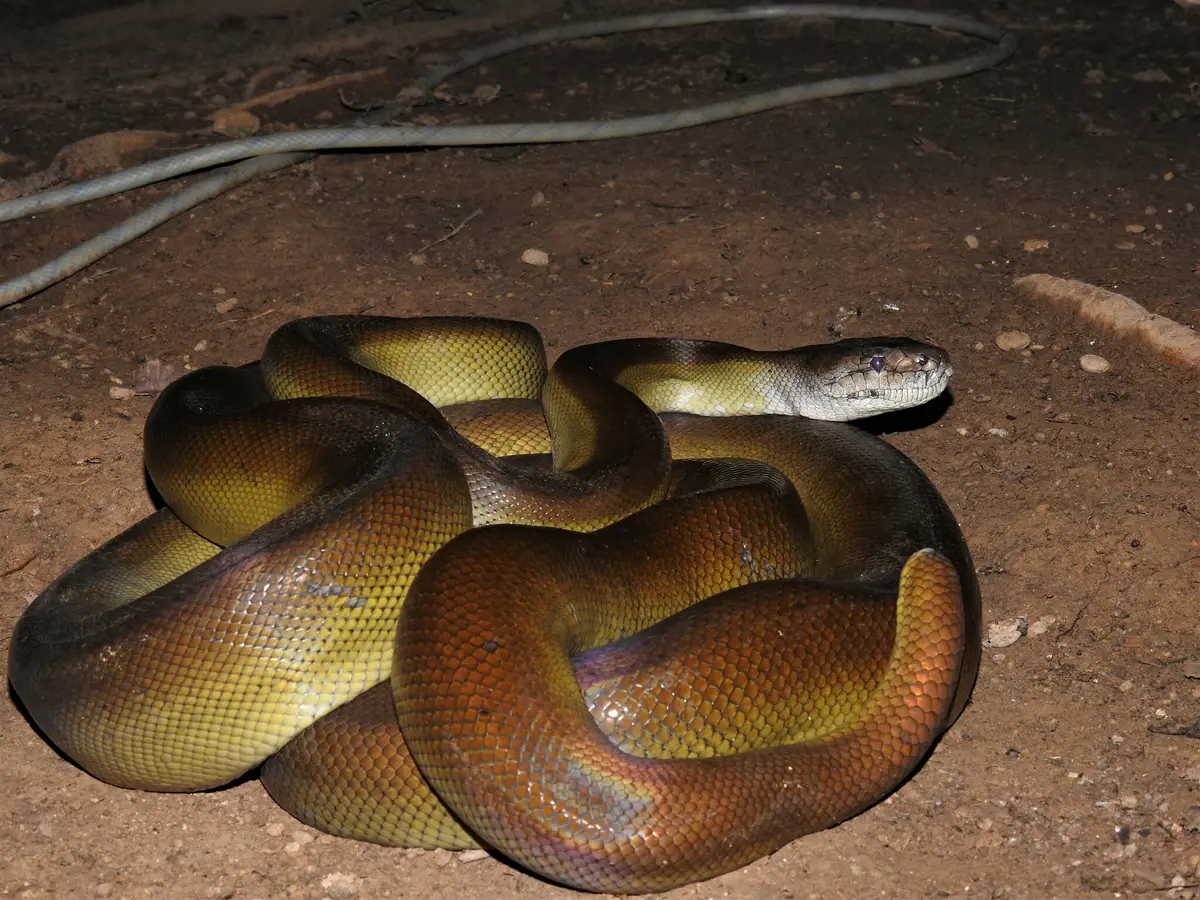
Papuan Python
Apodora papuana
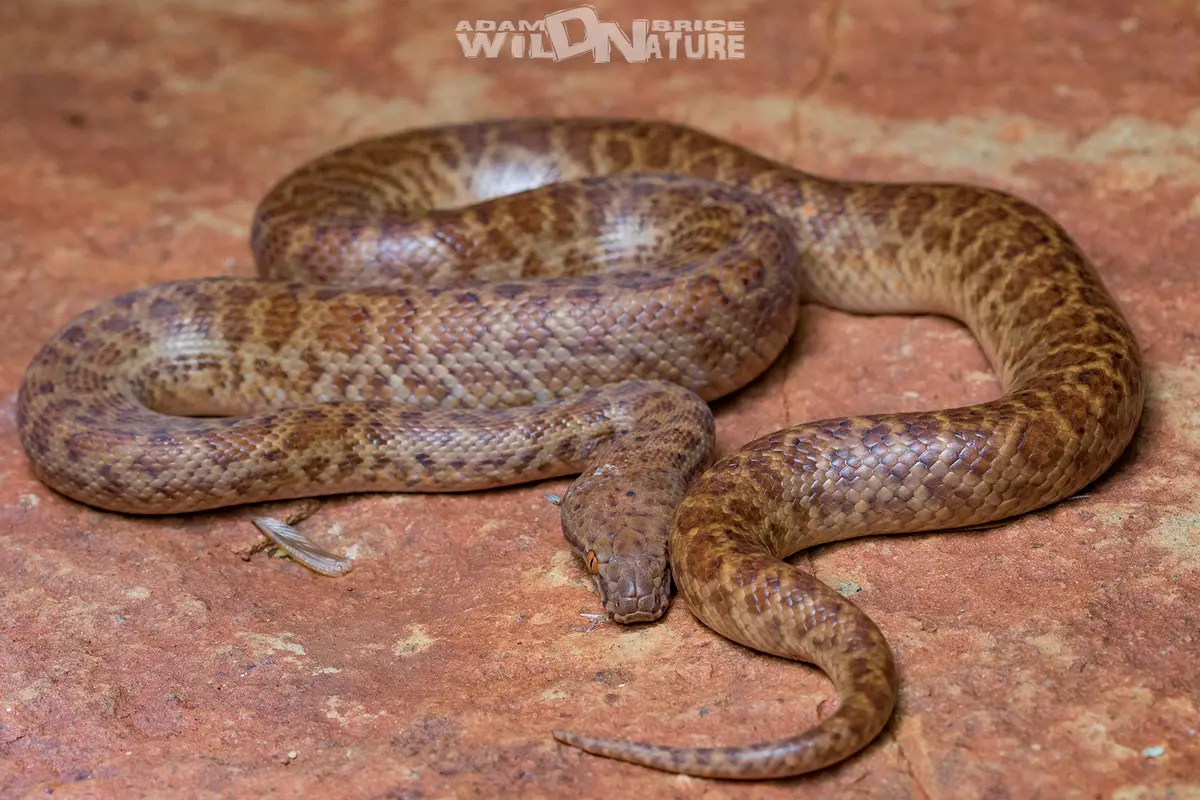
Pygmy Python
Antaresia perthensis
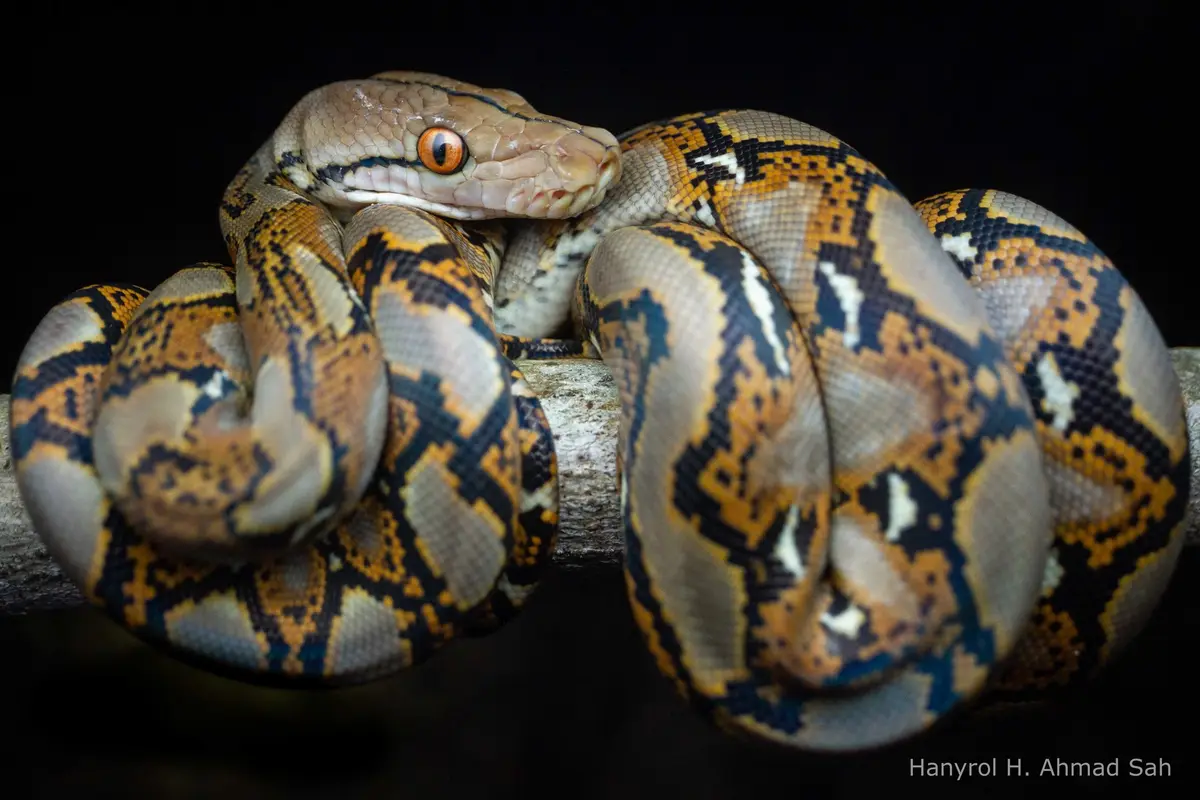
Reticulated Python
Malayopython reticulatus
Selayer Reticulated Python
Malayopython reticulatus saputrai
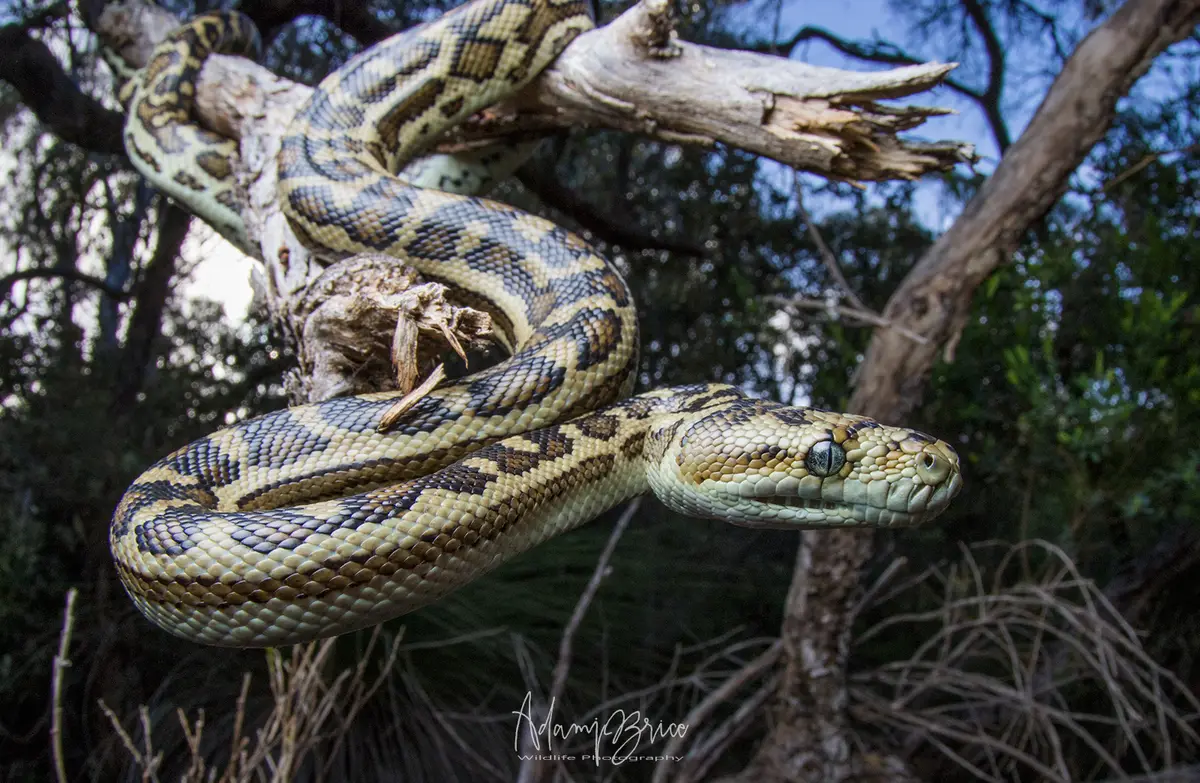
Southwestern Carpet Python
Morelia imbricata
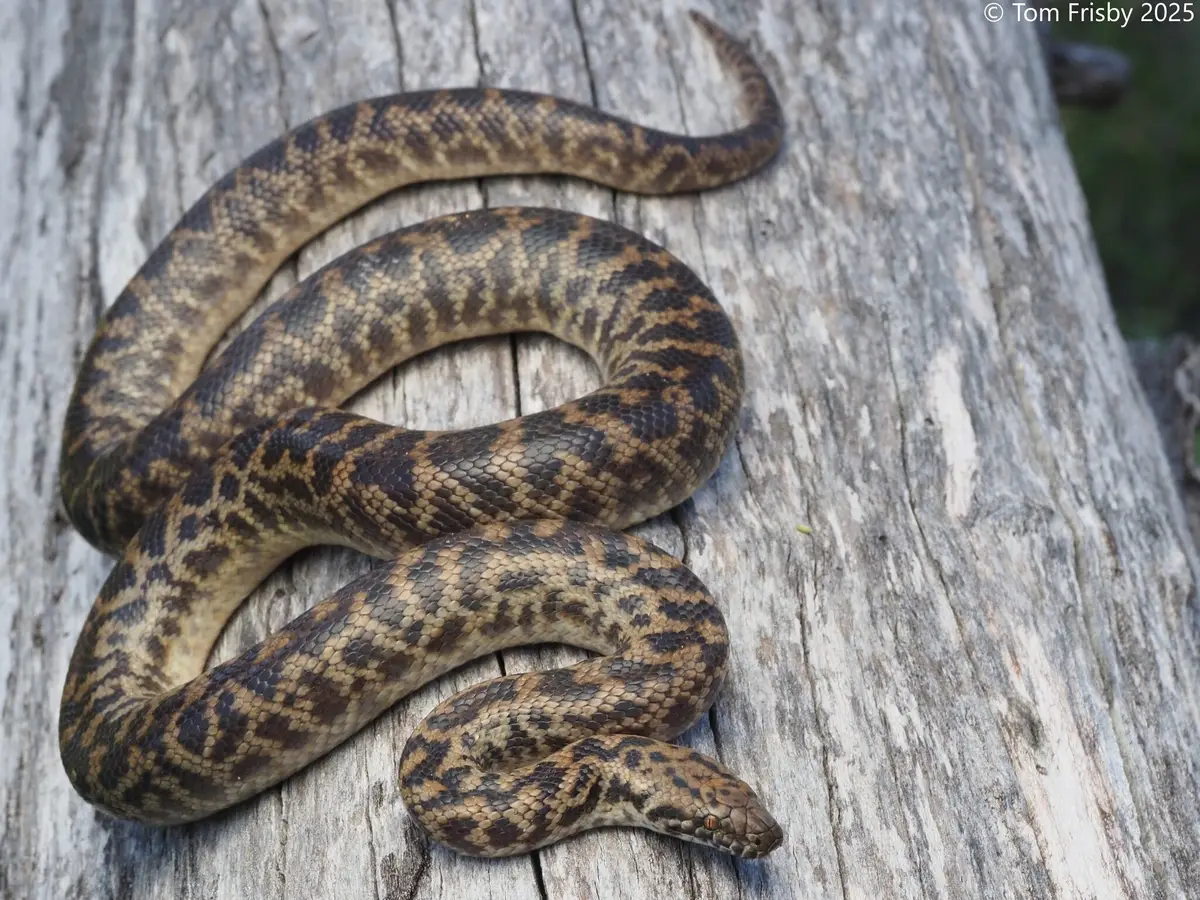
Spotted Python
Antaresia maculosa
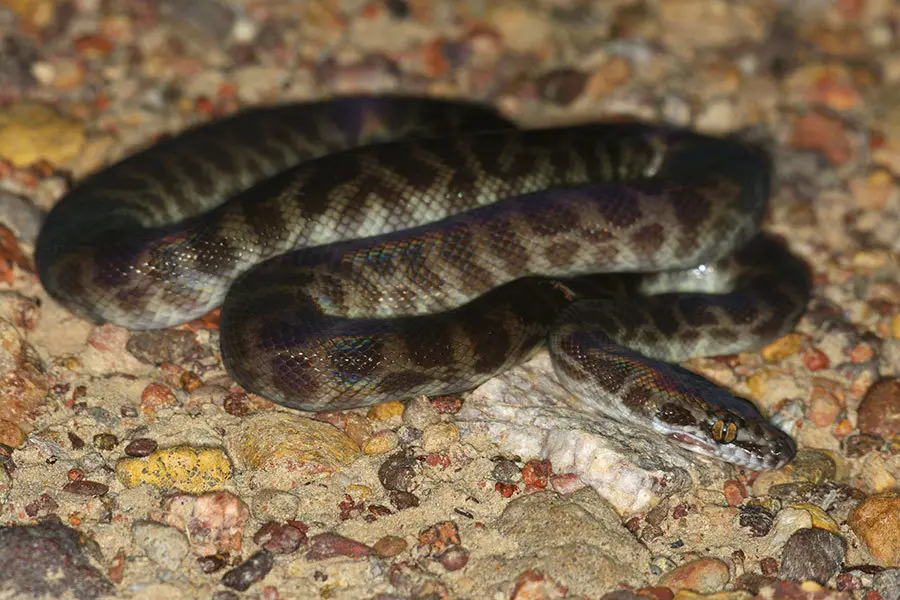
Stimson's Python
Antaresia stimsoni
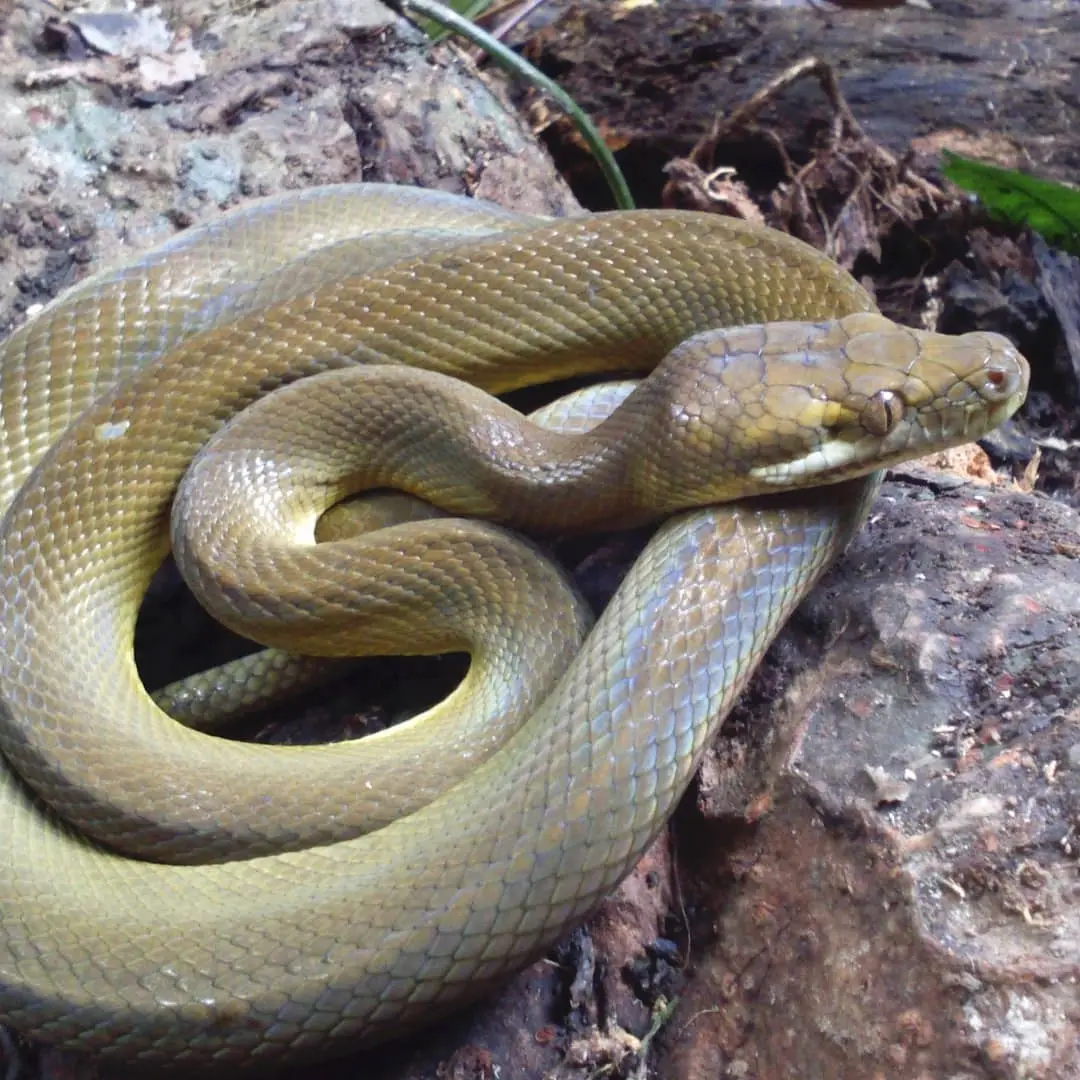
Tanimbar Python
Simalia nauta
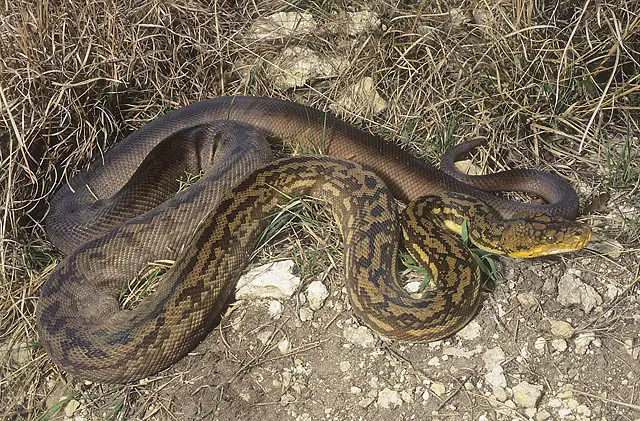
Timor Python
Malayopython timoriensis
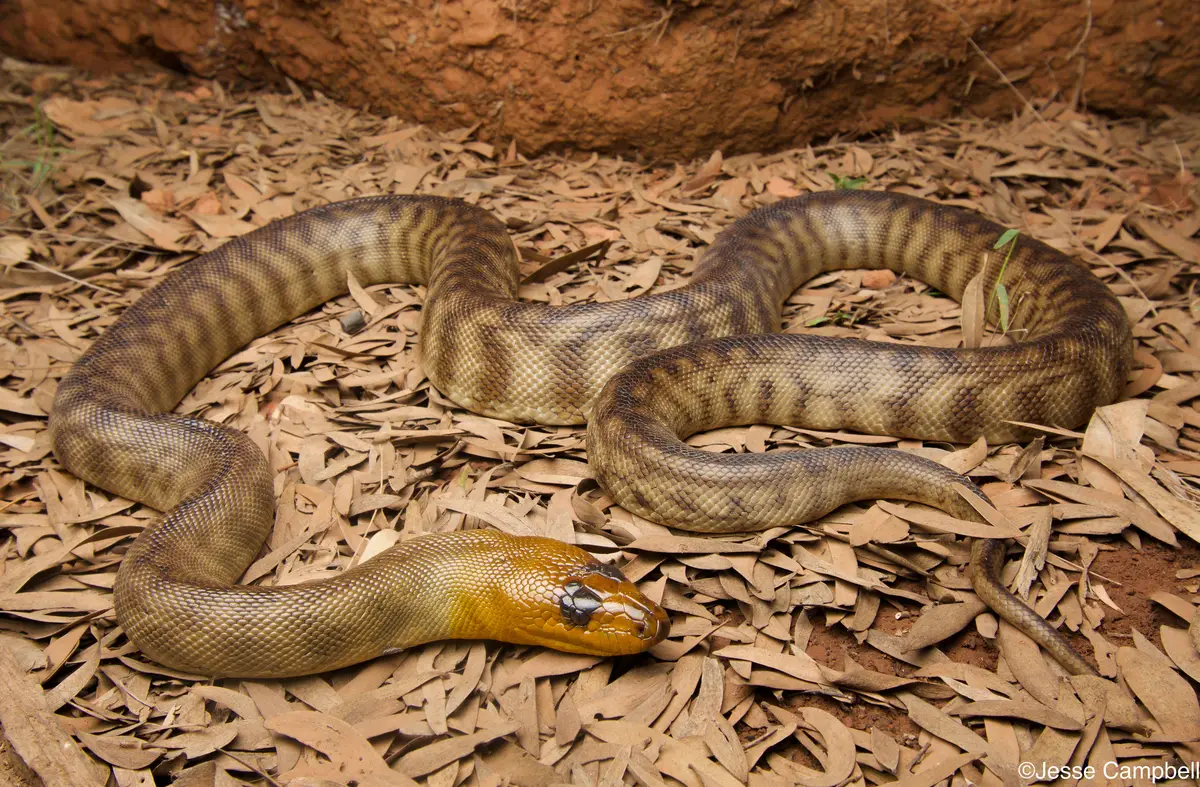
Woma Python
Aspidites ramsayi
Sources
- Reptile Database: family Pythonidae species list
- Reptile Database: Python bivittatus
- Reptile Database: Malayopython reticulatus
- San Diego Zoo Wildlife Alliance: Python
- Florida Museum of Natural History: Burmese python
- US Geological Survey: Pythons and mammal declines in Everglades National Park
- Animal Diversity Web: Reticulated python
- Smithsonian's National Zoo: Black-headed python