 NON-VENOMOUS
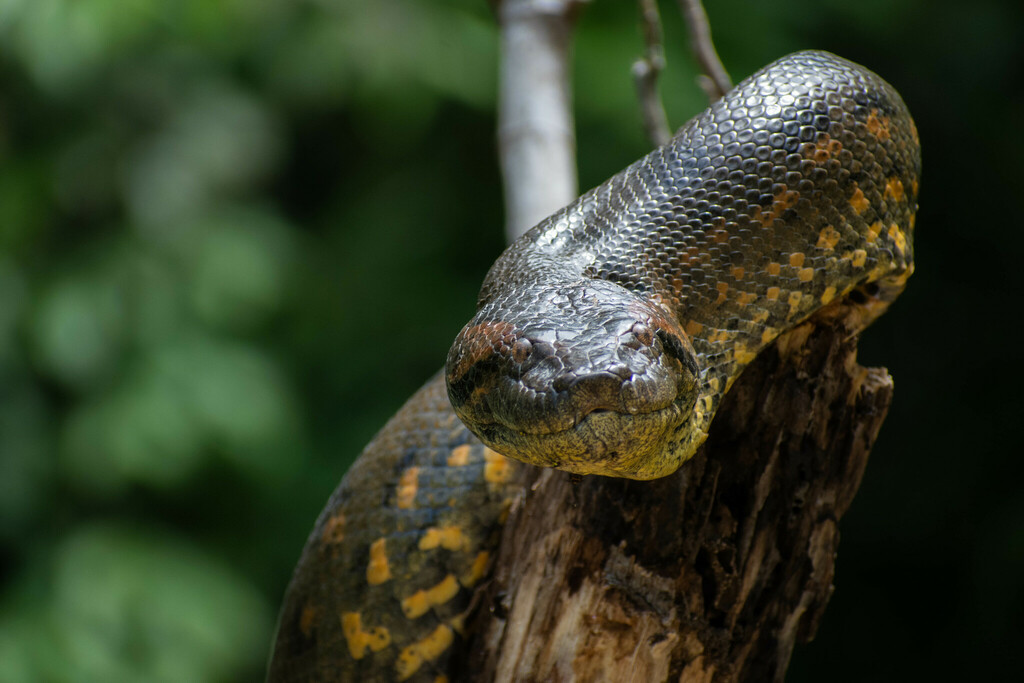
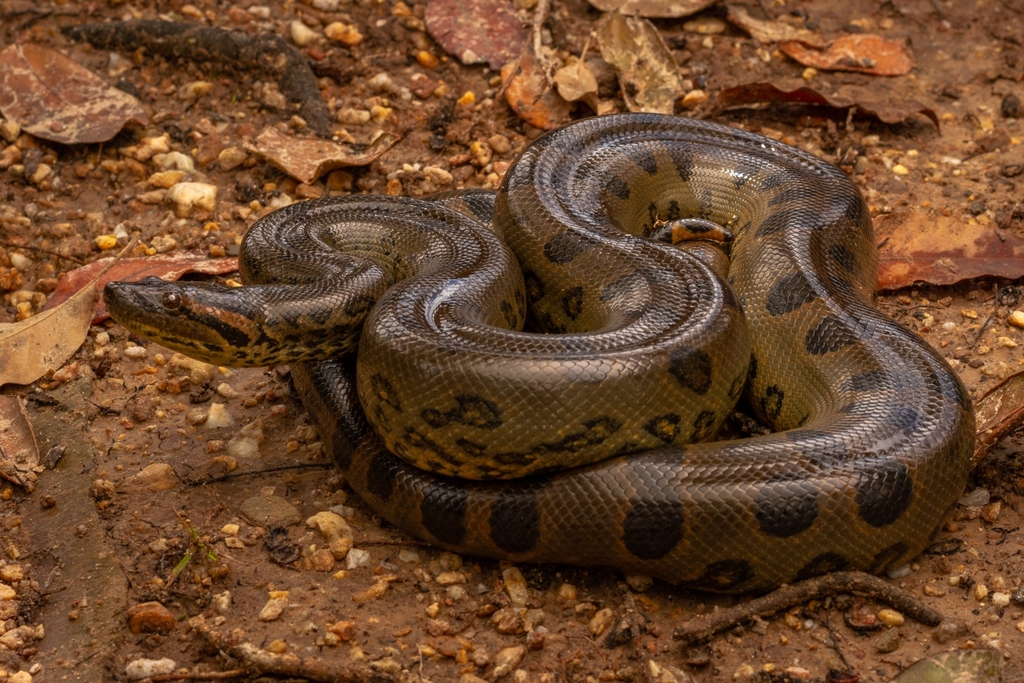
Anaconda
Eunectes
The heaviest snakes on Earth, built for life in swamps and slow rivers.
- Range
- Tropical South America
- Length
- 10-17 ft (3-5.2 m)
Field-guide profiles for more than 4,000 snake species on six continents. Identify what you saw, learn which species are venomous, and see where each one lives on real observation maps.
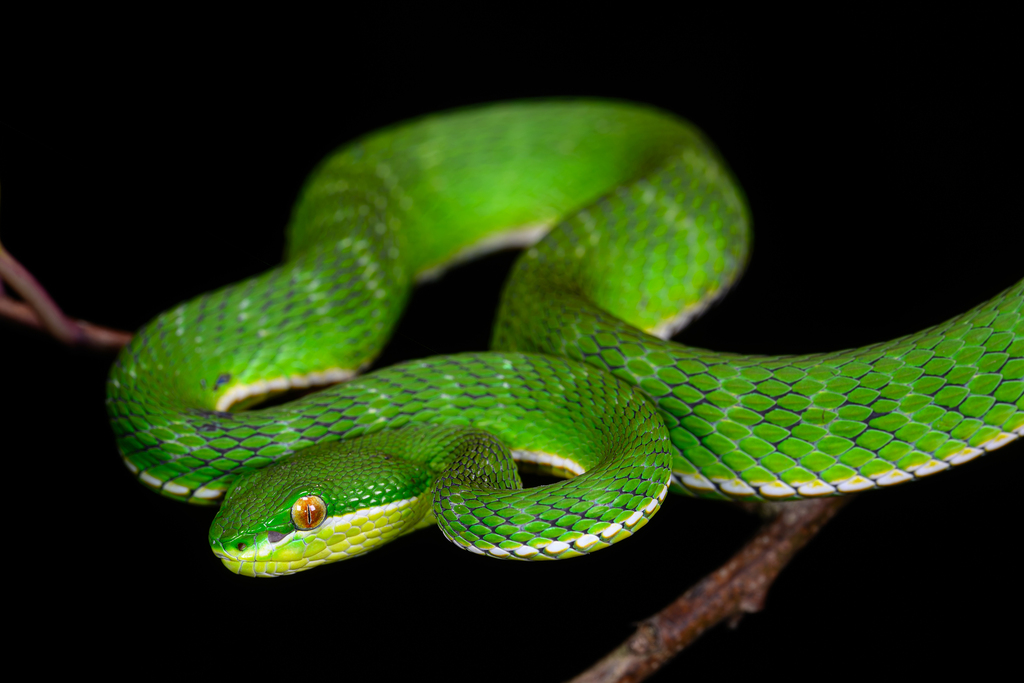
Photo: (c) 藜梓柠, some rights reserved (CC BY-NC), uploaded by 藜梓柠 · via iNaturalist
FIELD GUIDE · WORLDWIDE
In-depth field guides with identification tips, range maps, venom facts and safety advice. More species guides are on the way.
NON-VENOMOUSEunectes
The heaviest snakes on Earth, built for life in swamps and slow rivers.
 NON-VENOMOUS
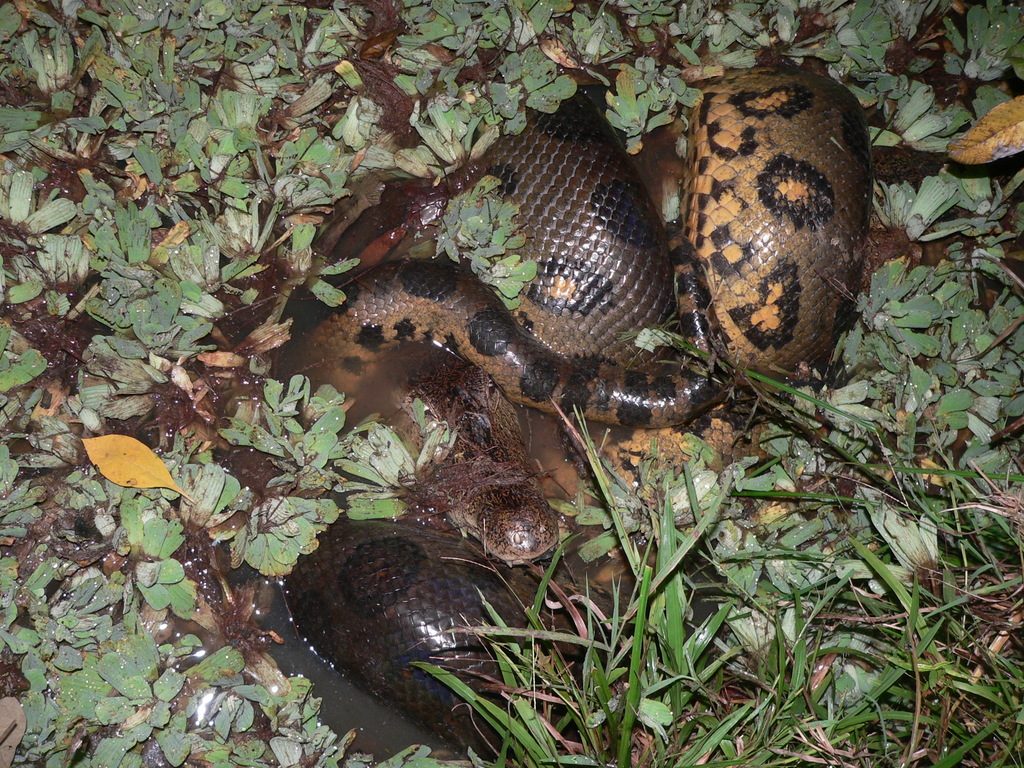
Boidae
Live-bearing constrictors, from 16-inch sand boas to the anaconda.
 VENOMOUS
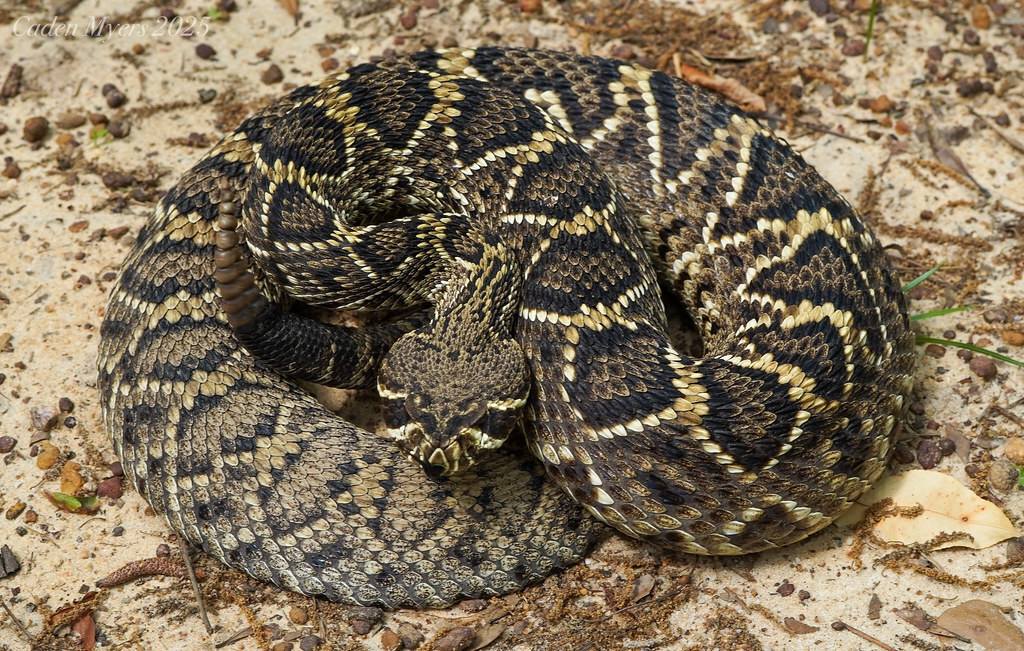
Crotalus adamanteus
The largest rattlesnake and heaviest venomous snake in the Americas.
QUICK REFERENCE
Short answer: the inland taipan has the most toxic venom, but the snakes that kill the most people are South Asia's "big four" (Indian cobra, common krait, Russell's viper and saw-scaled viper). The World Health Organization estimates snakebite kills 81,000 to 138,000 people every year.
| Species | Where it lives | Adult length | Venom | Why it's notable |
|---|---|---|---|---|
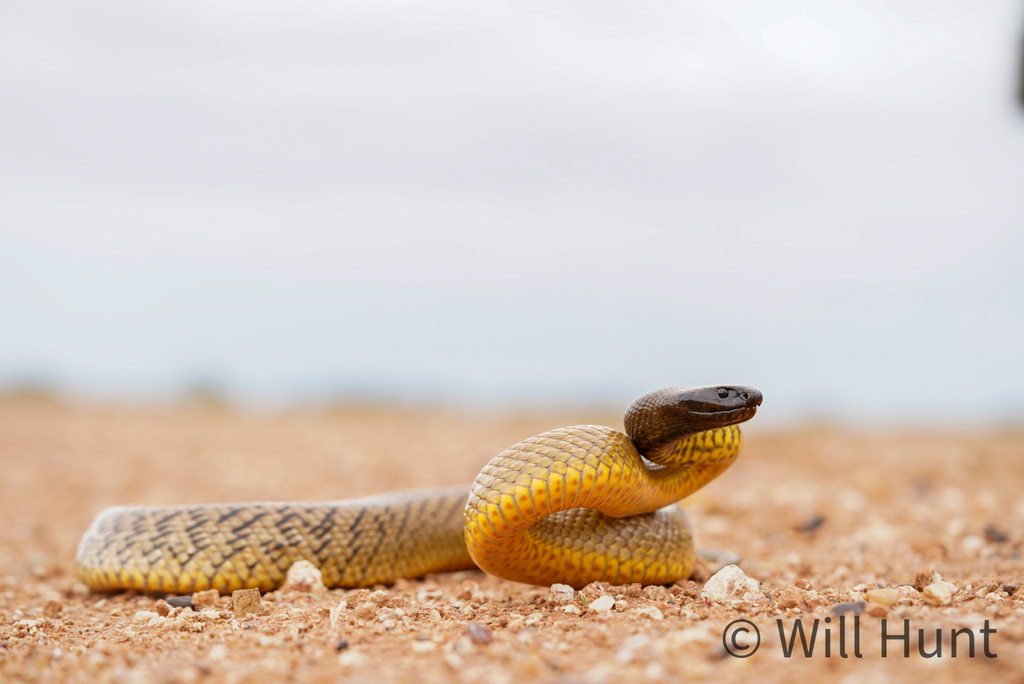
| Inland taipan Oxyuranus microlepidotus | Central Australia | 5-6.5 ft | Neurotoxic | Most toxic venom of any land snake |
| Eastern brown snake Pseudonaja textilis | Eastern Australia | 4-6.5 ft | Neurotoxic, procoagulant | Australia's deadliest snake by bites |
| Coastal taipan Oxyuranus scutellatus | N & E Australia, New Guinea | 5-6.5 ft | Neurotoxic | Longest fangs of any Australian snake |
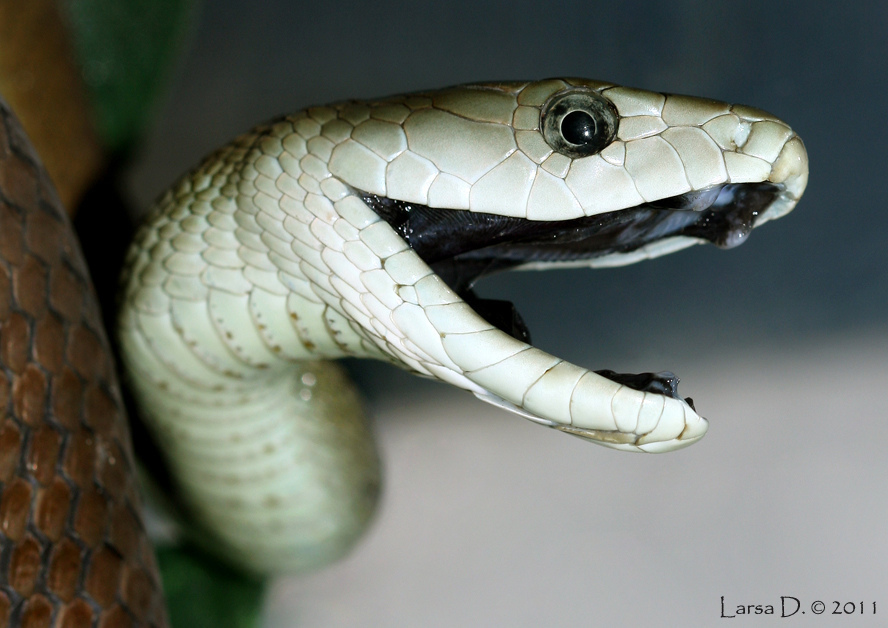
| Black mamba Dendroaspis polylepis | Eastern & southern Africa | 6.5-10 ft | Neurotoxic | Fast-acting venom, near 100% fatal untreated |
| King cobra Ophiophagus hannah | South & Southeast Asia | 10-13 ft | Neurotoxic | Delivers the largest venom dose of any elapid |
| Indian cobra Naja naja | India, Pakistan, Sri Lanka | 3-5 ft | Neurotoxic | One of the "big four" |
| Common krait Bungarus caeruleus | Indian subcontinent | 3-4 ft | Neurotoxic | Bites sleeping people at night; often painless |
| Russell's viper Daboia russelii | Indian subcontinent | 3-5 ft | Hemotoxic | Causes more deaths than any other snake in Asia |
| Saw-scaled viper Echis carinatus | Middle East to India | 1-2.5 ft | Hemotoxic | Small but blamed for huge numbers of bites |
| Fer-de-lance Bothrops asper | Mexico to Ecuador | 4-6 ft | Hemotoxic | Top cause of snakebite in Central America |
| Eastern diamondback Crotalus adamanteus | Southeastern USA | 3-6 ft | Hemotoxic | Most dangerous snake in the US |
| Boomslang Dispholidus typus | Sub-Saharan Africa | 3-5 ft | Hemotoxic | Rear-fanged; symptoms can take hours to appear |
LIVE MAP
Every green cell is a verified snake sighting from iNaturalist's community scientists. Snakes live on every continent except Antarctica, and are naturally absent from Ireland, Iceland, Greenland and New Zealand.
BROWSE BY CONTINENT

QUICK ANSWERS
A little over 4,000 described species, found on every continent except Antarctica. Researchers still describe dozens of new species every year, mostly in the tropics.
By lab toxicity tests, the inland taipan of central Australia has the most potent venom of any land snake. It is shy and lives in remote areas, so bites to people are very rare.
Saw-scaled vipers, Russell's vipers, Indian cobras and common kraits cause the most deaths, mainly in South Asia and Africa, where people often work barefoot in fields and antivenom can be far away.
The reticulated python is the longest, with records over 20 ft (6 m). The green anaconda is the heaviest, exceeding 200 lb (90 kg).
Antarctica, Iceland, Ireland, Greenland and New Zealand have no native land snakes. In the US, Hawaii and Alaska have no native venomous land snakes.
Call 911 or your local emergency number and move away from the snake. Stay calm, remove rings and tight clothing, and keep the limb still. Do not cut, suck, ice or tourniquet the bite. US Poison Control: 1-800-222-1222.