MOLUCCANPYTHON
Simalia clastolepis · Family Pythonidae
KEY TAKEAWAYS
The Moluccan python (Simalia clastolepis) is a large, non-venomous python from the islands of Seram and Ambon in Maluku province, eastern Indonesia. It is harmless to people. It belongs to the scrub python group and was filed under the amethystine python until a 2000 study described it as a separate species.
- It has no venom and kills its prey by constriction.
- Adults reach about 12.5 ft (3.8 m) and 18.7 lb (8.5 kg), according to the original description.
- Adults are nearly patternless gray or brown, with faint bands only toward the tail.
- The IUCN Red List rates it Near Threatened.
Moluccan python quick facts
| Common names | Moluccan python, Southern Moluccan python, Seram scrub python, yellow python |
|---|---|
| Scientific name | Simalia clastolepis (Harvey, Barker, Ammerman & Chippindale, 2000); first named Morelia clastolepis |
| Family | Pythonidae (pythons) |
| Venomous | No, a constrictor |
| Adult length | Up to about 12.5 ft (3.8 m) |
| Weight | Up to about 18.7 lb (8.5 kg) |
| Coloring | Adults almost plain gray or brown; faint narrow bands on the rear of the body and tail |
| Range | Seram and Ambon, Maluku, Indonesia; probably Haruku and Saparua |
| Habitat | Forest; partly arboreal |
| Diet | Not studied in the wild; scrub pythons eat birds and mammals |
| Reproduction | Lays eggs |
| Conservation | IUCN Near Threatened; CITES Appendix II |
How to identify a Moluccan python
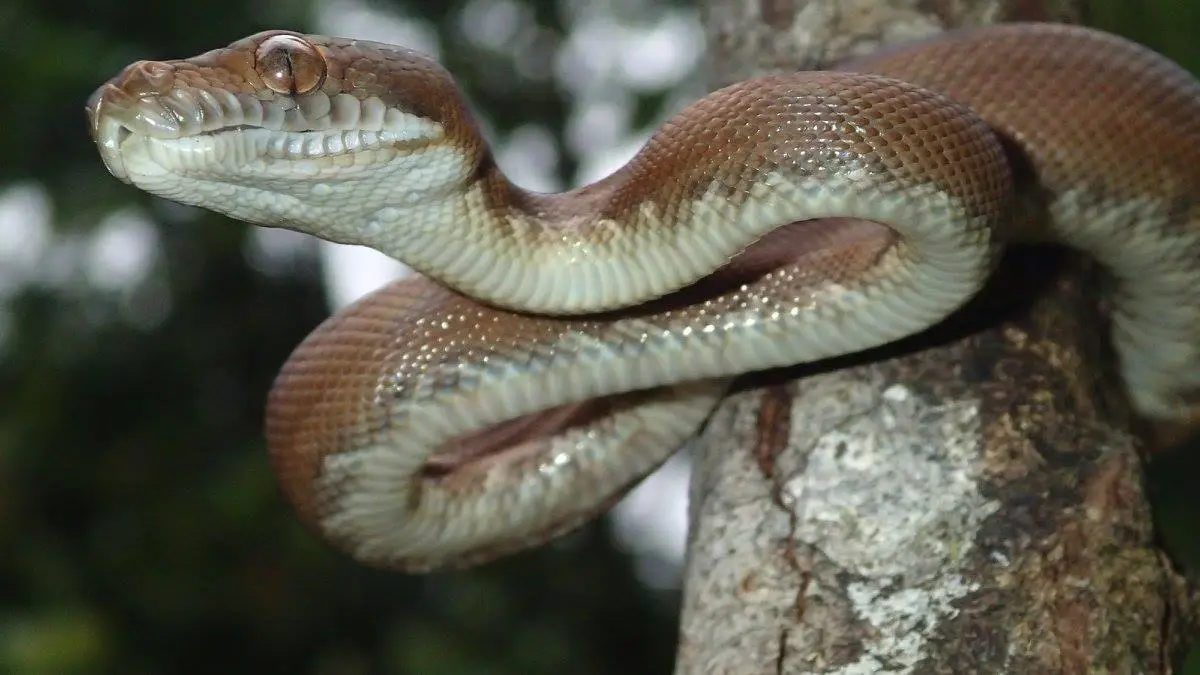
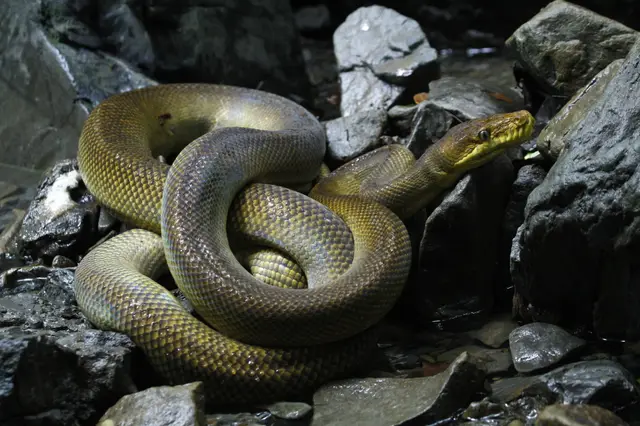
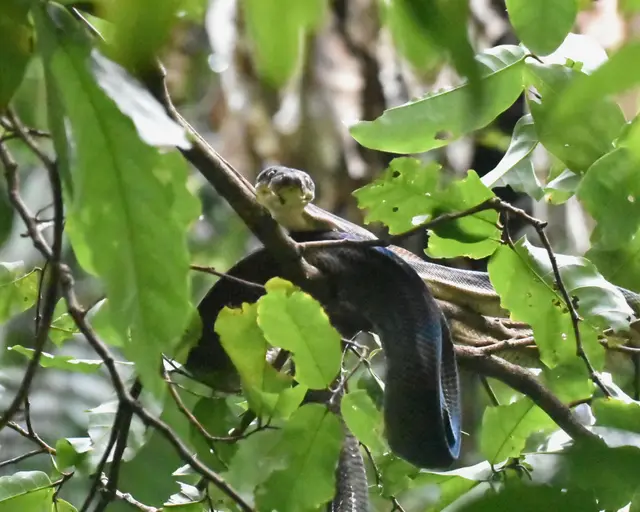
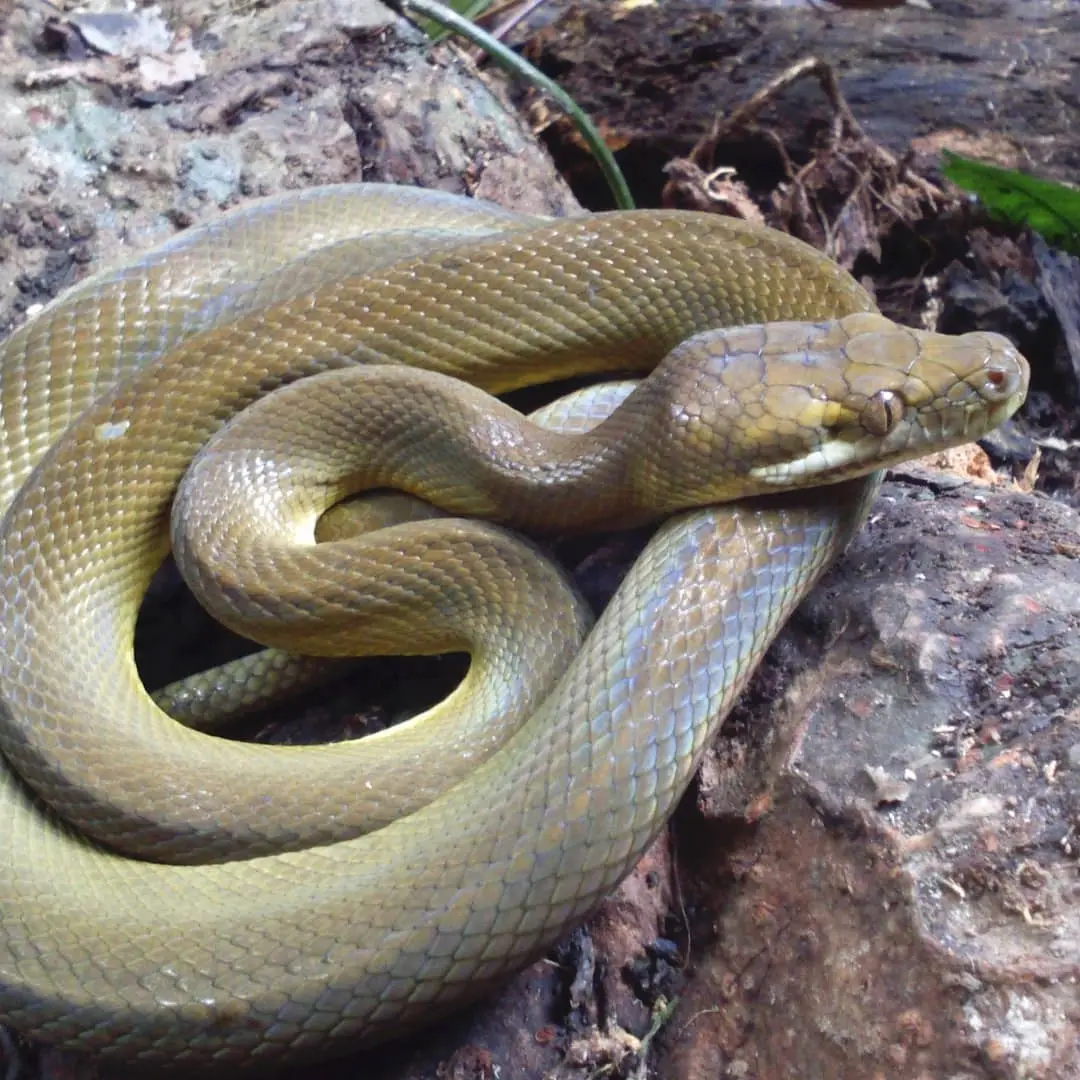
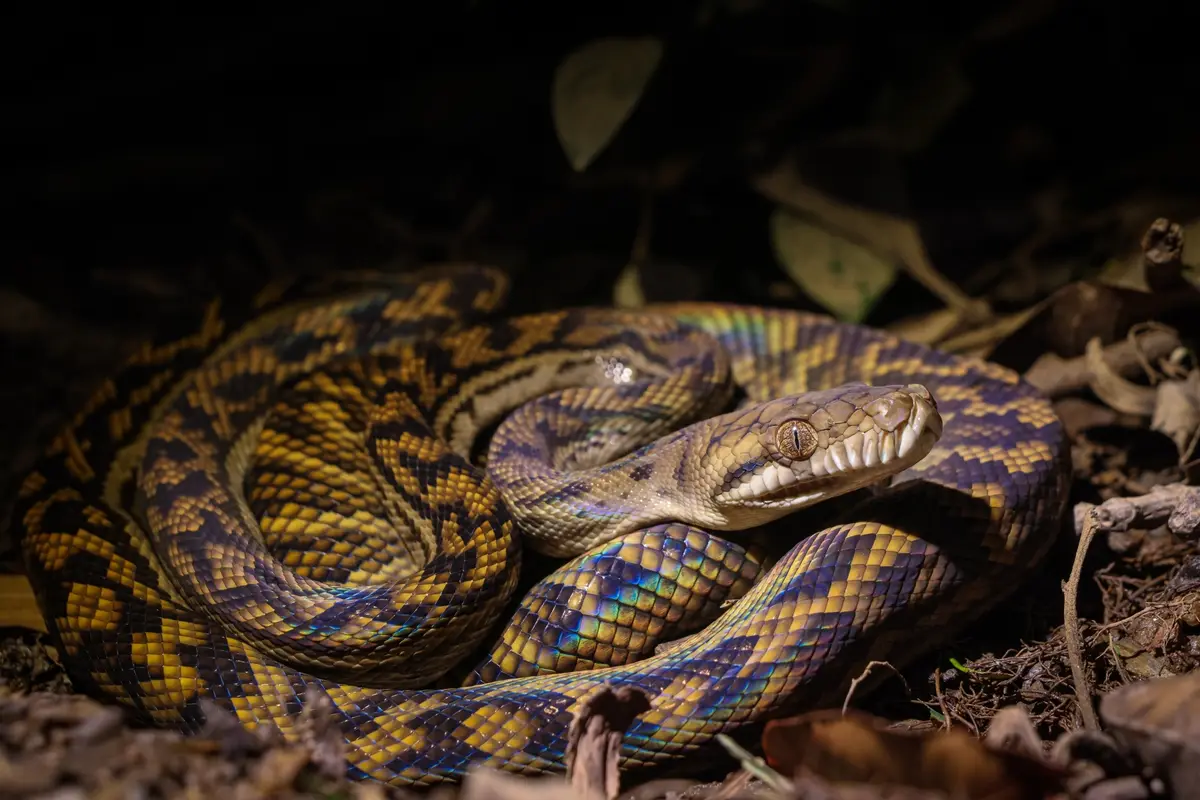
A Moluccan python is a big, solid scrub python that looks almost plain. That is the main clue. Other scrub pythons carry obvious bands, blotches or spots, but the diagnosis in the Reptile Database, taken from the original 2000 description, says the adult back is nearly uniform. Adults come in two broad looks: gray with black eyes, or brown with bronze eyes. In German it is called Goldpython, and some English sources call it the yellow python.
- 1Nearly plain back: adults show little or no pattern on the front half of the body. Narrow, faint bands appear only on the rear third to half of the body and on the tail.
- 2Gray or bronze eyes: the iris is gray, black or bronze, never red. A red eye with broad bands points to the Halmahera python instead.
- 3No neck bars or eye stripe: neck bars are missing at every age. The dark stripe behind the eye that other scrub pythons have shows only in newborn Moluccan pythons and is gone in adults.
- 4Heavy body, rounded snout: it is a robust snake with a rounded snout, unlike the slim, pointed-snouted Tanimbar python of the islands to the southeast.
- 5Broken-up head scales: for anyone with a specimen in hand: two or three pairs of enlarged scales on top of the head, extra small scales around the eye, and small scales below the eye (suboculars). No other member of the genus has suboculars. The name clastolepis means 'broken scale' in Greek and refers to this fractured head scaling.
How big do Moluccan pythons get?
Moluccan pythons grow to about 12.5 ft (3.8 m) and 18.7 lb (8.5 kg), the maximum figures given in the diagnosis by Harvey and colleagues (2000). Many adults are smaller, and general references such as Wikipedia give 8-9 ft (2.4-2.7 m). That puts the species in the same size class as the Halmahera python and the Australian scrub python, and far short of the reticulated python that shares its islands.
| Measure | Figure | Source |
|---|---|---|
| Maximum length | About 12.5 ft (3.8 m) | Harvey et al. (2000), via Reptile Database |
| Maximum weight | About 18.7 lb (8.5 kg) | Harvey et al. (2000), via Reptile Database |
| Build | Robust, with a rounded snout | Reptile Database |
No record-length wild specimen has been published, and no study has measured a wild population, so the range of normal adult sizes is not well known.
Where do Moluccan pythons live?
Short answer: on Seram and Ambon in Maluku province, Indonesia, and probably on the small neighboring islands of Haruku and Saparua. That is the range given by the Reptile Database. The type locality, the place the first described specimen came from, is Ambon, according to the annotated checklist of pythons by Schleip and O'Shea (2010). The holotype is an adult female held at the University of Texas at Arlington (UTA 44486).
Seram is the large island; Ambon, Haruku and Saparua are small islands just to its south and southwest. All sit in Wallacea, the island zone between Asia and Australia. Older books list these pythons as amethystine pythons: Rooij (1917) and McDowell (1975) both used Python amethistinus for them. Records of scrub pythons from Seram and Ambon now belong to Simalia clastolepis. To see how its range compares with other species, open the world snake map.
Habitat
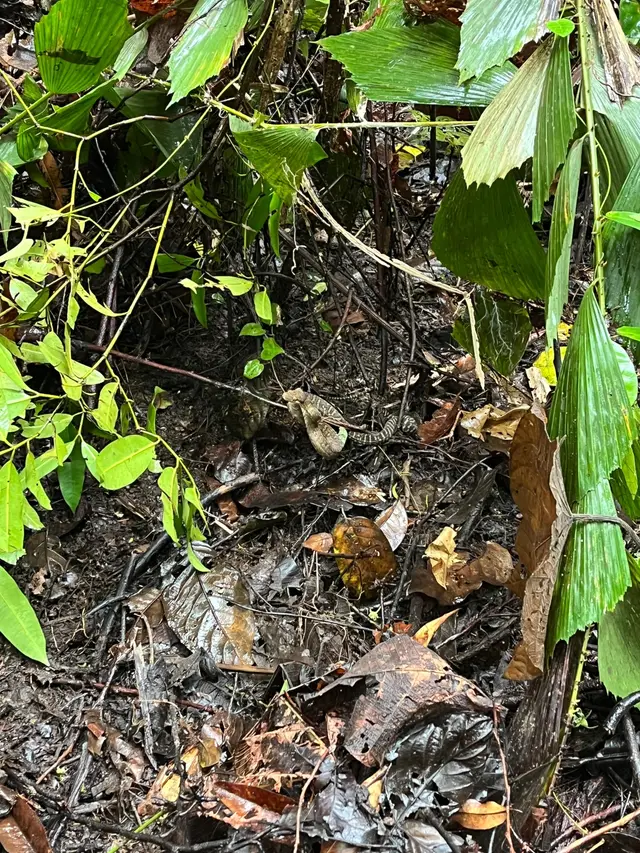
Moluccan pythons live in the forests of Seram and Ambon. A 2018 global review of tree-dwelling snakes by Harrington and colleagues in the Biological Journal of the Linnean Society classes the species as semi-arboreal, meaning it uses both the ground and the trees. No field study has described its habitat in more detail, such as how high it climbs or whether it enters farmland and villages.
Behavior
Almost nothing has been published on how wild Moluccan pythons behave. There are no radio-tracking studies, no population counts and no published records of daily or seasonal activity. Most knowledge of the species comes from museum specimens, from the snakes examined for the 2000 description and from captive animals.
Scrub pythons as a group are known for biting readily when picked up, and an adult of 10 ft or more has a mouthful of long, sharp teeth. Treat a wild one as you would any large snake: watch from a distance and leave it alone.
What do Moluccan pythons eat?
No one has published a study of what wild Moluccan pythons eat. Their close relatives give a fair guide. Scrub pythons in general feed on birds and mammals, and the related Halmahera python is reported to take fruit bats and village chickens. A python this size can handle prey up to about the size of a chicken or a large rat, killed by constriction and swallowed whole.
| Prey | Evidence |
|---|---|
| Small mammals | Presumed from related scrub pythons |
| Bats | Presumed; fruit bats are the main reported prey of the Halmahera python |
| Birds | Presumed from related scrub pythons |
| Domestic poultry | Not documented for this species |
Is the Moluccan python venomous?
No. The Moluccan python has no venom. Like all pythons, it kills by wrapping around its prey and squeezing. A snake that tops out near 12.5 ft and 18.7 lb is no threat to an adult person who leaves it alone.
A bite still hurts. Python teeth are sharp and curve backward, and a large scrub python can leave several rows of bleeding punctures. Wash any python bite well with soap and water and check that your tetanus shots are up to date. See a doctor if the wound turns red, hot or swollen, or if a tooth may be stuck in it.
On Seram and Ambon, a big plain brown snake could also be a reticulated python, which grows much larger. Color is a poor guide to danger. If you are unsure what a snake is, give it space. The SnakesWiki snake venom FAQ covers the basics.
Moluccan python vs amethystine python and other look-alikes
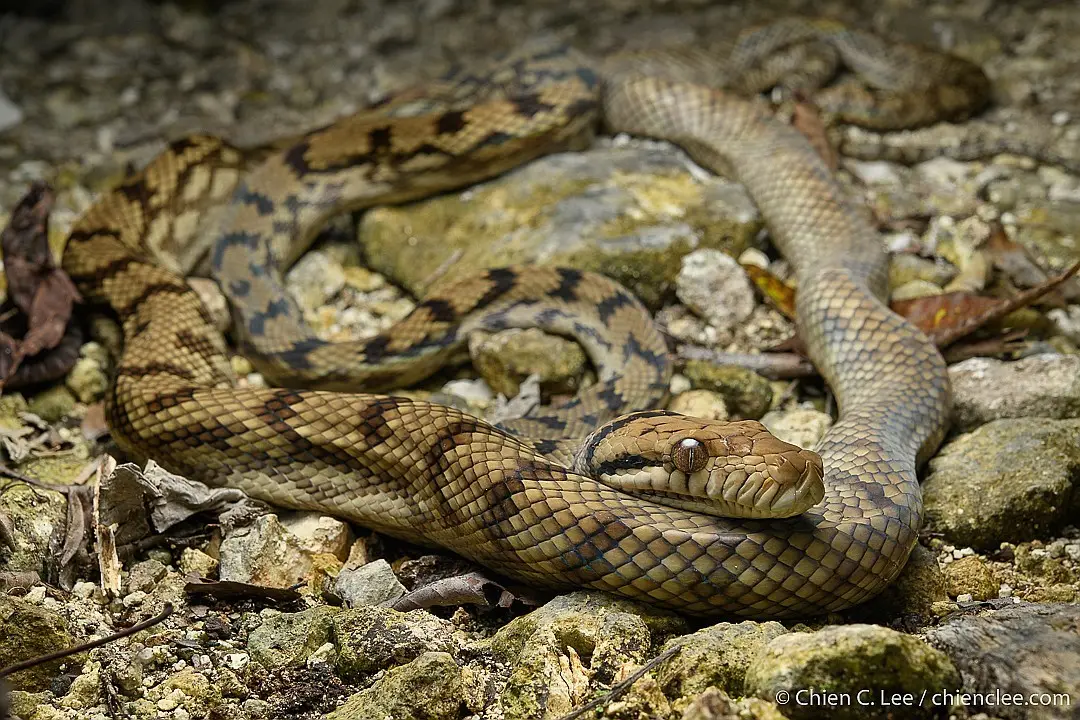
Amethystine python
Simalia amethistina · Harmless
The species it was lumped with before 2000. The amethystine python lives on New Guinea and nearby islands, not on Seram or Ambon, and its back has a clear pattern of dark bands or blotches. A nearly plain scrub python from Seram or Ambon is S. clastolepis.
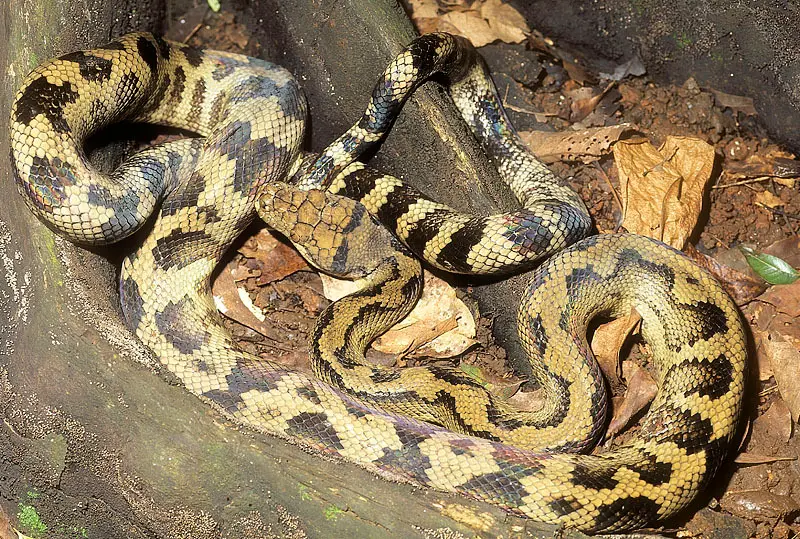
Halmahera python
Simalia tracyae · Harmless
Named in the same 2000 paper, from Halmahera to the north. The Halmahera python has a red iris and broad dark bands along the whole body, and it has neck bars. The Moluccan python has gray or bronze eyes and only faint bands near the tail.
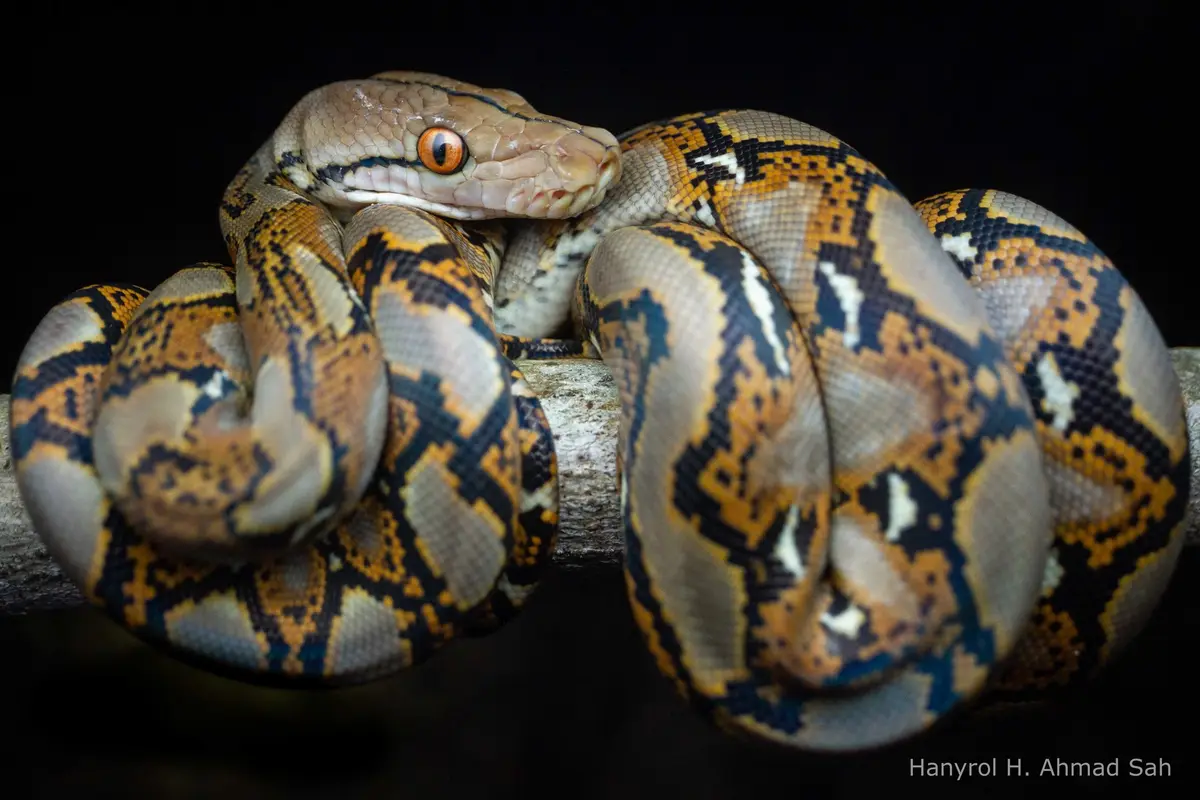
Reticulated python
Malayopython reticulatus · Harmless, but very large
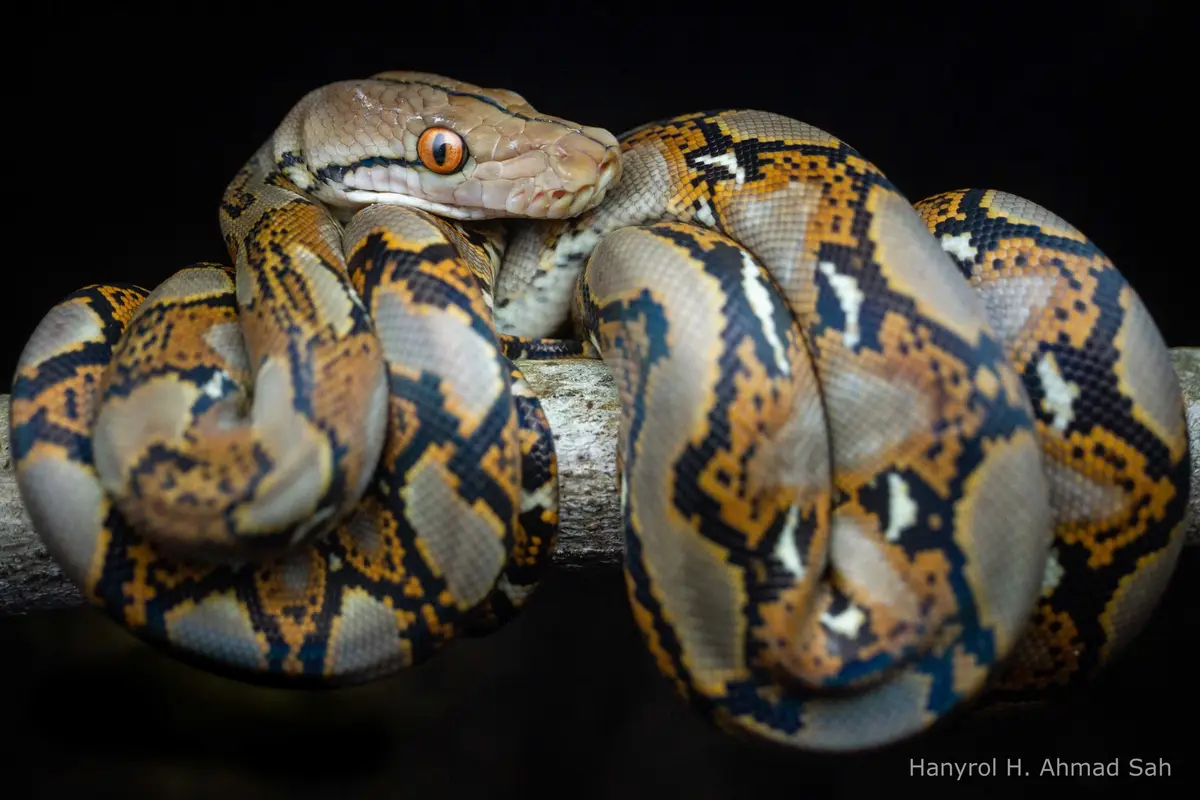
Lives on the same islands: the Reptile Database lists Ambon, Seram, Haruku and Saparua in its range. The reticulated python has a bold net of black lines, gold patches and pale diamonds and grows far longer. A big snake with a busy pattern is not a Moluccan python.
Tanimbar python
Simalia nauta · Harmless
A scrub python from the Tanimbar Islands to the southeast. The Reptile Database entry for Simalia nauta describes it as slender and medium-sized, with a pointed snout and, in patterned snakes, rows of cream spots on the flanks.
Reproduction
Moluccan pythons lay eggs, as every python does. Wild clutch size, breeding season and incubation time have not been published. Young snakes differ from adults: the Reptile Database diagnosis notes a diffuse pattern in juveniles and a dark stripe behind the eye in newborns, both of which fade as the snake grows.
In the related Australian scrub python, the female coils around her clutch until the eggs hatch. Whether Moluccan pythons do the same in the wild has not been recorded.
Is the Moluccan python endangered?
Not quite. The IUCN Red List rates the Moluccan python Near Threatened, one step below Vulnerable. Its whole range is a handful of islands, so forest clearing or heavy collecting on Seram and Ambon would affect the entire species. All pythons are listed in CITES Appendix II, which means international trade needs export permits.
| Authority | Status |
|---|---|
| IUCN Red List | Near Threatened |
| CITES | Appendix II (all Pythonidae) |
A species named in 2000
Michael Harvey, David Barker, Loren Ammerman and Paul Chippindale described the Moluccan python in their 2000 revision of the scrub pythons in Herpetological Monographs. According to the East Tennessee State University record of the paper, they studied museum specimens and new material from eastern Indonesia, raised two forms to full species and named three new ones, including this snake and the Halmahera python. A 2014 DNA study by Reynolds, Niemiller and Revell supported it as a distinct species and moved the scrub pythons from Morelia to Simalia. Raymond Hoser's name Australiasis clastolepis (2004) is not accepted; Schleip and O'Shea treat it as unavailable.
Moluccan python FAQ
Is the Moluccan python venomous?
No. The Moluccan python has no venom and kills its prey by constriction. It is not dangerous to people who leave it alone. A large adult can still give a painful bite with many sharp teeth, so clean any bite with soap and water, keep your tetanus protection current and see a doctor if the wound looks infected.
How big do Moluccan pythons get?
Moluccan pythons reach about 12.5 feet (3.8 m) and 18.7 pounds (8.5 kg), the maximum given in the 2000 species description by Harvey and colleagues. Many adults are smaller, around 8-9 feet. They are heavy-bodied snakes with a rounded snout.
Where is the Moluccan python found?
The Moluccan python lives on Seram and Ambon in Maluku province, eastern Indonesia, and probably on the nearby small islands of Haruku and Saparua. The first described specimen came from Ambon. It lives in forest and uses both the ground and the trees.
What does a Moluccan python look like?
Adults are almost patternless. They are gray with black eyes or brown with bronze eyes, with narrow, faint bands only on the rear part of the body and the tail. They have no neck bars, and adults lack the dark stripe behind the eye that other scrub pythons have.
Is the Moluccan python the same as the amethystine python?
No. Moluccan pythons were filed under the amethystine python until 2000, when Harvey and colleagues described them as a separate species, Morelia clastolepis, now Simalia clastolepis. A 2014 DNA study supported the split. The amethystine python lives on New Guinea and nearby islands and has a clear banded or blotched pattern.
Is the Moluccan python endangered?
No, but it is close. The IUCN Red List rates the Moluccan python Near Threatened, one category below Vulnerable. It lives on only a few islands, so habitat loss or heavy collecting there could affect the whole species. Like all pythons, it is listed in CITES Appendix II, so international trade requires permits.
Related snakes
Sources
- Reptile Database: Simalia clastolepis (Harvey, Barker, Ammerman & Chippindale, 2000)
- Harvey, Barker, Ammerman and Chippindale (2000). Systematics of pythons of the Morelia amethistina complex (Serpentes: Boidae) with the description of three new species. Herpetological Monographs 14: 139-185
- Schleip and O'Shea (2010). Annotated checklist of the recent and extinct pythons (Serpentes, Pythonidae). ZooKeys 66: 29-79
- IUCN Red List: Simalia clastolepis (Near Threatened)
- Reptile Database: Malayopython reticulatus (distribution including Ambon and Seram)
- Reptile Database: Simalia nauta (Tanimbar python)
- iNaturalist: Moluccan python (Simalia clastolepis)