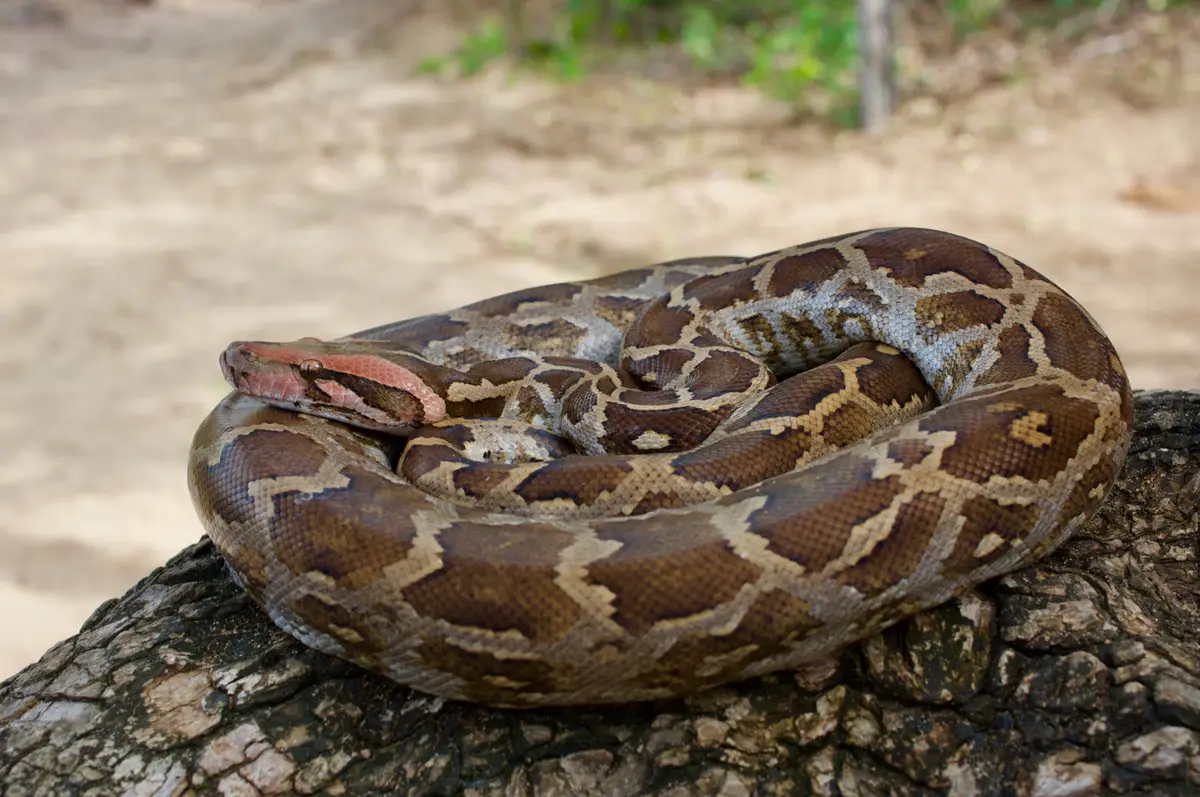
INDIANPYTHON
Python molurus · Family Pythonidae
KEY TAKEAWAYS
The Indian python (Python molurus), also called the Indian rock python, is a large, non-venomous python of the Indian subcontinent. It kills prey by constriction. It can bite if handled, but it has no venom and is not a danger to people who leave it alone.
- It has no venom. A bite needs cleaning and a tetanus check, not antivenom.
- Most adults are about 8-10 ft (2.4-3 m) long. The largest measured specimen in the scientific record, from Pakistan, was about 15 ft (4.6 m) and 115 lb (52 kg).
- It lives across most of India and into Pakistan, southern Nepal and Bangladesh, usually near water.
- The IUCN rates it Near Threatened (2021), and India protects it under Schedule I of the Wild Life (Protection) Act, the same schedule as the tiger.
Indian python quick facts
| Common name | Indian python, Indian rock python |
|---|---|
| Scientific name | Python molurus (Linnaeus, 1758); the type species of the genus Python |
| Family | Pythonidae (pythons) |
| Venomous | No, a constrictor |
| Adult length | Usually about 8-10 ft (2.4-3 m); largest measured specimen about 15 ft (4.6 m) |
| Weight | Record specimen about 115 lb (52 kg) |
| Range | India, southeastern Pakistan, southern Nepal and Bangladesh; Sri Lanka is usually included |
| Habitat | Grassland, marsh, scrub, open forest, rocky foothills and river valleys, nearly always near water |
| Diet | Mainly mammals such as chital deer and rats; also birds and reptiles |
| Reproduction | Lays eggs; clutches average about 40 and can reach about 100; the female broods them |
| Conservation | IUCN Near Threatened (2021); CITES Appendix I; Schedule I in India |
How to identify an Indian python
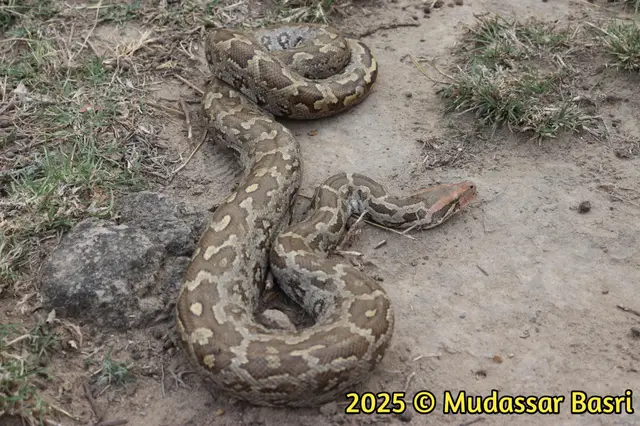
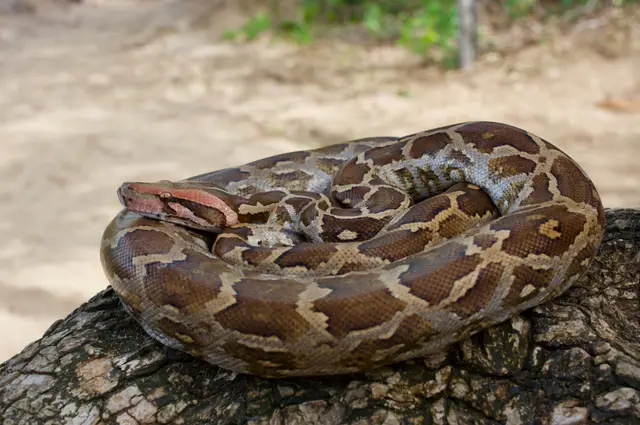
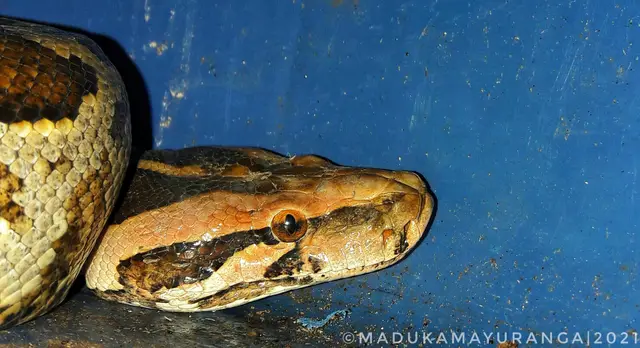
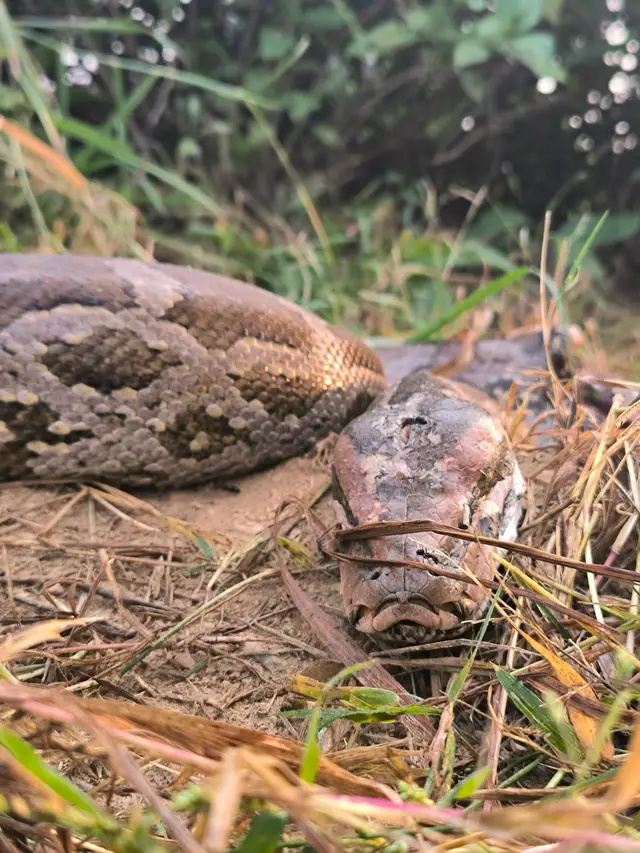
An Indian python is a heavy, pale snake with a chain of dark blotches down its back. Animal Diversity Web describes light brown and tan patches on a cream background, with only a partial arrow mark on the head. Snakes from hill forests in the Western Ghats and Assam tend to be darker, and those from the Deccan plateau and Eastern Ghats lighter, according to Romulus Whitaker's field guide to Indian snakes.
- 1Pale body, dark blotches: the ground color is whitish, yellowish or light tan, with large brown blotches edged in black running along the back and sides.
- 2Pale centers in the side spots: many of the blotches on the flanks have a light center, like an eye, which the Burmese python usually lacks.
- 3Blurred arrow on the head: a pale lance or arrow shape on top of the head is faint and broken toward the front, with reddish or pinkish stripes along the sides of the head.
- 4Lip pits and a wide head: the head is broad and clearly set off from the neck, with heat-sensing pits along the lips.
- 5A lip scale touches the eye: seen up close, the sixth upper lip scale reaches the eye. In the Burmese python a small subocular scale sits between them.
Females are longer and heavier than males, and males have larger spurs beside the vent, the last traces of hind legs.
How big do Indian pythons get?
Most adult Indian pythons are about 8-10 ft (2.4-3 m) long, and the largest measured specimen on record was about 15 ft (4.6 m) and 115 lb (52 kg). That snake came from Pakistan and was reported by herpetologist Sherman Minton in his 1966 survey of the reptiles of West Pakistan, where he found typical adults of 7.9-9.8 ft (2.4-3 m).
| Measure | Size | Source |
|---|---|---|
| Typical adult length | About 10 ft (3 m) | Wall (1912); Whitaker (2006) |
| Adults in Keoladeo National Park | A quarter measured 8.9-10.8 ft (2.7-3.3 m); two neared 11.8 ft (3.6 m) | Bhupathy (1990) |
| Largest measured specimen | About 15 ft (4.6 m) and 115 lb (52 kg), Pakistan | Minton (1966) |
| Hatchlings | About 18-24 in (45-60 cm) | Mehrtens (1987) |
Some popular sources give far bigger numbers. Animal Diversity Web lists 21 ft (6.4 m) and 200 lb (91 kg) for the Indian form, and the herpetologist Mark O'Shea writes that both Indian and Burmese pythons may exceed 23 ft (7 m), though snakes over 20 ft (6 m) are probably very rare today. None of these figures is tied to a measured, published specimen, so treat them with caution. Next to the reticulated python, the Indian python is a mid-sized giant.
Where do Indian pythons live?
Short answer: across most of the Indian subcontinent south of the Himalayas, in India, southeastern Pakistan, southern Nepal and Bangladesh. The Reptile Database lists those countries and gives the type locality simply as India.
The edges of the range are less settled. Animal Diversity Web and Whitaker and Captain's Snakes of India include Sri Lanka, and a Sri Lankan form was named Python molurus pimbura in 1945, but the Reptile Database comments that the species is not found in Sri Lanka or Bhutan. In Pakistan, the snake is now mostly confined to southern Sindh and the Indus Valley, where farmland has replaced much of its habitat, according to a 2012 study in the Pakistan Journal of Zoology by Goursi and colleagues.
To the east it meets the Burmese python, which ranges from northeastern India and Bangladesh across Southeast Asia. Mark O'Shea found Burmese pythons in Bardia National Park in far western Nepal in 1991, about 435 miles (700 km) west of their known limit, so the two species overlap more than older maps show. See where other pythons live on the world snake map.
Habitat
Indian pythons live in grassland, swamp, marsh, scrub, open forest, rocky foothills and river valleys, and they almost always stay close to water. They shelter in old mammal burrows, hollow trees, dense reed beds and mangroves. O'Shea notes that, at least in the north of the range, Indian pythons favor drier, sandier ground than the Burmese python.
Burrows matter a great deal. In Deva Vatala National Park in Pakistan-administered Kashmir, Goursi and colleagues found that about 91% of the dens used by pythons were holes dug by other animals, and the rest were rock crevices and man-made caves.
Behavior
Indian pythons are slow and mostly sit-and-wait hunters. They live alone, spend most of their time on the ground, climb trees now and then, and swim well; Animal Diversity Web says they can stay under water for up to 30 minutes.
Cold weather slows them down. Animal Diversity Web says they go through a short dormant period in the cool months, roughly October to February. In Keoladeo National Park in Rajasthan, Bhupathy, Ramesh and Bahuguna (2014, Herpetological Journal) found that pythons fed in every month except December to February, and that feeding tracked minimum temperature and rainfall, not the amount of prey around.
What do Indian pythons eat?
Indian pythons eat mostly mammals. In Keoladeo, analysis of droppings found 23 kinds of vertebrate prey, 79% of them mammals, 17% birds and 4% reptiles, as summarized by Vadher, Vaghashiya and Vyas (2023, Reptiles & Amphibians). Chital, or spotted deer, made up 44% of the feeding records in the Keoladeo study.
| Prey | Examples | Source |
|---|---|---|
| Large mammals | Chital, sambar, nilgai, wild boar, striped hyena | Bhupathy et al. (2014) |
| Small and medium mammals | Field rats, jungle cat, small Indian civet, mongoose, porcupine | Bhupathy et al. (2014) |
| Birds | Comb duck, grey heron, greater coucal, grey francolin, mottled wood owl | Bhupathy et al. (2014); Vadher et al. (2023) |
| Livestock | Goats, calves and poultry where wild prey is scarce | Goursi et al. (2012) |
They hunt mainly by ambush and kill by constriction. One python in Girnar Wildlife Sanctuary, Gujarat, was seen in April 2022 hanging from a banyan branch with a mottled wood owl it had caught by the legs; it swallowed the owl in about 30 minutes while a second owl attacked it. Where natural prey has declined, pythons turn to livestock. Villagers in Deva Vatala reported 91 python attacks on livestock from 2005 to 2009, with 74 animals killed.
Is the Indian python venomous or dangerous?
No. The Indian python has no venom. It kills by coiling around prey and squeezing, and it swallows food whole. The 2023 Reptiles & Amphibians note calls it a giant, nocturnal, non-venomous snake.
Size is the only real risk. A 10 ft (3 m) snake that can swallow a deer is strong enough to injure a person who grabs or restrains it, and its many curved teeth can tear skin. Most bites happen when people try to catch or move one. If bitten, wash the wound with soap and water, keep your tetanus protection up to date and see a doctor if it is deep or turns red and swollen. Antivenom does nothing for a python bite.
The bigger danger in the same places is a misidentified viper. If you are not sure what a snake is, keep back and call the local forest department or a licensed rescuer. Our snake venom FAQ explains why pattern and color are poor guides to danger.
Indian python vs Burmese python and other look-alikes
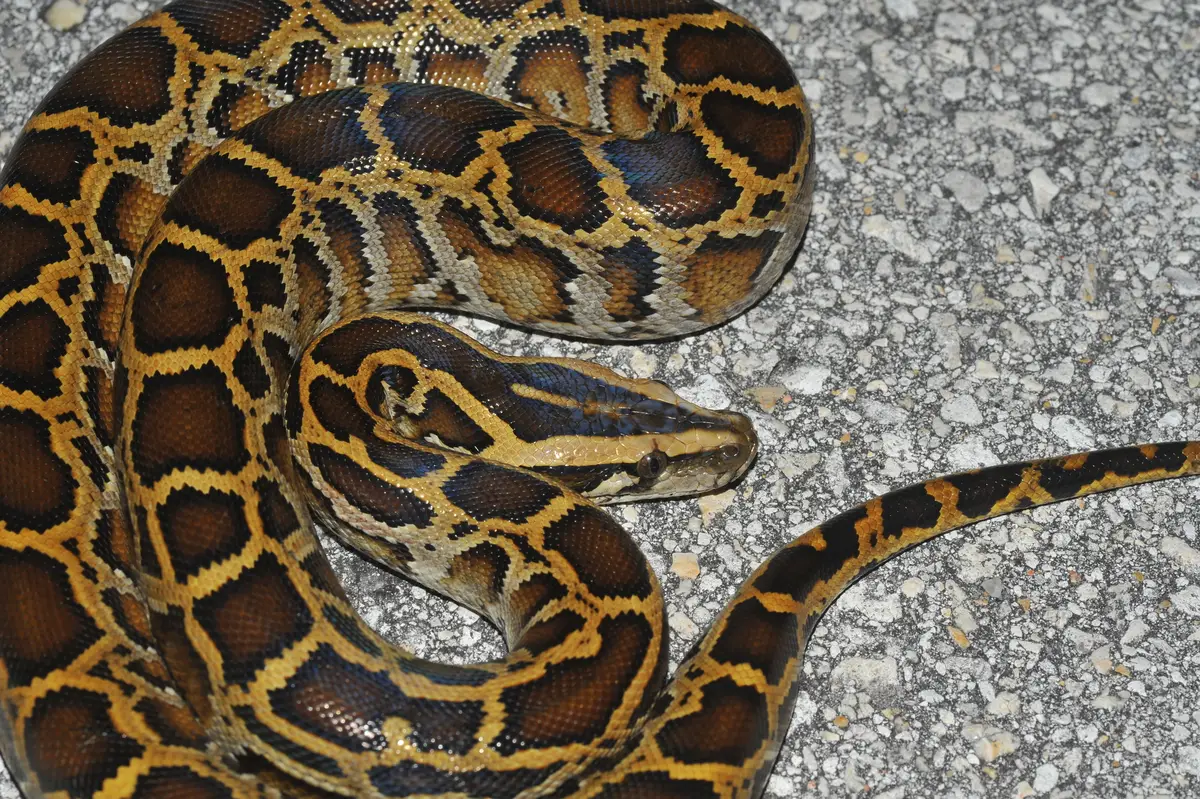 Photo: (c) Wayne Fidler, some rights reserved (CC BY-NC), uploaded by Wayne Fidler · via iNaturalist
Burmese python
Python bivittatus · Harmless
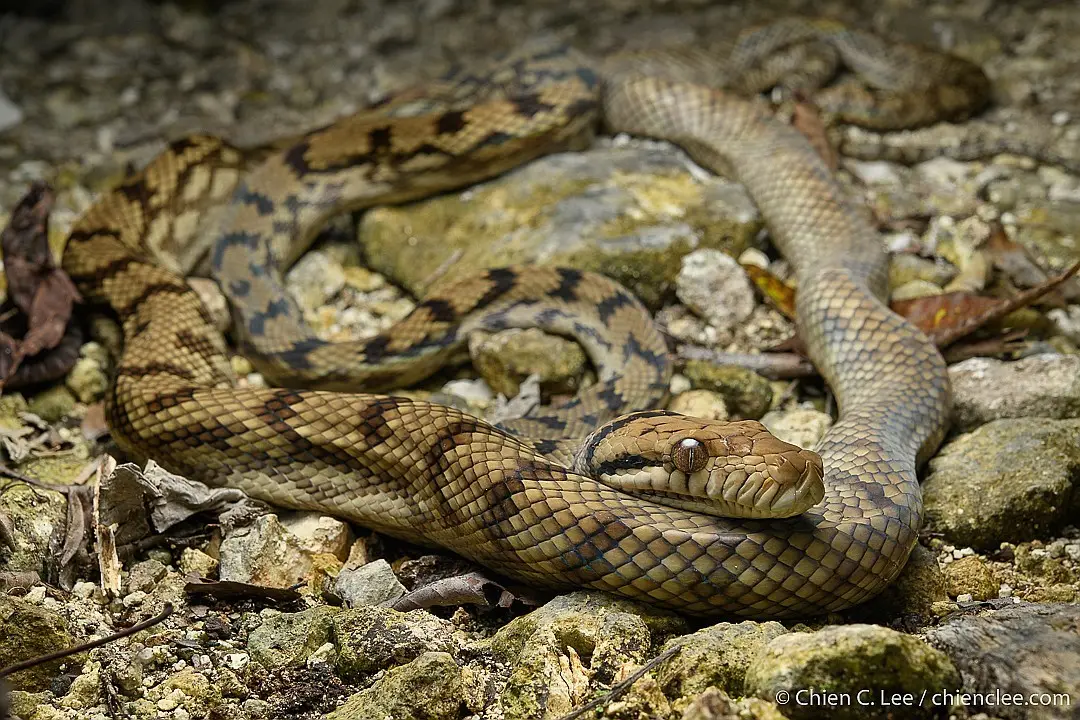
Treated as a subspecies of the Indian python until it was raised to a full species in 2009. The Burmese python is darker and grayer, with a sharp, complete arrow on the head and no pale centers in its side blotches. The surest check is the small subocular scale between the lip scales and the eye, which the Indian python lacks.
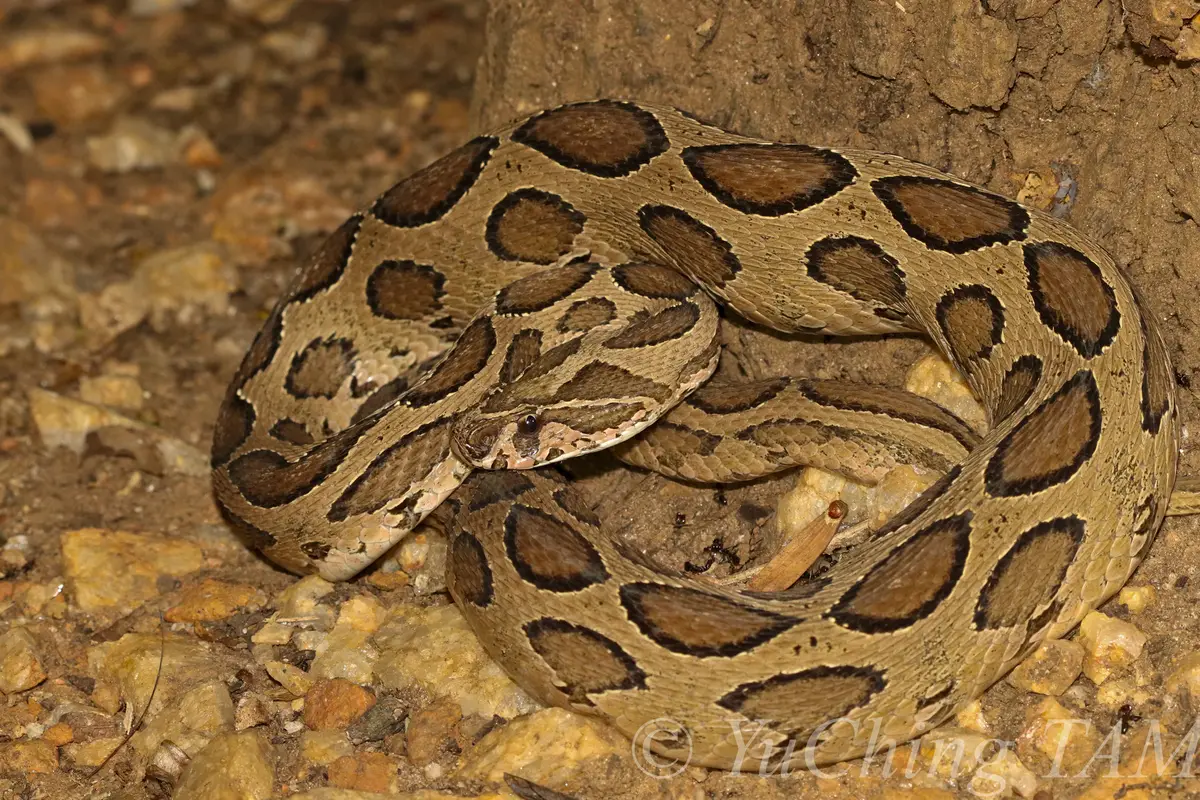
Russell's viper
Daboia russelii · Venomous
Shares much of the same range and also has a chain of dark, black-edged spots, which is why young pythons get killed by mistake. The Reptile Database describes three rows of brown spots on a light brown body and a length of up to about 5 ft (1.6 m). It has a large triangular head clearly wider than its neck and a short, thin tail. Its bite is a medical emergency.
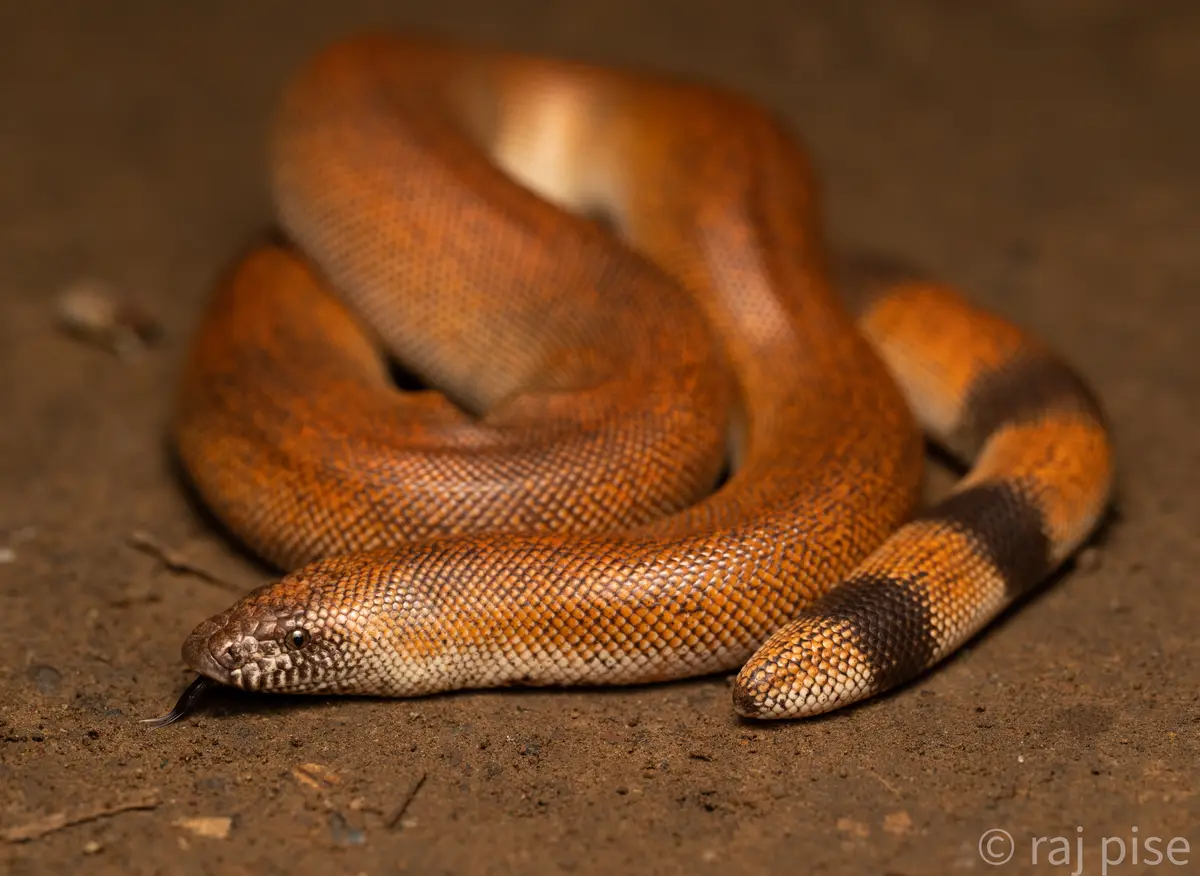
Red sand boa
Eryx johnii · Harmless
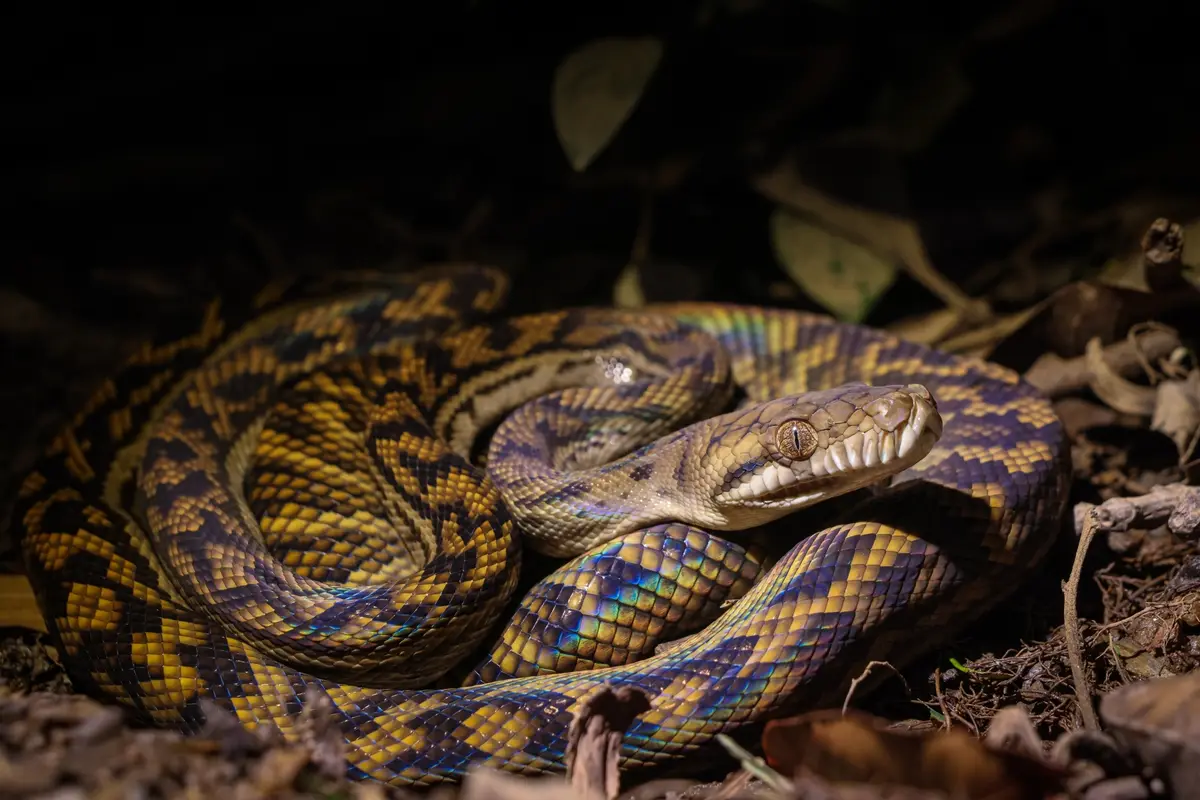
A thick, short burrowing snake of the same dry country. The red sand boa, one of India's sand boas, is plain reddish brown without blotches and has a blunt tail that looks like a second head. It is much smaller than an adult python.
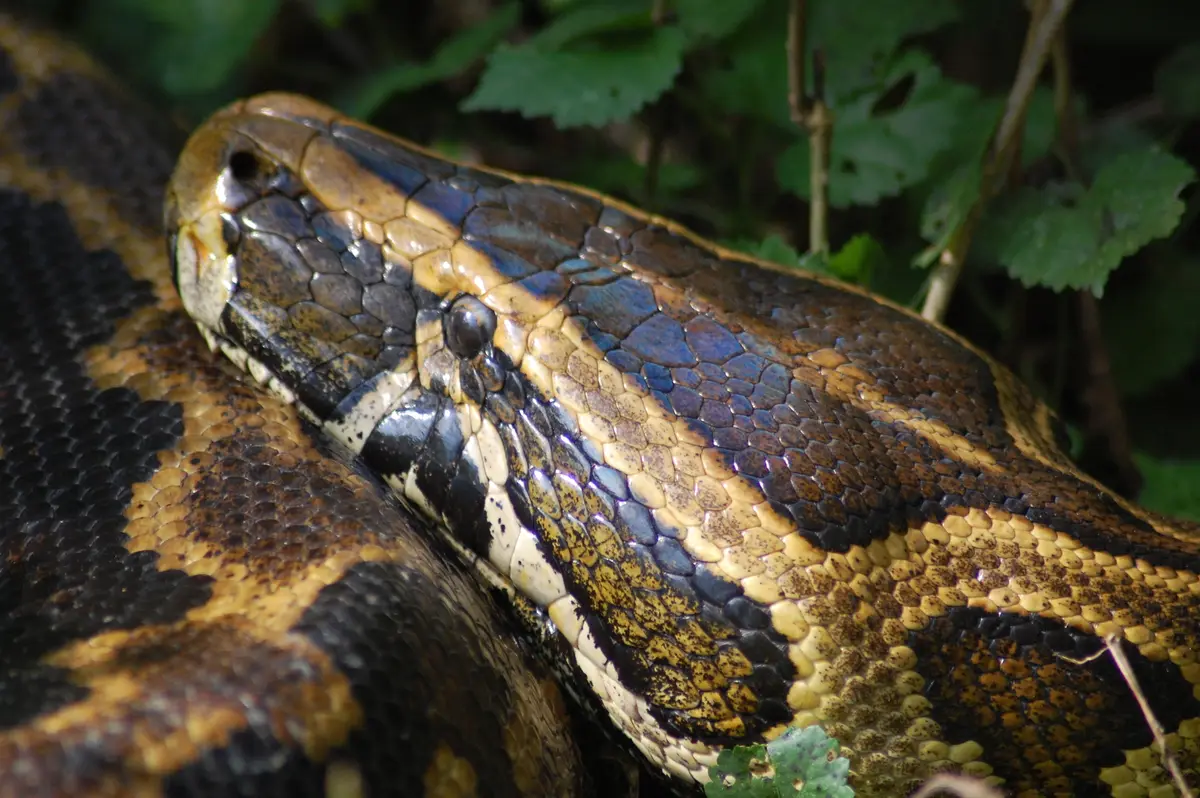
African rock python
Python sebae · Harmless
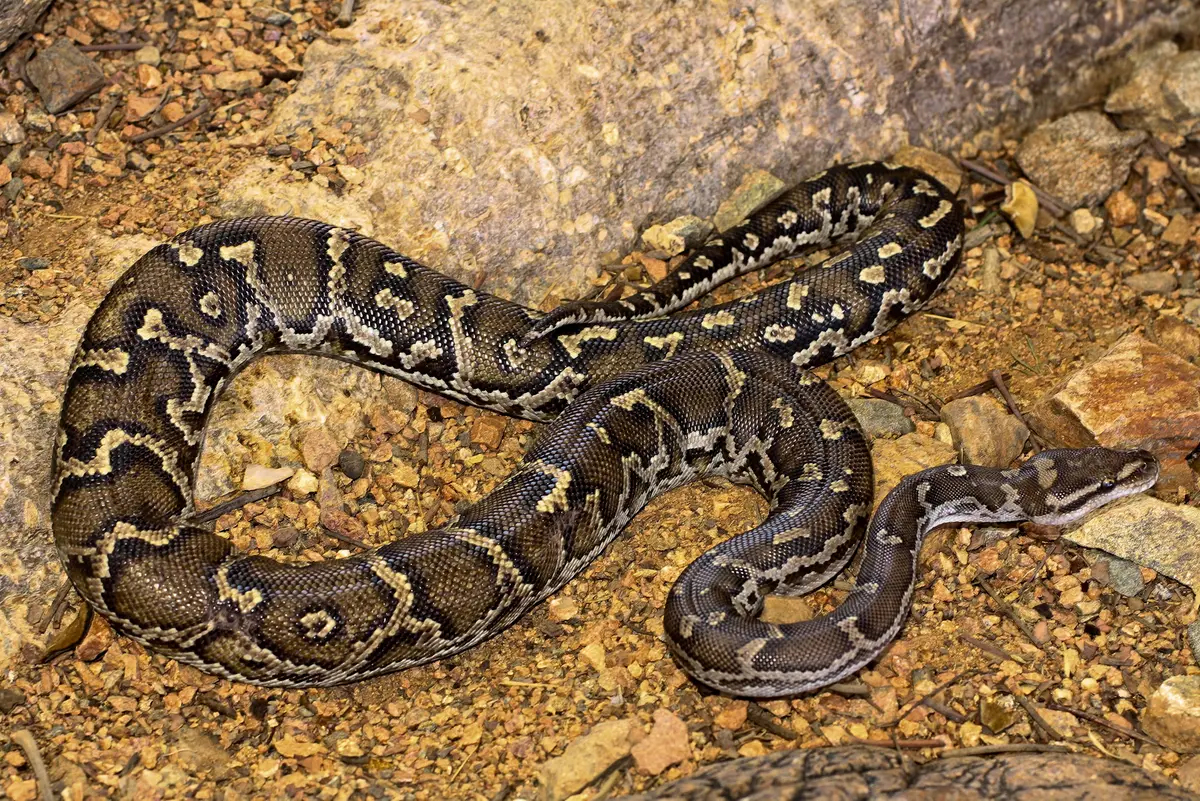
Lives only in Africa, so it is a look-alike in zoos and the pet trade, not in the wild. The African rock python is browner, with a dark spearhead mark on the head and a more broken, wavy pattern.
Reproduction and lifespan
Indian pythons lay eggs, and the mother guards and warms them. Animal Diversity Web gives an average clutch of about 40 eggs and up to 100, laid three to four months after mating. Incubation takes two to three months. The female coils around the clutch and shivers her muscles to raise its temperature, which Hutchison, Dowling and Vinegar first measured in a brooding Indian python in 1966 (Science 151: 694-695).
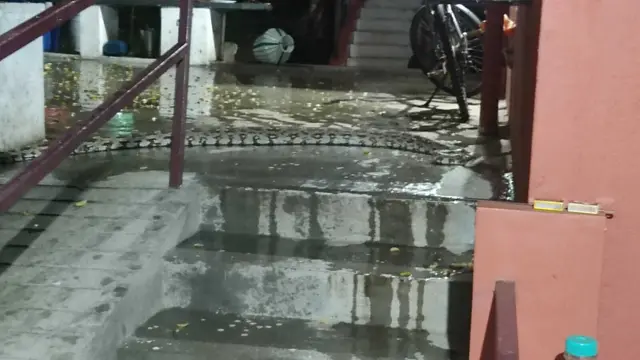
The young get no care once they hatch. In Kerala in 2022, work on a new highway in Kasaragod district stopped for 54 days after a python was found brooding 24 eggs in a hole on the site; once the eggs began to hatch, a snake catcher moved them with official permission and all 24 hatched, Gulf News reported.
Indian pythons can mature at two to three years old if they grow fast enough, and captive snakes have lived an average of about 15.8 years, according to Animal Diversity Web. Wild lifespans are not well known.
Is the Indian python endangered?
It is not endangered, but it is declining. The IUCN Red List rates the Indian python Near Threatened in a 2021 assessment by Aengals and colleagues, which estimated a population drop of about 30% from 2010 to 2020 due to habitat loss, over-collection and a lack of conservation action.
| Authority | Status |
|---|---|
| IUCN Red List | Near Threatened (2021) |
| CITES | Appendix I (listed as Python molurus molurus): commercial international trade banned |
| India | Schedule I, Wild Life (Protection) Act, 1972 |
| United States | Injurious wildlife under the Lacey Act since 2012: import and interstate transport need a permit |
Pythons are killed for their skins and meat, and out of fear. In Pakistan, Goursi and colleagues listed forest cutting, overgrazing, fuelwood collection and illegal trade as the main threats, and found that livestock losses had turned local people against the snake.
The species also matters in Florida. The US Fish and Wildlife Service's 2012 rule listed Python molurus, covering both the Indian and Burmese pythons, as injurious after Burmese pythons spread through the Everglades. A genetic study of 426 Everglades pythons by Hunter and colleagues (2018, Ecology and Evolution) found mitochondrial DNA matching the Indian python in some of them, a sign that the two species had hybridized, probably before the snakes reached Florida.
Indian python FAQ
Is the Indian python venomous?
No. The Indian python has no venom and kills prey by constriction. It can still give a painful bite with its curved teeth, usually when someone tries to catch it. Clean any bite with soap and water, check that your tetanus protection is current and see a doctor if the wound gets infected. Antivenom is not used for python bites.
How big does an Indian python get?
Most adults are about 8-10 feet (2.4-3 m) long. The largest measured specimen in the scientific record was a snake from Pakistan of about 15 feet (4.6 m) and 115 pounds (52 kg), reported by Sherman Minton in 1966. Claims of 20 feet or more appear in popular sources but are not backed by a measured specimen.
What is the difference between an Indian python and a Burmese python?
They are separate species that were long treated as one. The Indian python is paler and more yellowish, with pale centers in its side blotches and a faint, broken head arrow. The Burmese python is darker and grayer with a full arrow. Up close, the Burmese python has a small scale between its lip scales and its eye that the Indian python lacks.
Where are Indian pythons found?
Indian pythons live across most of India south of the Himalayas, plus southeastern Pakistan, southern Nepal and Bangladesh. Sri Lanka is included by most field guides, though the Reptile Database disputes it. They prefer grassland, marsh, scrub and open forest near water, and often shelter in old animal burrows.
Is the Indian python endangered?
Not quite. The IUCN Red List rates the Indian python Near Threatened in its 2021 assessment, after an estimated 30% decline from 2010 to 2020. It is listed on CITES Appendix I, which bans commercial international trade, and on Schedule I of India's Wild Life (Protection) Act, the highest level of protection in Indian law.
Is it illegal to kill or keep an Indian python in India?
Yes. The Indian python is on Schedule I of India's Wild Life (Protection) Act, 1972, and Kerala forest officials have said pythons get the same protection as tigers. Catching, keeping, selling or killing one without permission is an offense. If a python turns up in a house or on a building site, call the forest department or a licensed rescuer.
Related snakes
Sources
- Reptile Database: Python molurus (Linnaeus, 1758)
- IUCN Red List: Python molurus, Near Threatened (Aengals et al. 2021)
- Animal Diversity Web (University of Michigan): Python molurus, Indian python
- Bhupathy, Ramesh and Bahuguna (2014). Feeding habits of Indian rock pythons in Keoladeo National Park, Bharatpur, India. Herpetological Journal 24: 59-64
- Goursi et al. (2012). Status and conservation of Indian rock python in Deva Vatala National Park, Azad Jammu and Kashmir, Pakistan. Pakistan Journal of Zoology 44: 1507-1514
- Vadher, Vaghashiya and Vyas (2023). Indian rock python preying on a mottled wood owl at Girnar Wildlife Sanctuary, Gujarat. Reptiles & Amphibians 30: e18740
- US Fish and Wildlife Service (2012). Listing three python species and one anaconda species as injurious reptiles. Federal Register 77: 3330
- Hunter et al. (2018). Cytonuclear discordance in the Florida Everglades invasive Burmese python population reveals possible hybridization with the Indian python. Ecology and Evolution 8: 9034-9047