 NON-VENOMOUS
SOUTH AMERICA
Anaconda: Facts, ID & Range
Eunectes
Anacondas are giant, non-venomous water boas from South America. The green anaconda is the heaviest snake on Earth.
Adult 10-17 ftRead guide →
Every species profile on SnakesWiki in one place. Search by common or scientific name, or narrow the list by continent and venom.
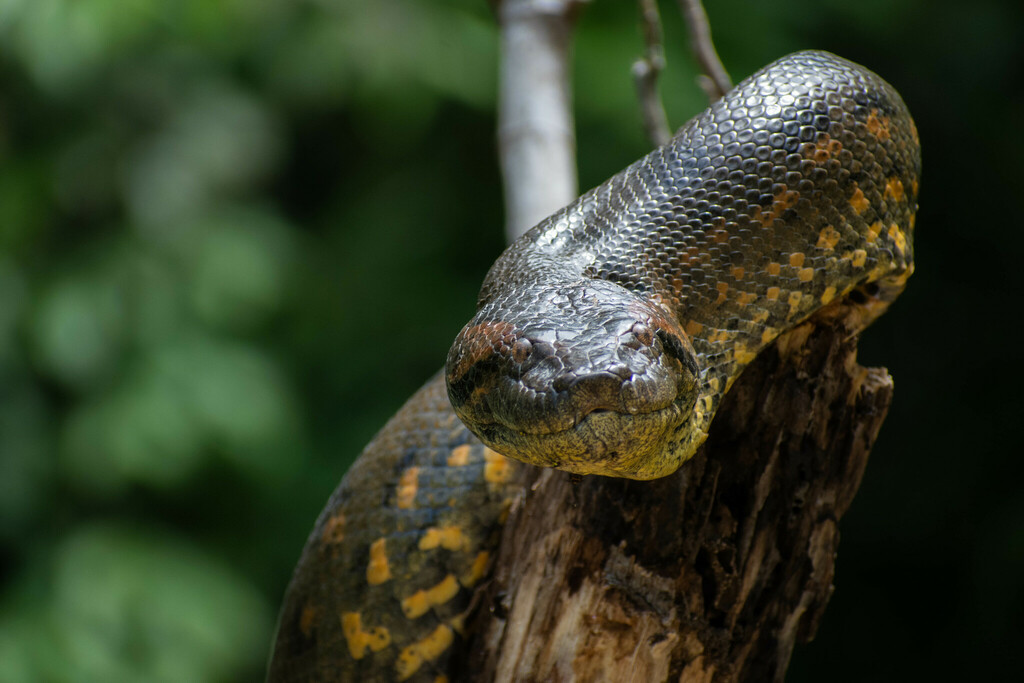
The heaviest snakes alive, and some of the most exaggerated. How many anaconda species there are, how big they really get, where they live, and whether they are dangerous to people.
South America · 9 min read · Updated Oct 16, 2026
READ THE GUIDE →NON-VENOMOUSSOUTH AMERICA
Eunectes
Anacondas are giant, non-venomous water boas from South America. The green anaconda is the heaviest snake on Earth.
 NON-VENOMOUS
SOUTH AMERICA
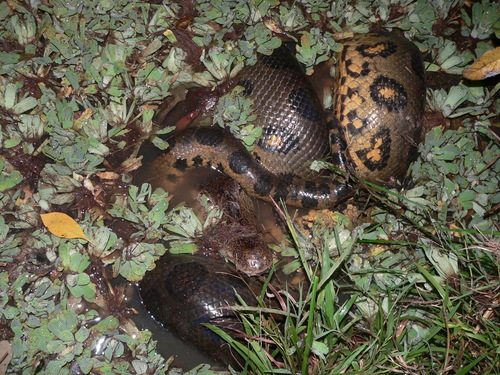
Boidae
A boa is a non-venomous constricting snake of the family Boidae. Most boas live in the Americas and give birth to live young.
 NON-VENOMOUS
SOUTH AMERICA
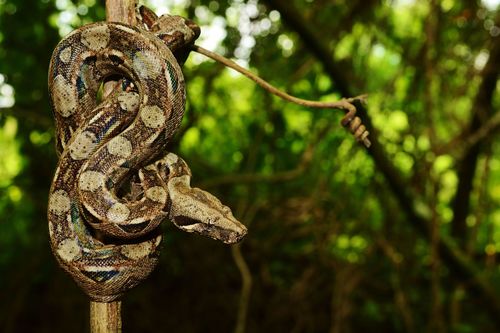
Boa constrictor
The boa constrictor is a non-venomous constrictor native to South America and one of the most familiar snakes in the pet trade.
 NON-VENOMOUS
SOUTH AMERICA
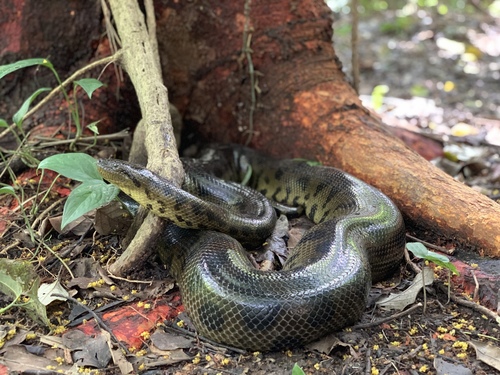
Eunectes beniensis
The Bolivian anaconda, also called the Beni anaconda, is a rare, non-venomous constrictor found only in a small part of northern Bolivia.
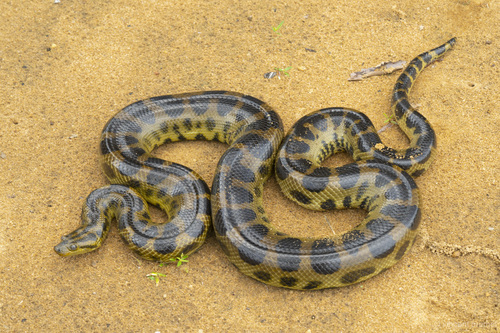 NON-VENOMOUS
SOUTH AMERICA
Eunectes deschauenseei
De Schauensee's anaconda, also called the dark-spotted anaconda, is the smallest and least known anaconda, found only around the mouth of the Amazon.
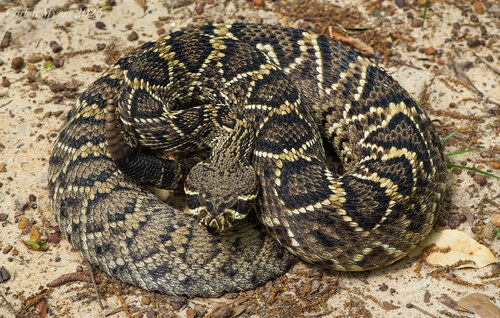 VENOMOUS
NORTH AMERICA
Crotalus adamanteus
The largest rattlesnake, native to the southeastern United States.
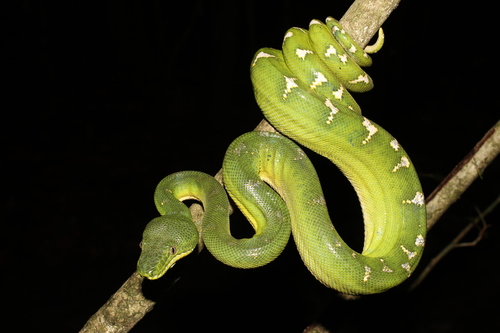 NON-VENOMOUS
SOUTH AMERICA
Corallus caninus
The emerald tree boa is a non-venomous constrictor native to the rainforest canopy of Guyana, Suriname and northern Brazil, known for its brilliant green color and unusually long teeth.
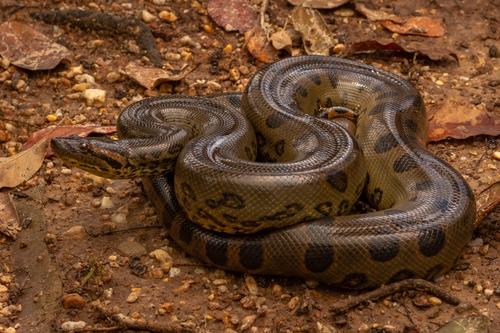 NON-VENOMOUS
SOUTH AMERICA
Eunectes murinus
The green anaconda is the heaviest snake on Earth, a non-venomous constrictor of South American rivers and swamps.
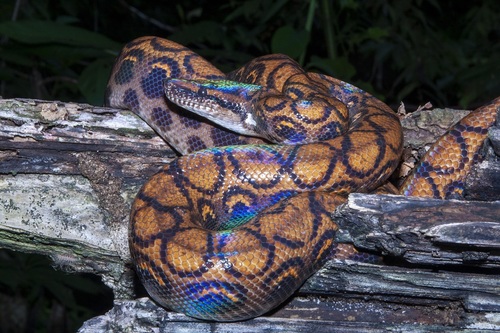 NON-VENOMOUS
SOUTH AMERICA
Epicrates cenchria
The rainbow boa is a non-venomous constrictor native to northern and central South America, named for the iridescent sheen on its reddish-brown scales.
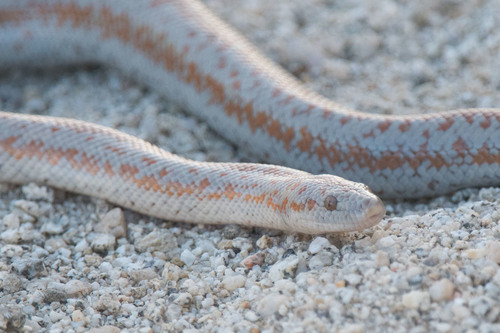 NON-VENOMOUS
NORTH AMERICA
Lichanura
The rosy boa is a small, non-venomous constrictor of the deserts and rocky scrub of southern California, southwestern Arizona and northwestern Mexico.
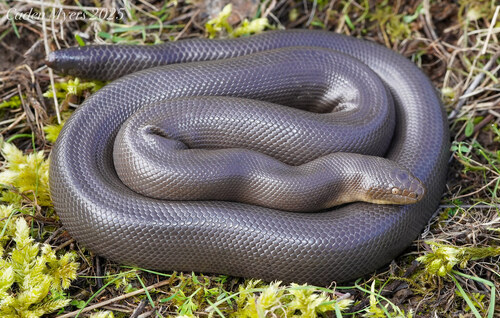 NON-VENOMOUS
NORTH AMERICA
Charina bottae
The rubber boa is a small, non-venomous constrictor of the western United States and southern British Columbia, known for its blunt tail that looks like a second head.
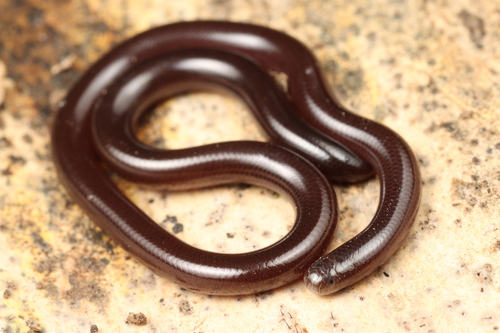 NON-VENOMOUS
ASIA
Eryx
Sand boas are small, non-venomous burrowing boas of the genus Eryx, found in dry country across Africa, the Middle East, Central and South Asia and southeastern Europe.
UNDERSTANDING THE LABELS
Short answer: venom is injected through a bite; toxins are harmful if a predator eats or mouths the animal. Most snakes are venomous to some degree, but only about 600 species have venom strong enough to seriously harm people.
Venom that is medically significant to humans. A bite needs emergency care. Examples: cobras, mambas, rattlesnakes, vipers.
Weak venom or saliva, usually delivered by rear fangs, that subdues prey but rarely causes more than local swelling in people. Examples: garter and hognose snakes.
No venom. These snakes kill by constriction or simply swallow prey alive. Examples: pythons, boas, corn snakes, kingsnakes.
Poisonous to eat or touch. A few snakes, like Asian keelbacks, store toxins from the toads they eat in glands on the neck.