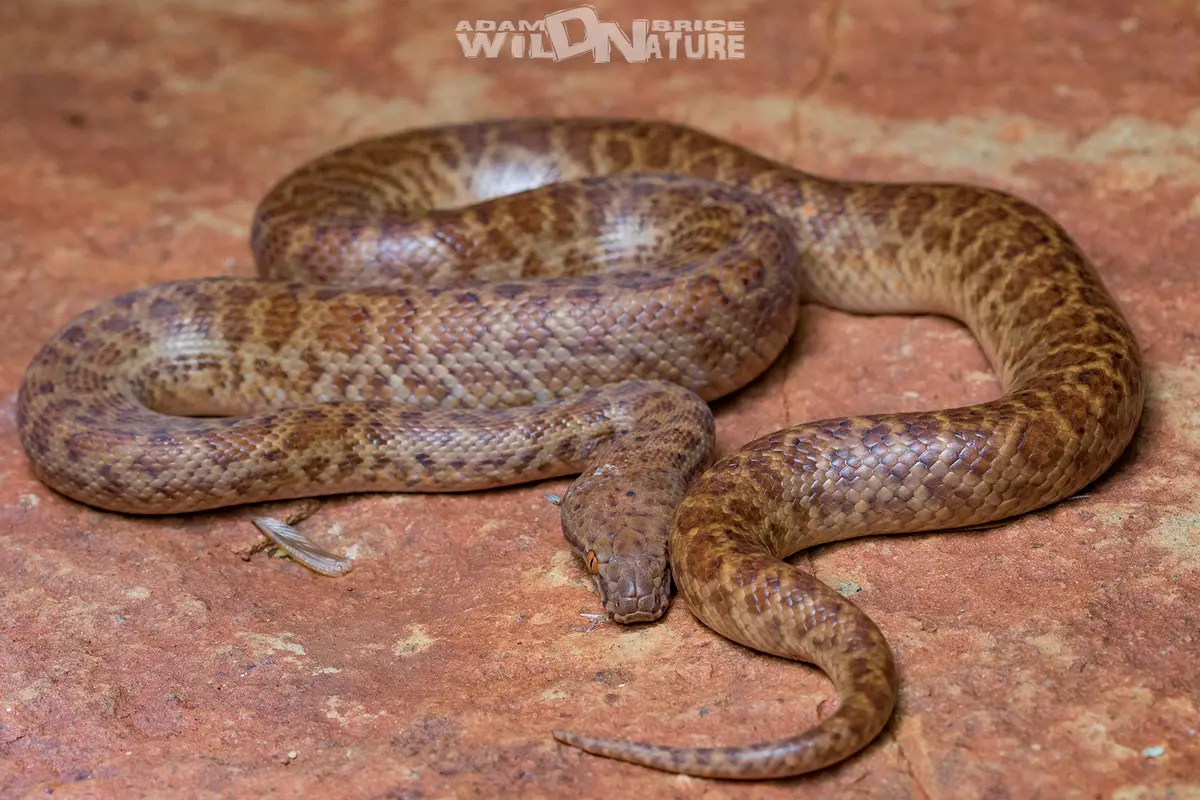
PYGMYPYTHON
Antaresia perthensis · Family Pythonidae
KEY TAKEAWAYS
The pygmy python (Antaresia perthensis) is the smallest member of the python family, a non-venomous snake found only in the Pilbara and nearby regions of Western Australia. Adults average about 16 inches (40 cm) long, and it is harmless to people. It is often found in termite mounds, which is why it is also called the anthill python.
- It has no venom. It kills small prey by constriction and is not considered dangerous to people.
- The Australian Reptile Online Database gives an average length of 16 in (40 cm) and a maximum of 24 in (60 cm).
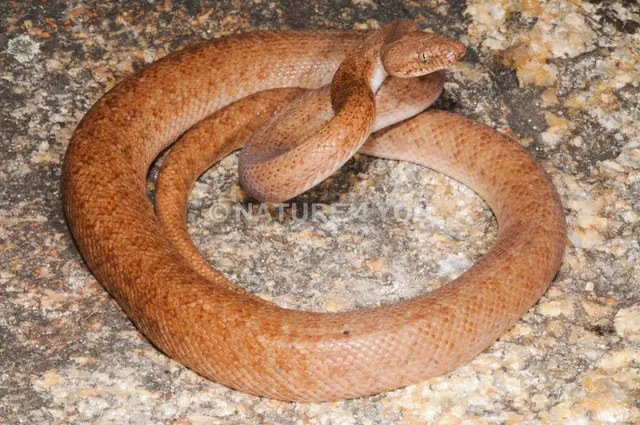
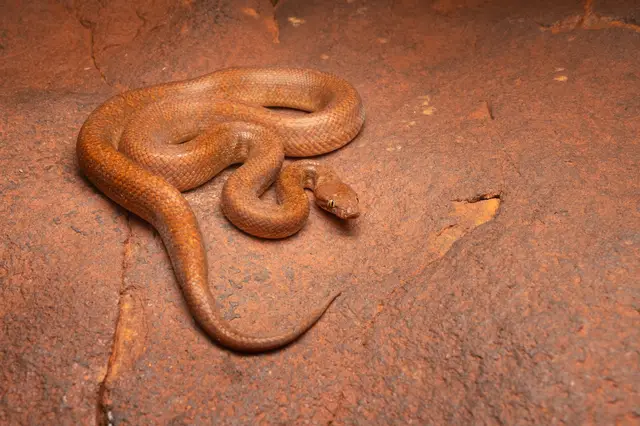
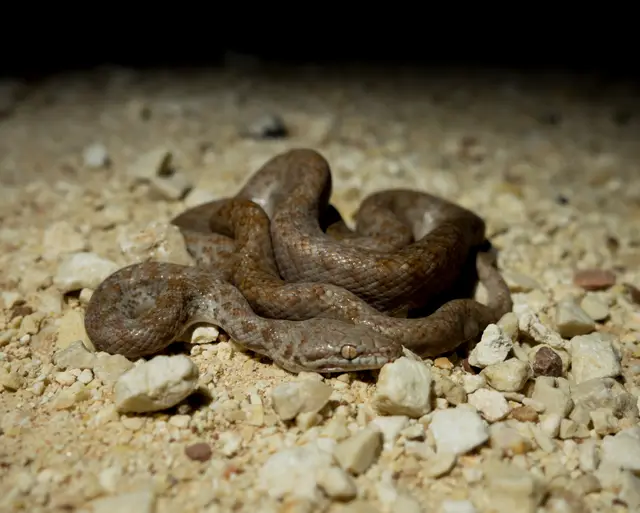
- It is reddish-brown with faint, irregular darker spots that tend to fade as it ages.
- Despite its scientific name, it is not found near Perth. The IUCN rates it Least Concern.
Pygmy python quick facts
| Common name | Pygmy python; also anthill python or ant-hill python |
|---|---|
| Scientific name | Antaresia perthensis (Stull, 1932) |
| Family | Pythonidae (pythons) |
| Venomous | No, a constrictor |
| Adult length | Average about 16 in (40 cm); maximum about 24 in (60 cm) |
| Weight | About 6.3-7.4 oz (180-210 g), according to Animal Diversity Web |
| Coloring | Light brown to reddish-brown with faint darker spots; pale belly |
| Range | Western Australia only: the Pilbara, Gascoyne and Murchison regions |
| Habitat | Rocky areas, spinifex and scrubland, often in or near termite mounds |
| Diet | Mainly small lizards, especially geckos |
| Reproduction | Lays eggs; clutches of about 2-6 eggs, average 5 |
| Conservation | IUCN Least Concern; CITES Appendix II |
How to identify a pygmy python
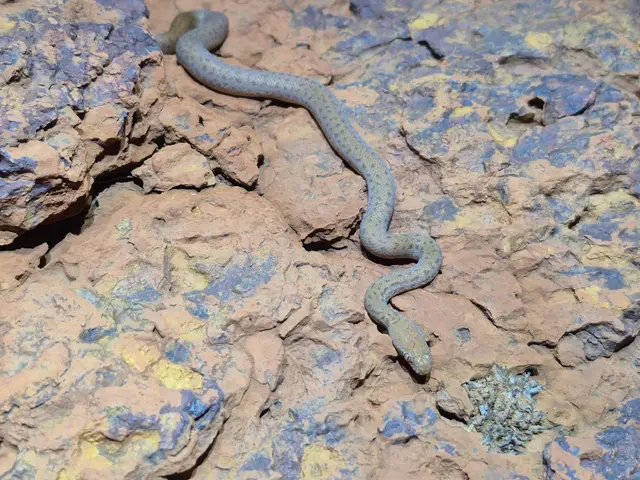
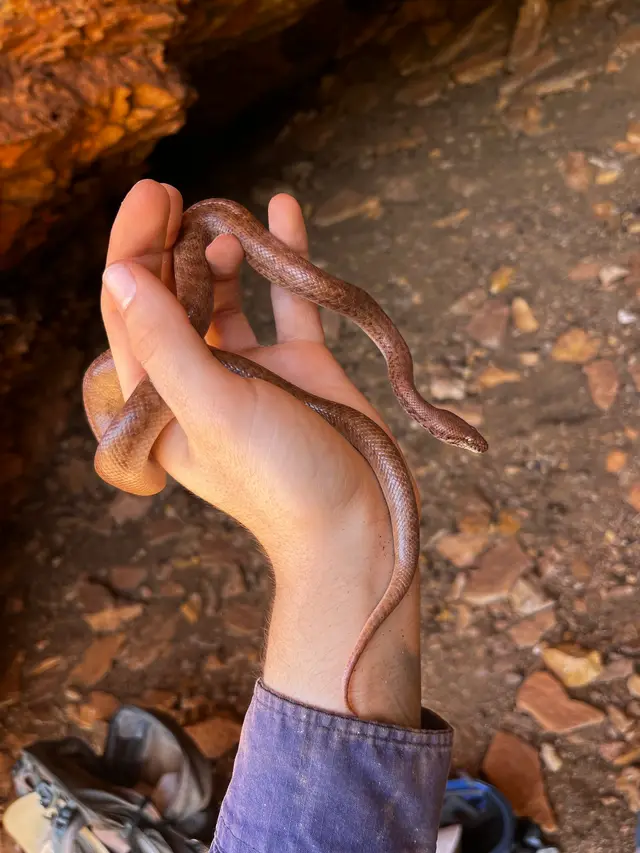
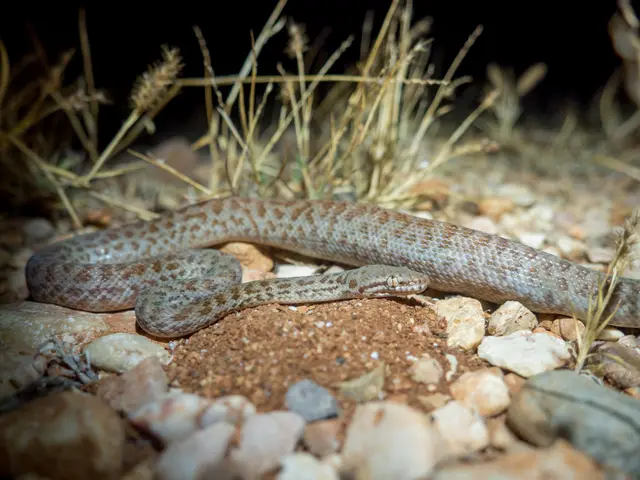
A pygmy python is a very small, slender python, usually reddish-brown with irregular darker spots. The Western Australian Museum describes it as light brown or reddish-brown with no distinct pattern, and the Australian Reptile Online Database (AROD) as reddish-brown with irregular darker spots. Both descriptions fit, because the spots are clearer on young snakes and fade with age. It is easy to mistake for a young snake of a bigger species, so the head and scales are worth a close look from a safe distance.
- 1Tiny adult size: an adult is about the length of a ruler and a half. AROD lists an average of 16 in (40 cm) and a maximum of 24 in (60 cm). A python much longer than 2 ft is a different species.
- 2Reddish-brown color: the body is light brown to brick red, often matching the red soils of the Pilbara. The darker spots are irregular, not neat bands.
- 3Heat pits on the lower lip: AROD notes heat-sensing pits on the lower lip scales but none on the snout scale. Australia's venomous snakes have no lip pits.
- 4Plated head: the scales on top of the head are enlarged and symmetrical, so the head looks covered in neat plates rather than tiny granules.
- 5Low scale counts: AROD gives 31-35 scale rows around the middle of the body and 205-255 belly scales, fewer than its larger relatives in the genus Antaresia.
How big do pygmy pythons get?
Pygmy pythons rarely grow longer than 2 ft (60 cm), which makes them the smallest pythons in the world. AROD and Animal Diversity Web (ADW), a University of Michigan database, both give it that title. For scale, a reticulated python can top 20 ft, and so can the olive python, which shares parts of the Pilbara with it.
| Measure | Size | Source |
|---|---|---|
| Average length | About 16 in (40 cm) | AROD |
| Adult length range | 16.5-24.4 in (42-62 cm) | ADW |
| Typical maximum | About 24 in (60 cm) | AROD; WA Museum |
| Adult weight | 6.3-7.4 oz (180-210 g) | ADW |
| Hatchling | About 6.7 in (17 cm) and 0.14 oz (4 g) | ADW |
ADW notes that females are slightly larger than males. A newly hatched pygmy python weighs about as much as a single grape.
Where do pygmy pythons live?
Short answer: only in Western Australia, mostly in the Pilbara and the drier country to its south. The Reptile Database records it from the Pilbara region and adjacent rocky areas. AROD adds the Gascoyne and Murchison regions, and the WA Museum describes its range as mid-western Western Australia, including the Pilbara and areas to the south.
The name is misleading. The species was named perthensis after Perth, the state capital, which was written as the type locality when Olive Griffith Stull described it in 1932. The WA Museum points out that the snake is not found near Perth at all. Its real range lies hundreds of miles to the north, in towns and parks such as Marble Bar, Port Hedland and Karijini National Park. See how its range compares with other snakes on the world snake map.
Habitat: why pygmy pythons live in termite mounds
Pygmy pythons live in hot, dry rocky country and spinifex grassland, and they are best known for sheltering in termite mounds. AROD lists rocky areas and scrubland as their habitat and says they are often found around termite mounds, probably living inside them. The WA Museum calls them terrestrial and notes they are often found in termite mounds but also in a range of other habitats.
The mounds offer two things a small snake needs: shelter and food. According to ADW, daytime temperatures inside the mounds can reach about 100 F (38 C), and geckos also hide there. ADW also lists spinifex clumps, stunted eucalyptus and the spaces under rocks as places where pygmy pythons turn up. Termite mounds in the Pilbara are shared housing. Other snakes, including the black-headed python, Stimson's python and the venomous king brown snake, use them too.
Behavior
The pygmy python is a secretive, mostly nocturnal snake. ADW says it hunts at night to avoid the daytime heat and lives alone outside the breeding season. It is described as sedentary, but no study has measured how far a pygmy python moves or how big its home range is.
Its small size makes it vulnerable. ADW lists birds, carnivorous mammals, large frogs, spiders and other snakes as predators of young pygmy pythons, and names the king brown snake as a known predator. A snake this small spends most of its life out of sight, so it is seldom seen even where it is common.
What do pygmy pythons eat?
Pygmy pythons eat mainly small lizards, especially geckos. AROD lists small lizards, particularly geckos, as the diet, and the WA Museum says it feeds on geckos it finds in termite mounds. Like other pythons, it kills by wrapping its coils around prey and squeezing.
| Prey | Notes | Source |
|---|---|---|
| Geckos | The main food, often caught inside termite mounds | AROD; WA Museum |
| Skinks and other small lizards | Taken mostly by young snakes | AROD; ADW |
| Small mammals, including bats | Bats caught at cave entrances by adults | ADW |
| Frogs | Listed for adults | ADW |
ADW notes that pygmy pythons squeeze their prey in short bursts rather than holding a steady grip, which may save energy. Diet accounts are general. No detailed study of what wild pygmy pythons eat was found in the sources used here.
Is the pygmy python venomous or dangerous?
No. The pygmy python has no venom and is not considered dangerous to people. AROD rates it non-venomous and not dangerous, and the WA Museum says it kills its prey by constriction. A snake that averages 16 inches long and weighs about as much as a smartphone cannot constrict anything larger than a small lizard or mouse.
It can still bite if handled, and AROD advises against being bitten by any reptile because even small bites can become infected. Wash any snake bite with soap and water and see a doctor if it turns red or swollen.
The bigger risk in the Pilbara is confusing a dangerous snake for a harmless one. The region has highly venomous species, including the king brown snake, which shares termite mounds with pygmy pythons. If you are not certain what a small brown snake is, leave it alone. The SnakesWiki snake venom FAQ explains why size and color are poor guides to danger.
Pygmy python vs Stimson's python and other look-alikes
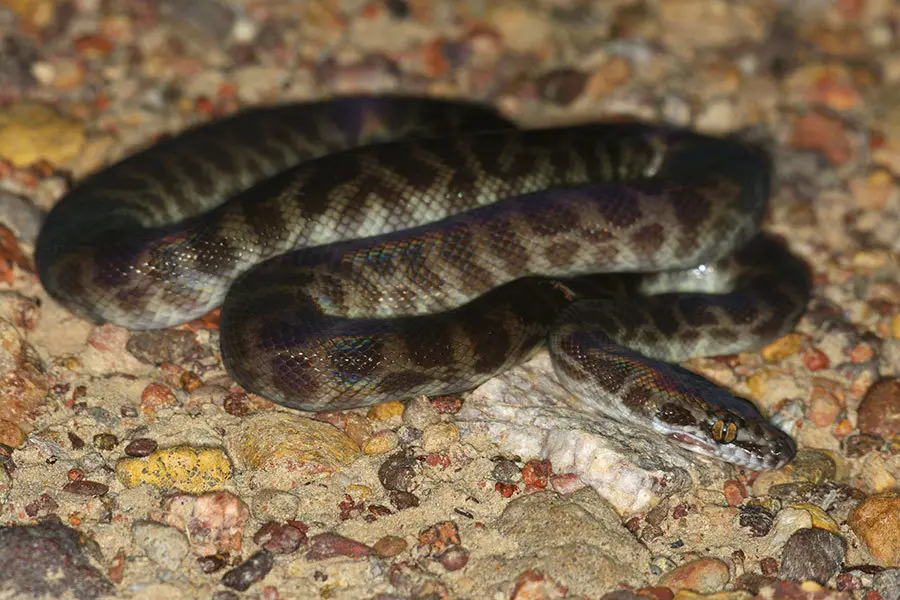
Stimson's python
Antaresia stimsoni · Harmless
A close relative that lives across much of arid Australia, including the Pilbara. AROD gives it an average of about 35 in (90 cm), more than twice the pygmy python's size, with bold dark blotches and a pale line along the side of the neck. It also has more scale rows, 35-49 around the body.
Children's python
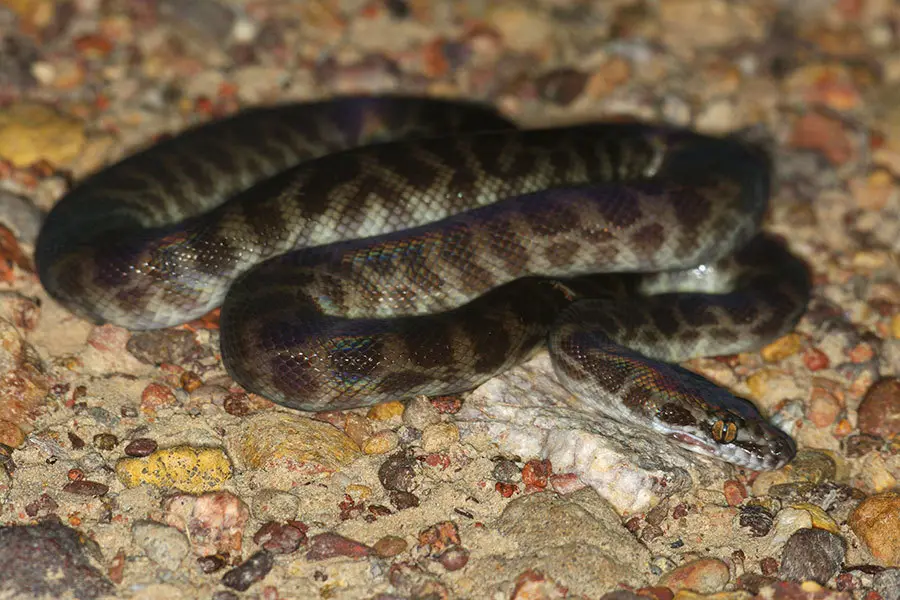
Antaresia childreni · Harmless
Lives further north and east, in the Kimberley, the Top End and northwest Queensland, according to AROD. It averages about 28 in (70 cm) and reaches 50 in (127 cm), and its round dark blotches fade with age, like the pygmy python's spots. Higher scale counts (37-49 rows, 255-300 belly scales) separate it.
King brown snake (mulga snake)
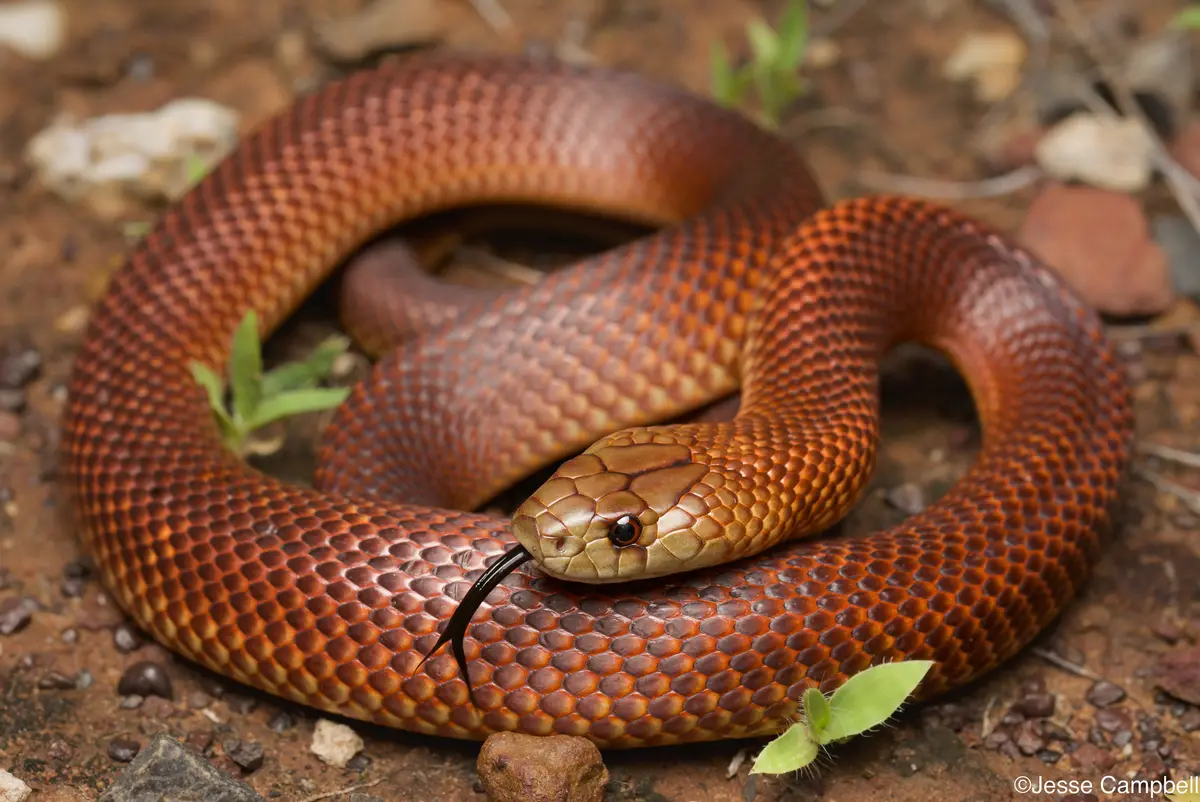
Pseudechis australis · Highly venomous
The look-alike that matters. The Australian Museum describes a robust snake with a broad, deep head, bulging cheeks and two-toned scales. Adults average about 6.5 ft (2 m). It has no heat pits on its lips, its venom is highly toxic, and a bite needs immediate medical care. It shares termite mounds with pygmy pythons and eats them.
Reproduction
Pygmy pythons lay eggs, and the female guards them. AROD gives an average clutch of 5 eggs, and ADW gives a range of 2-6. ADW says the female coils around her eggs to keep them warm and protected, as many pythons do, and that the eggs take about two to three months to hatch.
Hatchlings are about 6.7 in (17 cm) long. ADW notes they carry a temporary egg tooth for cutting out of the shell, which falls off within a few weeks, and that both sexes can mature at about two years old. ADW lists captive lifespans of about 15-23 years. No reliable figure for wild pygmy pythons has been published.
Is the pygmy python endangered?
No. The IUCN Red List rates the pygmy python Least Concern, as recorded by the Reptile Database and the WA Museum. ADW describes it as common throughout its natural habitat, though as a small, hidden snake it is rarely counted.
| Authority | Status |
|---|---|
| IUCN Red List | Least Concern |
| Australia (national) | Not listed as threatened |
| CITES | Appendix II, as are nearly all pythons |
ADW names road traffic and smuggling as the main threats, and notes that smuggling is punished with large fines and jail time.
How the pygmy python fits into Antaresia
The pygmy python is one of the dwarf pythons in the genus Antaresia, along with Children's, Stimson's and the spotted python. Stull first named it Liasis childreni perthensis, a subspecies of Children's python, in 1932. It has since been treated as its own species. A 2021 genetic study of the genus by Esquerré and colleagues in Molecular Phylogenetics and Evolution found that the Kimberley, Pilbara and Cape York regions were important sources of dwarf python diversity in Australia.
Pygmy python FAQ
Is the pygmy python venomous?
No. The pygmy python has no venom and kills its prey by constriction. The Australian Reptile Online Database rates it non-venomous and not dangerous to people. It can bite if handled, and any bite can become infected, so wash it with soap and water and see a doctor if it turns red or swollen.
What is the smallest python in the world?
The pygmy python of Western Australia is the smallest python in the world. The Australian Reptile Online Database gives an average length of about 16 inches (40 cm) and a maximum of about 24 inches (60 cm). Animal Diversity Web gives adult weights of about 6-7 ounces (180-210 g).
Where do pygmy pythons live?
Pygmy pythons live only in Western Australia, mostly in the Pilbara and the Gascoyne and Murchison regions to its south. They use rocky country, spinifex and scrubland and often shelter in termite mounds. Despite the scientific name perthensis, the Western Australian Museum notes that they are not found near Perth.
Why is it called the anthill python?
It is called the anthill python because it is often found in termite mounds, which Australians often call anthills. The Western Australian Museum says it feeds on geckos it finds in the mounds. Animal Diversity Web reports that temperatures inside the mounds can reach about 100 F (38 C).
What do pygmy pythons eat?
Pygmy pythons eat mainly small lizards, especially geckos, according to the Australian Reptile Online Database. Young snakes take geckos and skinks. Animal Diversity Web reports that adults also eat small mammals, including bats caught at cave entrances, and frogs. They kill their prey by constriction.
How long do pygmy pythons live?
Animal Diversity Web lists captive lifespans of about 15-23 years for the pygmy python. No reliable lifespan figure for wild pygmy pythons has been published. They can mature at about two years old, and females lay clutches of about 2-6 eggs that they coil around and guard until they hatch.
Related snakes
Sources
- Reptile Database: Antaresia perthensis (Stull, 1932)
- Australian Reptile Online Database: Pygmy python (Antaresia perthensis)
- Western Australian Museum: Pygmy python (Antaresia perthensis)
- Animal Diversity Web, University of Michigan: Antaresia perthensis
- Esquerré et al. (2021). Phylogeography, historical demography and systematics of the world's smallest pythons (Pythonidae, Antaresia). Molecular Phylogenetics and Evolution 161: 107181
- Australian Reptile Online Database: Stimson's python (Antaresia stimsoni)
- Australian Reptile Online Database: Children's python (Antaresia childreni)
- Australian Museum: Mulga snake (king brown snake)