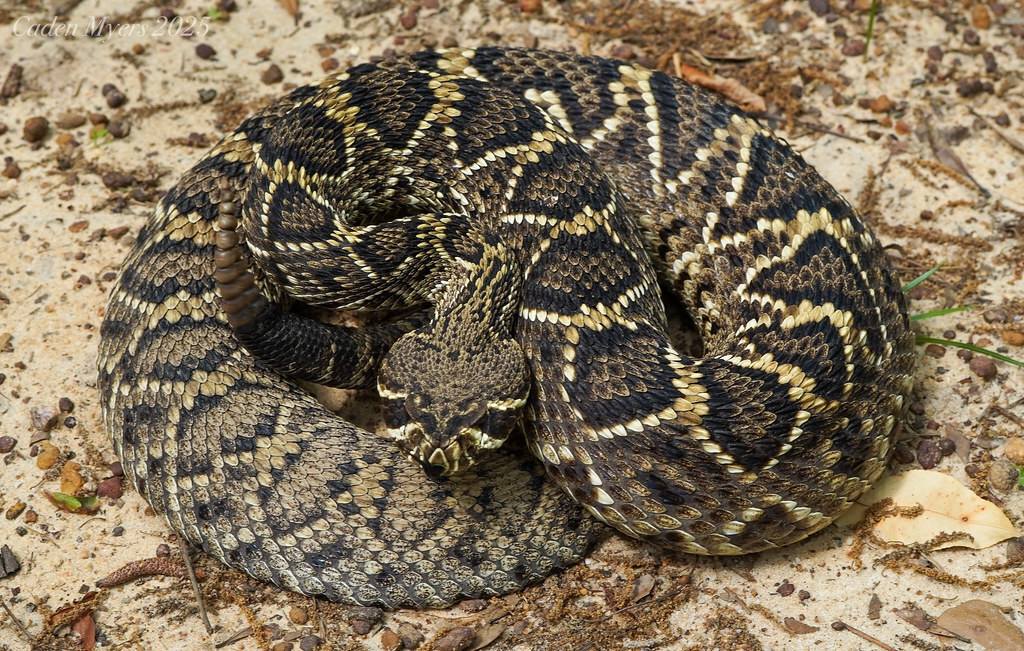
EASTERN DIAMONDBACKRATTLESNAKE
Crotalus adamanteus · Family Viperidae
Photo: (c) Caden Myers, all rights reserved, uploaded by Caden Myers · via iNaturalist
KEY TAKEAWAYS
The eastern diamondback rattlesnake is the largest rattlesnake and the heaviest venomous snake in the Americas. It lives only in the southeastern United States, from North Carolina to Louisiana, and is identified by dark diamonds edged in cream or yellow.
- Adults typically measure 3-6 ft (0.9-1.8 m); record specimens approach 8 ft.
- Venom is primarily hemotoxic: a bite is a medical emergency, but antivenom is highly effective.
- It is not aggressive: it relies on camouflage and rattles to warn before biting.
- Populations have declined with the loss of longleaf pine habitat; NatureServe ranks it Vulnerable (G3).
Quick facts
| Common name | Eastern diamondback rattlesnake |
|---|---|
| Scientific name | Crotalus adamanteus (Palisot de Beauvois, 1799) |
| Family | Viperidae (pit vipers) |
| Venomous | Yes, primarily hemotoxic |
| Adult length | 3-6 ft (0.9-1.8 m); record ~8 ft |
| Weight | 3-10 lb typical; large males 15 lb+ |
| US states | NC, SC, GA, FL, AL, MS, LA |
| Habitat | Longleaf pine, flatwoods, sandhills, coastal scrub |
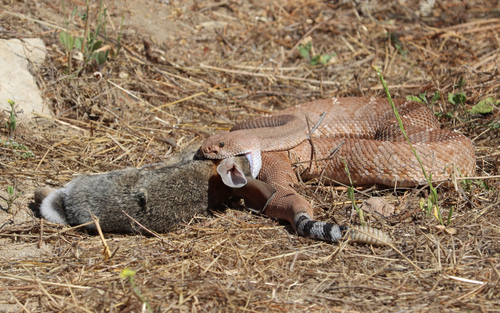
| Diet | Rabbits, rodents, occasionally birds |
| Reproduction | Live birth, ~7-21 young every 2-3 years |
| Subspecies | None recognized |
| Conservation | IUCN Least Concern · NatureServe G3 Vulnerable |
How to identify an eastern diamondback
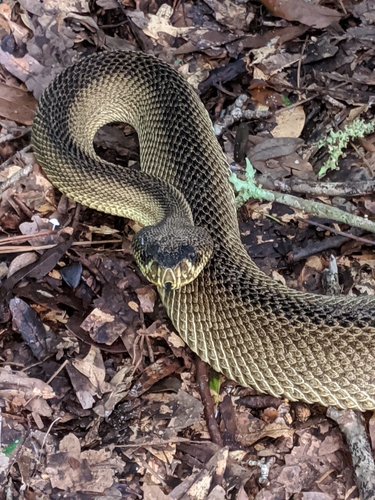
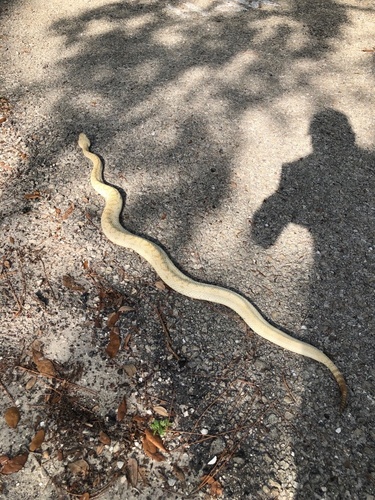
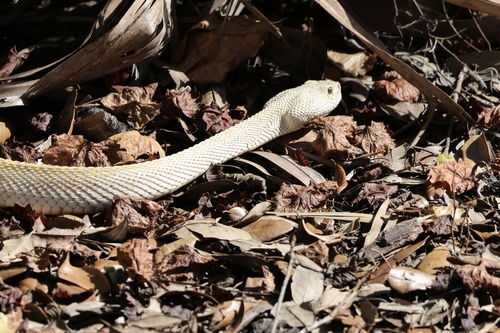
This is a heavy-bodied snake with a broad, triangular head distinctly wider than its neck. Look for these five features together; no single one is enough on its own.
- 1Diamond pattern: dark brown to black diamonds, each edged with a single row of cream or yellow scales, running the length of the back.
- 2Face stripes: a dark band through the eye bordered by two thin, pale diagonal lines.
- 3Tail: lighter than the body with dark rings, never the crisp black-and-white "coon tail" of the western diamondback.
- 4Rattle: a large segmented rattle at the tail tip (it can be broken off, so absence doesn't rule it out).
- 5Heat pits: a sensory pit between each nostril and eye, and many small scales on top of the head.
Size and weight
Eastern diamondbacks are born at about a foot long and grow quickly in their first few years. Large males are longer and heavier than females. Very large individuals are now rare because big snakes are the ones most often killed on roads and by people.
| Life stage | Length | Typical weight |
|---|---|---|
| Newborn | 12-15 in (30-38 cm) | 1-2 oz |
| Typical adult | 3-6 ft (0.9-1.8 m) | 3-10 lb (1.4-4.5 kg) |
| Record size | ~8 ft (2.4 m) | 15 lb+ (6.8 kg+) |
Range map: where eastern diamondbacks live
Short answer: the southeastern coastal plain, from southeastern North Carolina south through all of Florida (including the Keys), and west along the Gulf Coast to southeastern Louisiana. They do not occur west of the Mississippi River. Compare it with other snakes on our world snake map.
Status by state
| State | Where found | Status |
|---|---|---|
| North Carolina | Extreme southeastern coastal plain | State endangered; very rare |
| South Carolina | Coastal plain | Uncommon, declining |
| Georgia | Coastal plain, south of the fall line | Locally common |
| Florida | Statewide, including the Keys | Most widespread state population |
| Alabama | Southern counties | Uncommon |
| Mississippi | Southern counties near the Gulf | Rare |
| Louisiana | Historic Florida Parishes | Nearly extirpated |
Habitat
The species is most closely tied to longleaf pine ecosystems: sandhills, pine flatwoods and upland pine forest with an open canopy and thick ground cover such as saw palmetto and wiregrass. It also uses old fields, hardwood hammocks, dry prairie, coastal dunes and barrier islands, and can swim across salt water to reach islands.
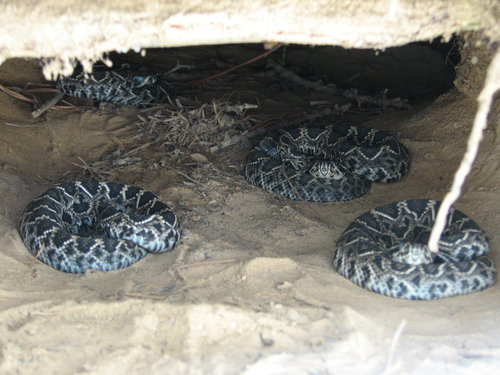
For shelter and winter refuge it depends heavily on gopher tortoise burrows, stump holes and root channels, according to the Florida Natural Areas Inventory. Where gopher tortoises disappear, diamondbacks usually decline too.
Behavior and temperament
Eastern diamondbacks are ambush predators. They spend hours or days coiled beside a rabbit trail or log, waiting for prey to pass. They are most active in the morning and evening during hot months and by day in spring and fall. In the northern part of the range they shelter underground on cold days but do not truly hibernate in Florida.
When approached, most freeze and trust their camouflage. If pressed, one raises into a defensive S-coil and rattles loudly. Biting is a last resort; most bites occur when someone steps on, handles, or tries to kill the snake.
Diet
| Prey group | Examples | Importance |
|---|---|---|
| Rabbits | Marsh rabbit, eastern cottontail | Primary prey for adults |
| Rodents | Cotton rats, squirrels, mice | Major, especially for juveniles |
| Birds | Ground-nesting birds such as quail | Occasional |
Venom: how dangerous is it?
Relative to its body length, the eastern diamondback has the longest fangs of any rattlesnake, and it produces a very large amount of venom, an average yield of roughly 400 to 450 mg (dried) per bite, according to published venom studies. The venom is mainly hemotoxic: it disrupts blood clotting and damages tissue around the bite.
Untreated, a serious bite can be fatal. Our snakebite FAQ explains how venom works and why first-aid myths like cutting or sucking the wound make things worse. With modern antivenom (CroFab or Anavip) and prompt hospital care, deaths are rare, though recovery from tissue damage can take weeks.
What to do if you're bitten
DO
- Call 911 and move away from the snake
- Remove rings, watches and tight clothing
- Keep the limb still, at about heart level
- Note the time of the bite
- Call Poison Control: 1-800-222-1222
DON'T
- Cut the wound or try to suck out venom
- Apply ice or a tourniquet
- Drink alcohol or caffeine
- Try to catch or kill the snake
Look-alike snakes
Several southeastern snakes are mistaken for eastern diamondbacks. Here's how to tell them apart. If you are unsure, photograph it from a distance and post it on iNaturalist, where local experts can confirm the ID.
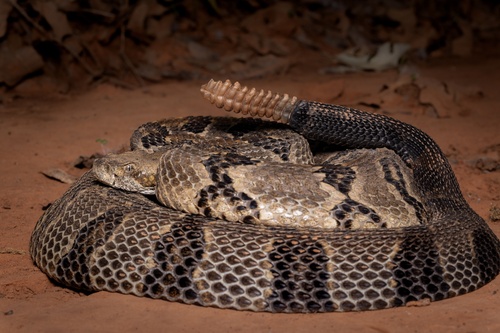
Timber (canebrake) rattlesnake
Crotalus horridus · Venomous
Dark zig-zag chevrons instead of diamonds, often a rusty stripe down the back, and a solid black tail.
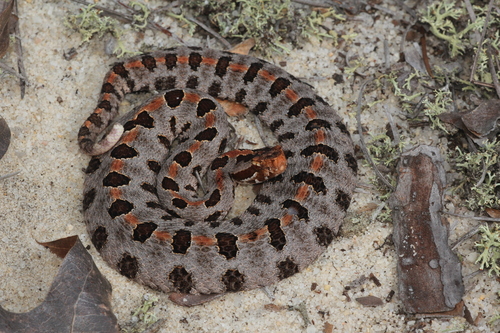
Pygmy rattlesnake
Sistrurus miliarius · Venomous
Rarely over 2 ft, with round dark blotches, large head plates and a tiny, insect-like rattle.
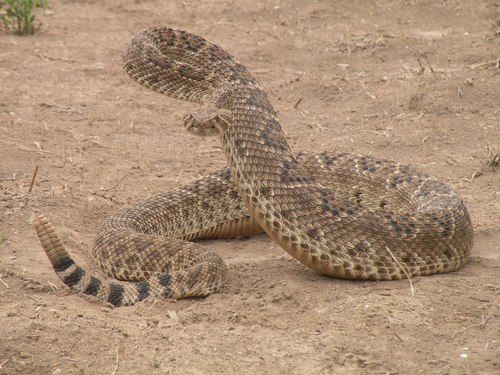
Western diamondback
Crotalus atrox · Venomous
Bold black-and-white "coon tail" bands. Ranges do not overlap; it is found west of the Mississippi.

Eastern hognose snake
Heterodon platirhinos · Harmless
Upturned snout, no rattle. Flattens its neck and hisses, then plays dead if harassed.
Reproduction and lifespan
Mating takes place mainly in late summer and fall. Females give birth to live young, usually around 7 to 21, in late summer, often inside a gopher tortoise burrow or stump hole, and typically breed only every two to three years. Newborns stay with the mother for a week or two until their first shed. Females mature at several years old, and wild snakes can live well over 10 years; captive individuals have exceeded 20.
Conservation status
| Authority | Status |
|---|---|
| IUCN Red List | Least Concern |
| NatureServe (global) | G3, Vulnerable |
| US Endangered Species Act | Not listed |
| North Carolina | State endangered |
Main threats are the loss of longleaf pine habitat (less than 5% of its original extent remains), road mortality, persecution and rattlesnake roundups. Prescribed fire and gopher tortoise protection both help the species.
Frequently asked questions
How big do eastern diamondback rattlesnakes get?
Adults are usually 3 to 6 feet (0.9 to 1.8 m) long. The largest reliable records approach 8 feet (about 2.4 m), making it the heaviest venomous snake in the Americas.
Where do eastern diamondback rattlesnakes live?
In seven southeastern states (North Carolina, South Carolina, Georgia, Florida, Alabama, Mississippi and Louisiana), mainly in longleaf pine forests, pine flatwoods and coastal scrub.
Are eastern diamondback rattlesnakes aggressive?
No. They rely on camouflage, usually stay still or retreat, and rattle as a warning. Most bites happen when people step on, handle or try to kill the snake.
Is the eastern diamondback rattlesnake endangered?
It is not federally listed and the IUCN lists it as Least Concern, but populations have declined sharply. NatureServe ranks it Vulnerable (G3), and North Carolina lists it as state endangered.
What should you do if bitten by an eastern diamondback?
Call 911 immediately and get to a hospital. Keep calm, remove rings and tight items, and keep the limb still. Do not cut, suck, ice or tourniquet the wound. Antivenom (CroFab or Anavip) is effective.