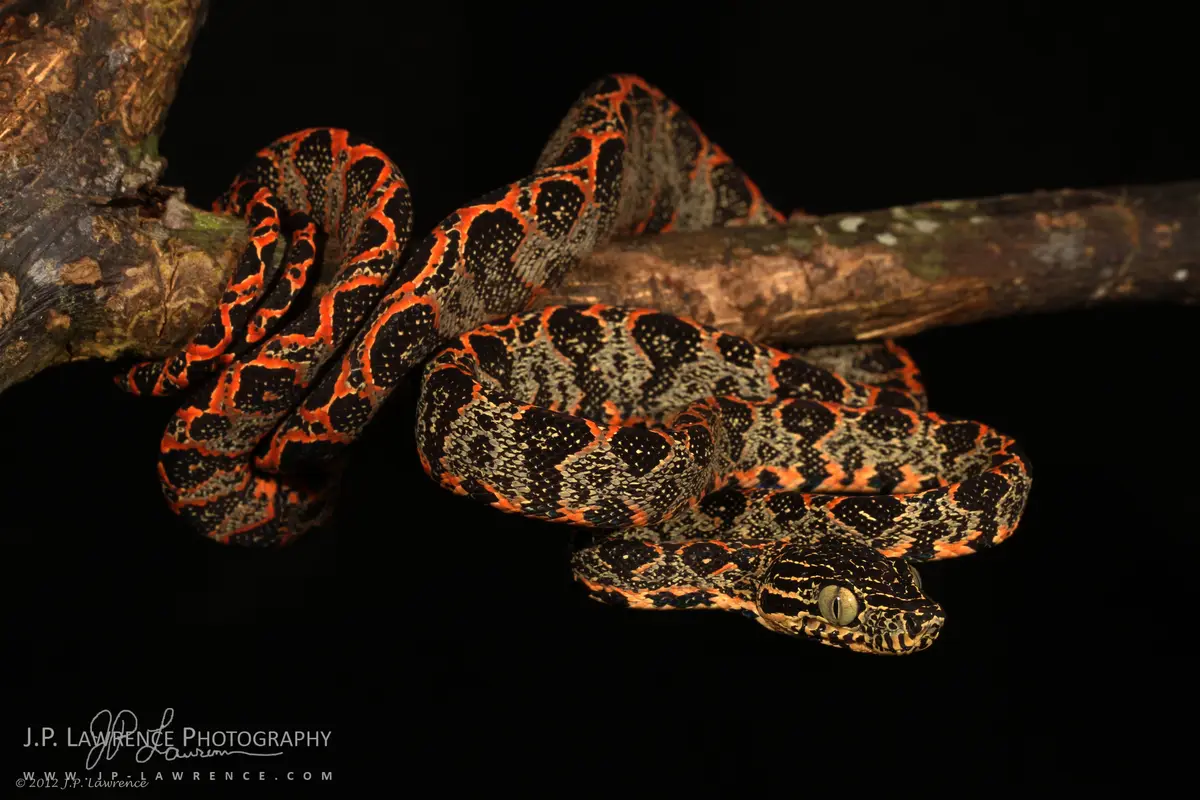
TREEBOA
Corallus · Family Boidae
KEY TAKEAWAYS
A tree boa is one of nine species of slender, tree-living boas in the genus Corallus, found in forests from southeastern Guatemala to southeastern Brazil and on Trinidad, Tobago, St. Vincent and Grenada. Tree boas are not venomous, but they bite readily and have some of the longest front teeth of any snake their size.
- They are not venomous. They kill birds, rodents, bats and lizards by constriction.
- Most adults are 4 to 6 ft (1.2 to 1.8 m) long. The Central American tree boa is the longest and can reach about 7 ft (2.1 m).
- The best known are the emerald tree boa and the Amazon tree boa, both common in the pet trade.
- Two species, Cropan's tree boa of Brazil and Blomberg's tree boa of Ecuador and Colombia, are rated Endangered by the IUCN.
Tree boa quick facts
| Common name | Tree boa, treeboa, Neotropical tree boa |
|---|---|
| Scientific name | Corallus Daudin, 1803 (9 species) |
| Family | Boidae, subfamily Boinae |
| Venomous | No, a constrictor |
| Adult length | Mostly 4-6 ft (1.2-1.8 m); Central American tree boa up to about 7 ft (2.1 m) |
| Weight | Light for their length; not well documented for wild snakes |
| Range | Southeastern Guatemala through Central America to Colombia, Ecuador, Venezuela, the Guianas, Amazonia and the Atlantic Forest of Brazil; Isla Margarita, Trinidad, Tobago, St. Vincent and the Grenada Bank |
| Habitat | Rainforest, dry forest, mangroves, riverside trees and gardens, sea level to about 3,600 ft (1,100 m) |
| Diet | Birds, rodents, bats, opossums, lizards and frogs |
| Reproduction | Live-bearing |
| Conservation | 6 species IUCN Least Concern, St. Vincent tree boa Near Threatened, Cropan's and Blomberg's tree boas Endangered |
How to identify a tree boa
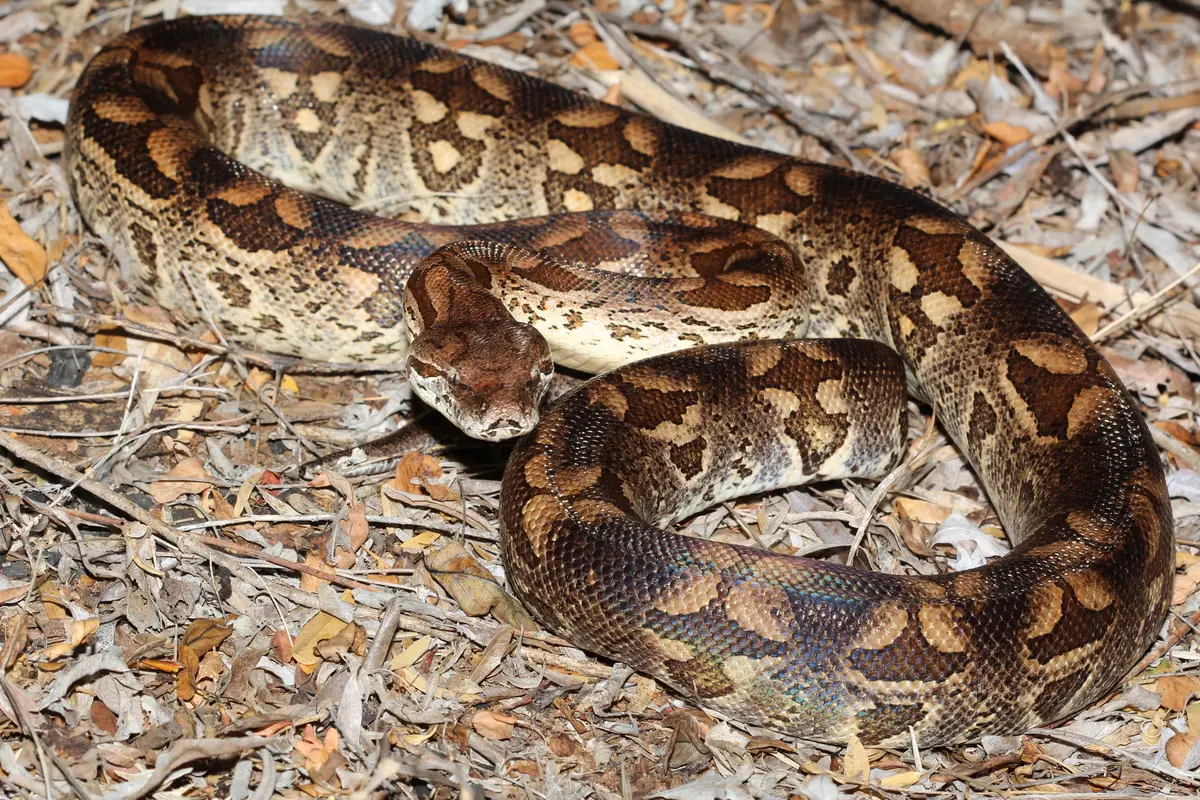
A tree boa is a long, thin snake with a big, blocky head on a narrow neck and a tail that grips branches like a hand. Color is no help at the genus level. The Amazon tree boa alone comes in gray, tan, brown, yellow, orange, red and near-black, and the emerald tree boa is bright green. Body shape and head scales tell you more.
- 1Large head, thin neck: the head is much wider than the neck and looks swollen at the back. The UWI guide to Trinidad's animals uses this as the first thing to check.
- 2Slim, flattened body: the body is narrow and a little flattened from side to side, which keeps it stiff when the snake reaches across a gap between branches.
- 3Rows of pits on the lips: deep heat-sensing pits sit between the scales of both the upper and lower lip. Pit vipers instead have a single large pit on each side between the eye and the nostril.
- 4Prehensile tail: the tail is long and wraps tightly around twigs. A resting tree boa hangs its coils over a branch in a loose bundle.
- 5Eyeshine at night: their eyes glow back in a flashlight beam, which the UWI guide calls the best way to find one after dark, since by day they blend into the branches.
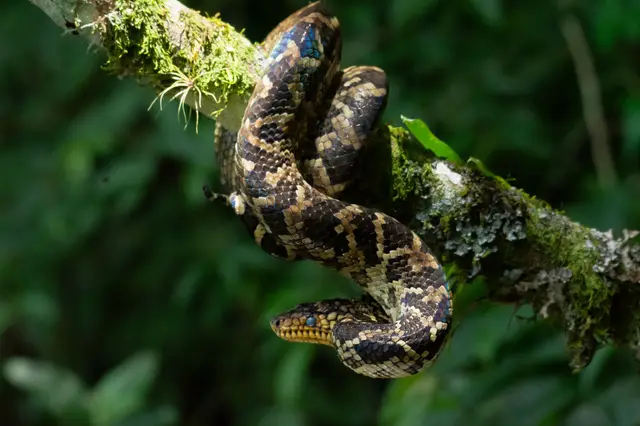
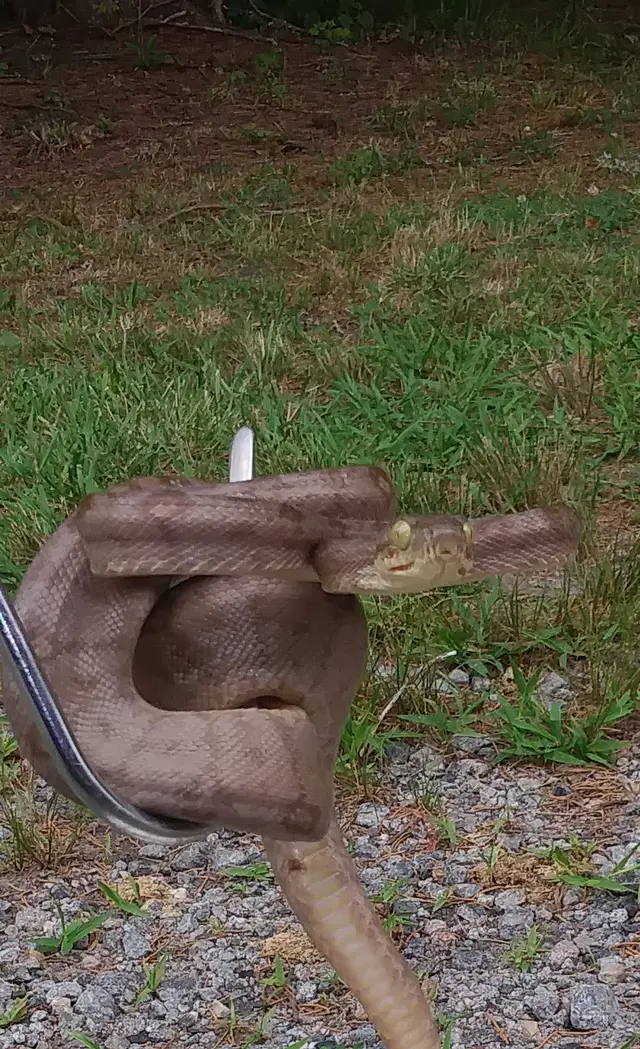
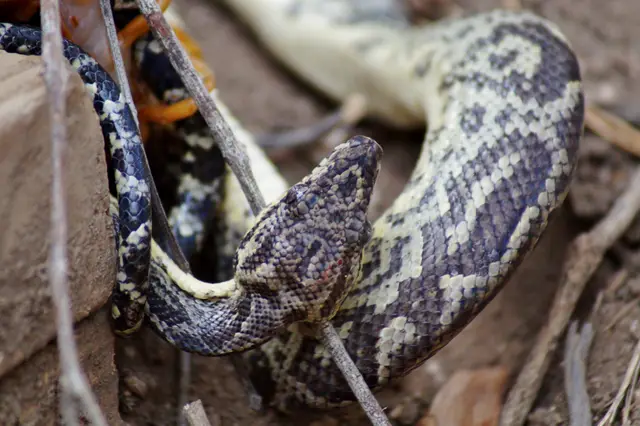
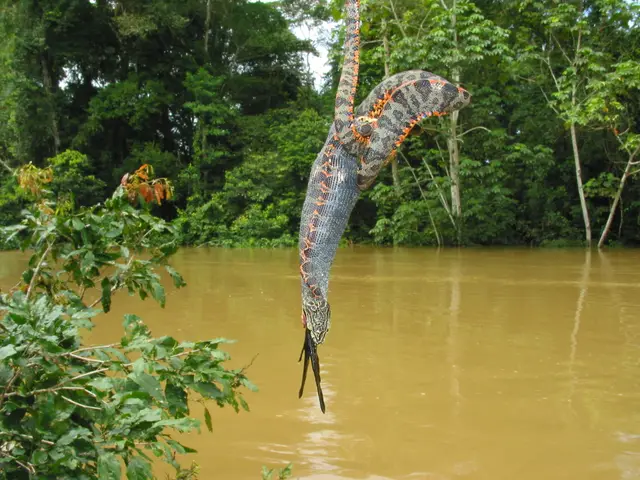
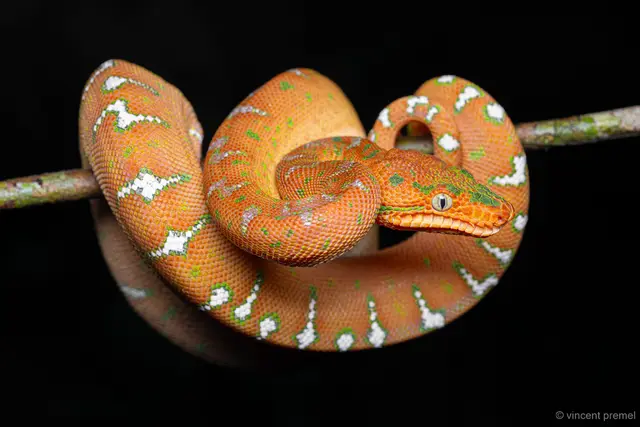
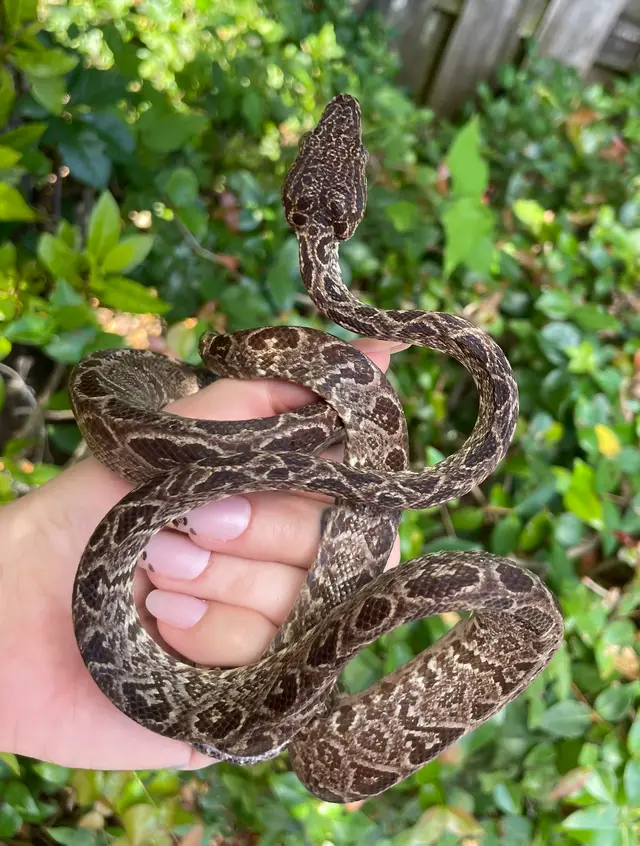
Young tree boas often look nothing like their parents. Newborn emerald tree boas are red or orange and turn green as they grow. Newborn Central American tree boas are carrot orange or pale green, and adults are dull khaki green or brown with a yellow chin and belly, according to the UWI guide.
Types of tree boa
The Reptile Database lists nine species in Corallus. Several were split from older, broader species, so books from before about 2010 may lump them together. The St. Vincent and Grenada tree boas used to be filed under the Amazon tree boa, and Reptile Database notes that genetic work by Colston and colleagues (2013) did not clearly separate the St. Vincent snake from it. The Amazon Basin emerald tree boa was split from the emerald tree boa in 2009.
| Species | Where it lives | Notes |
|---|---|---|
| Emerald tree boa (C. caninus) | The Guiana Shield: Guyana, Suriname, French Guiana and northern Brazil | Bright green with white markings; see our emerald tree boa guide |
| Amazon Basin emerald tree boa (C. batesii) | Upper Amazon in Brazil, Peru, Bolivia, Ecuador and Colombia | Also green; more white side markings than the emerald tree boa |
| Amazon or garden tree boa (C. hortulana) | The Guianas, Amazonia and eastern and southeastern Brazil | The most widespread species and the most variable in color |
| Central American or mangrove tree boa (C. ruschenbergerii) | Southwestern Costa Rica, Panama, northern Colombia, northern Venezuela, Isla Margarita, Trinidad and Tobago | The longest tree boa |
| Ringed tree boa (C. annulatus) | Eastern Guatemala and Honduras south to Colombia | Gray, brown or reddish, often with rings or blotches |
| Blomberg's tree boa (C. blombergi) | Pacific lowlands of Ecuador and southwestern Colombia | Endangered; lives in the canopy of lowland rainforest |
| St. Vincent tree boa (C. cookii) | St. Vincent only | Near Threatened |
| Grenada Bank tree boa (C. grenadensis) | Grenada and some of the Grenadines | Least Concern; very variable in color |
| Cropan's tree boa (C. cropanii) | Ribeira Valley, Sao Paulo state, Brazil | Endangered; one of the rarest boas in the world |
The Madagascar tree boa is a different animal. It belongs to the genus Sanzinia, lives only on Madagascar, and is not closely related to Corallus.
How big do tree boas get?
Most adult tree boas are 4 to 6 ft (1.2 to 1.8 m) long, but they are thin, so even a long one weighs far less than a boa constrictor of the same length. Animal Diversity Web gives the Amazon tree boa a range of 20.7 to 74 in (52.5 to 188 cm), usually 47 to 59 in (1.2 to 1.5 m), with males and females about the same size. The Central American tree boa is the longest. The UWI guide says it grows past 6.5 ft (2 m), some reach about 7 ft, and females are both longer and thicker than males.
| Species | Length | Source |
|---|---|---|
| Amazon tree boa, typical adult | 47-59 in (1.2-1.5 m) | Animal Diversity Web |
| Amazon tree boa, largest recorded | About 74 in (1.88 m) | Animal Diversity Web |
| Grenada Bank tree boa, type specimen (male) | 46 in (1.17 m) | Reptile Database |
| Central American tree boa, large adults | Over 6.5 ft (2 m), some about 7 ft (2.1 m) | UWI, citing Boos (2001) |
Where do tree boas live?
Short answer: tree boas live in the American tropics, from southeastern Guatemala through Central America and across northern and central South America to the Atlantic Forest of southeastern Brazil, plus a handful of southern Caribbean islands. None live in the United States. Compare their range with other snakes on the world snake map.
According to West Indian Boas, the genus is patchy in Central America and has only a small foothold west of the Andes, in Colombia and Ecuador. East of the Andes it is widespread through the Guianas and the Amazon Basin and runs south into the Atlantic Forest. Island populations live on Isla Margarita, Trinidad, Tobago, St. Vincent and the Grenada Bank. The same source places the genus's origin in mainland South America, with later spreads over water to Central America and the Lesser Antilles.
Habitat
Tree boas need trees, and they need them to touch. Reptile Database describes the Amazon, Central American and Grenada species as fully arboreal, and West Indian Boas notes the genus lives in unbroken forest from sea level to about 3,600 ft (1,100 m). Within that, the habitats vary. The Amazon tree boa uses rainforest, savanna, dry and scrub forest and riverside woods, usually 3 to 6 ft (1 to 2 m) or more above the ground, per Animal Diversity Web. The Central American tree boa is a regular in the mangroves of Trinidad's Caroni Swamp and also turns up in gardens and shrubs.
Behavior: night shift in the branches
Tree boas are mostly active at night. By day the Central American tree boa sleeps in a tight ball on a branch, which earned it the Trinidad name cascabel dormilion, roughly "sleeping rattlesnake", because people there once took it for a rattlesnake. A 2010 survey in the Caroni Swamp, cited by the UWI guide, counted 32 tree boas along 116 km (72 miles) of transects, each snake a few hundred meters from the next.
They are solitary and stay put for long periods. Animal Diversity Web describes the Amazon tree boa as sedentary and active by both day and night. Disturbed, a tree boa draws its neck back into an S, hisses and strikes fast. Animal Diversity Web calls the Amazon tree boa "notoriously aggressive", and the UWI guide says young Central American tree boas are just as quick to bite as adults. A tree boa that falls or drops from a branch over water will swim away, clumsily, to escape a predator.
What do tree boas eat?
Tree boas eat warm-blooded prey as adults, mainly birds and small mammals, and many species start life on lizards and frogs. Animal Diversity Web lists birds, bats, frogs, rodents, lizards and marsupials for the Amazon tree boa, which hunts by heat at night and by sight in daylight. Their long front teeth are built for this diet: they reach through feathers and fur to hold a struggling bird or bat.
| Prey | Notes |
|---|---|
| Birds | Taken from their roosts at night; a main food for several species |
| Rodents | Including introduced house mice and rats in some areas |
| Bats and opossums | Caught in trees; bigger-headed species take larger mammals |
| Lizards and frogs | Common food for young snakes |
Head shape tracks diet. A 2013 study by Henderson, Pauers and Colston measured museum specimens of all nine species and found three body types. The slender, short-headed Amazon, Central American, St. Vincent and Grenada tree boas take a wide range of prey. The stout, long-headed emerald, Amazon Basin emerald and Cropan's tree boas are linked to larger mammals. The ringed and Blomberg's tree boas sit between the two.
A Central American tree boa strikes, throws the front third of its body around the prey and squeezes, all while anchored by its tail. The UWI guide notes it can hold a dead animal in one coil while it grabs and constricts another.
Are tree boas venomous or dangerous?
No, tree boas are not venomous, and they are not dangerous to people. Like the rest of the boa family, they have no venom glands and kill by constriction. None is big enough to constrict anything larger than a small mammal or bird.
The bite is another matter. Tree boas bite readily when handled or cornered, and their long front teeth can leave deep, bleeding punctures, especially on fingers and hands. Wash the wound with soap and water, keep it clean, and see a doctor if it shows signs of infection. The bigger safety issue in the tropics is telling a tree boa from a green pit viper, which is venomous. If you cannot identify a snake in a tree, leave it alone. Our snakebite FAQ covers first aid for any snake bite.
Snakes confused with tree boas
Two of the snakes below are venomous pit vipers that share the same forests. The quickest check is the face: a pit viper has one large heat pit on each side between the eye and the nostril, while a tree boa has a row of smaller pits along its lips.
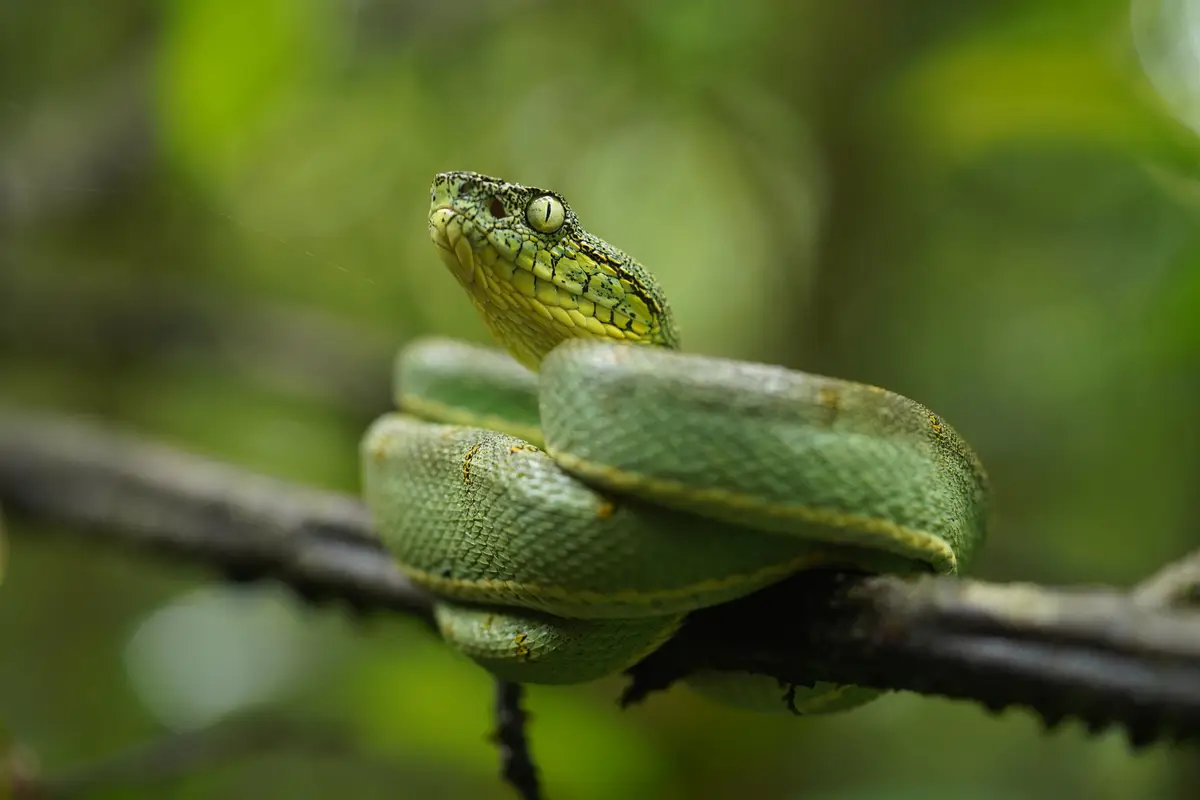
Two-striped forest pit viper
Bothrops bilineatus · Venomous
A green tree-living viper of the Amazon and the Atlantic Forest and an important cause of snakebite in the Amazon, according to a 2021 review in Frontiers in Immunology. It is turquoise green with fine black speckling and yellowish markings along each side, and adults are usually under 28 in (70 cm). A green emerald tree boa is much larger and has white markings across the back.
Eyelash viper
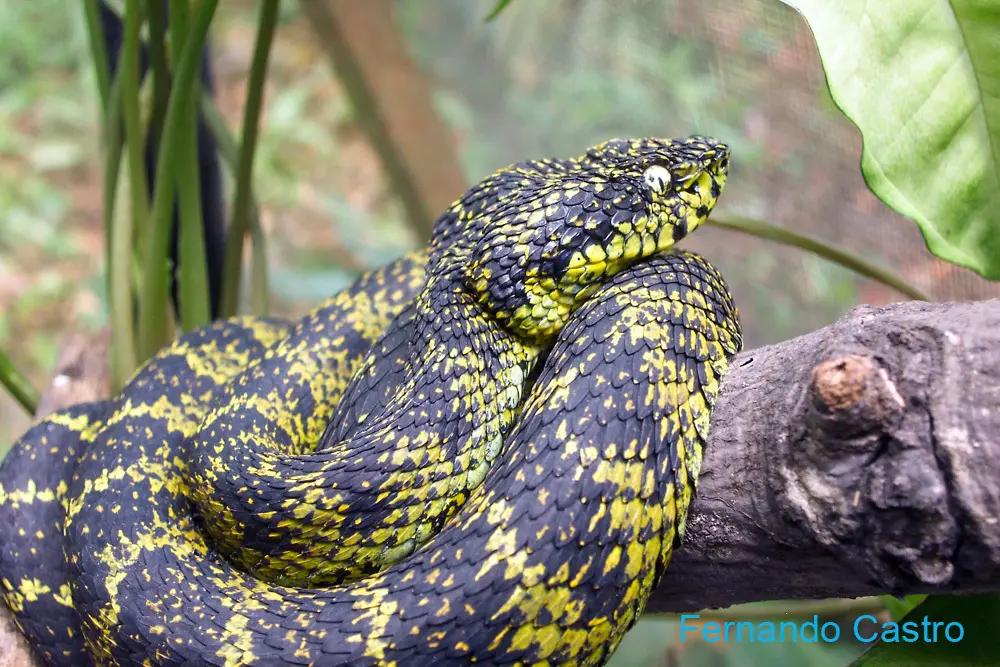
Bothriechis schlegelii · Venomous
A small pit viper of wet forests from southern Mexico to Ecuador and western Venezuela, per Animal Diversity Web. Look for the bristly raised scales over each eye and rough, keeled body scales. Adults are only 22 to 32 in (55 to 82 cm) long and come in olive green, bright yellow, pink, gray or brown, so color will not separate it from a tree boa.
Madagascar tree boa
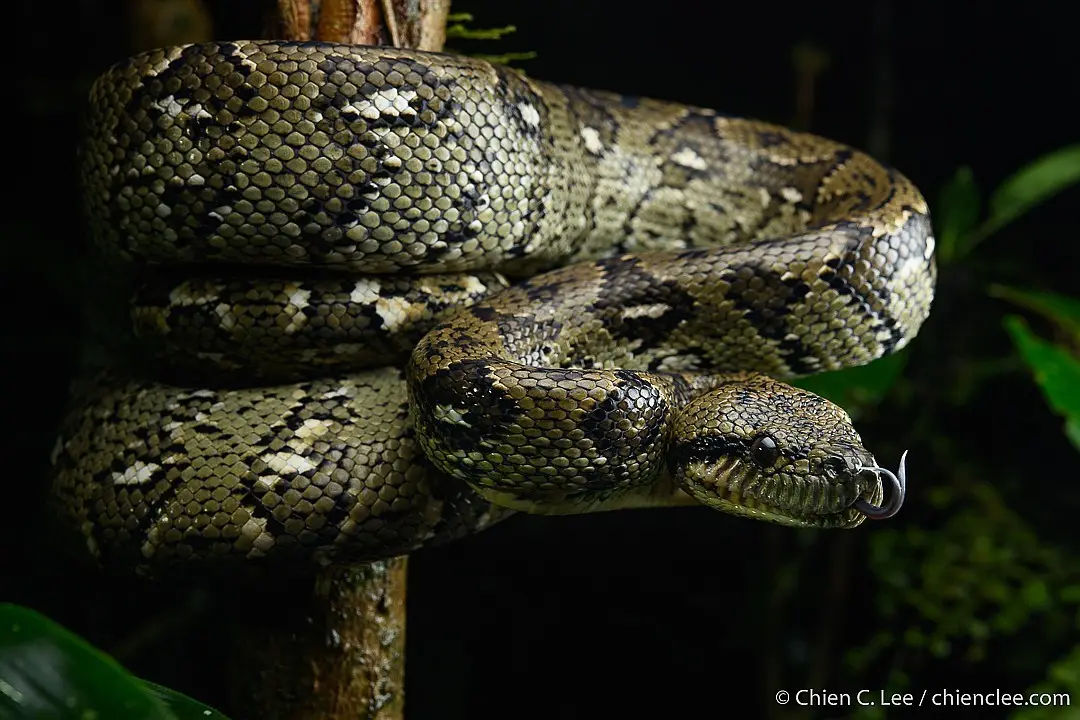
Sanzinia madagascariensis · Harmless
Shares the name but belongs to a different genus and lives only on Madagascar, so the two never meet in the wild. Both are sold as pets, which is where they get mixed up.
Rainbow boa
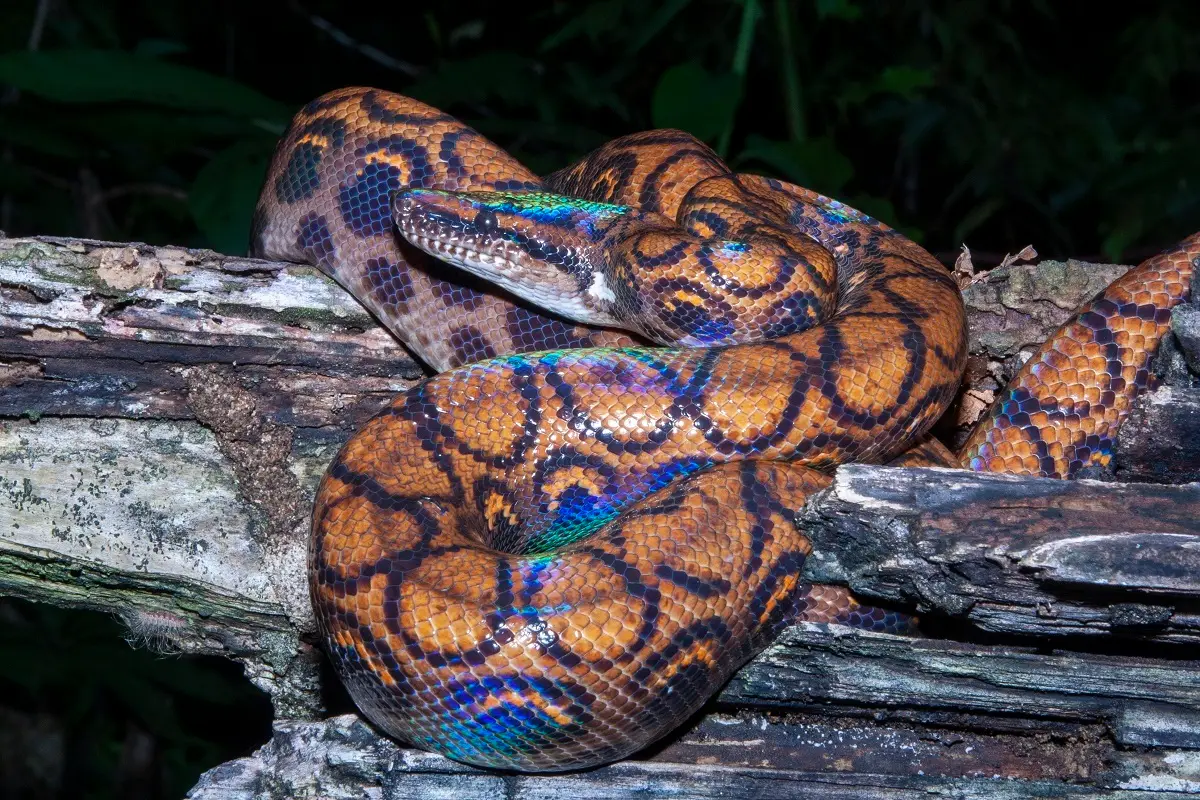
Epicrates cenchria · Harmless
Another South American boa that sometimes climbs. The rainbow boa is heavier, spends most of its time on the ground, and has an oily sheen that flashes rainbow colors in sunlight.
Reproduction and lifespan
All tree boas give birth to live young; the eggs develop inside the mother. In Trinidad, Central American tree boas mate early in the dry season, from about February to April. Several males gather around one larger female, often in a ball over water, and the snakes mature at about 2 years old, per the UWI guide. Animal Diversity Web puts mating in the Amazon tree boa between March and May, with sexual maturity at about 3 years. Newborns are on their own at birth and hide in thick plant growth on large branches.
Lifespan in the wild is not known. Animal Diversity Web gives about 20 years for Amazon tree boas in human care.
Conservation status
| Species or authority | Status |
|---|---|
| Cropan's tree boa (IUCN) | Endangered |
| Blomberg's tree boa (IUCN) | Endangered |
| St. Vincent tree boa (IUCN) | Near Threatened |
| Amazon, emerald, Amazon Basin emerald, Central American, ringed and Grenada Bank tree boas (IUCN) | Least Concern |
Most tree boas are widespread and secure. The two Endangered species are rare forest specialists with small ranges. Blomberg's tree boa lives in the canopy of lowland rainforest in Ecuador and southwestern Colombia, where much forest has been cleared. Cropan's tree boa is known only from the Ribeira Valley in Sao Paulo state. Pesquisa FAPESP reports that only six specimens had ever been documented before January 2017, when residents of Sete Barras caught a live one. Local people had killed some in the past, and an outreach campaign by scientists in the village of Guapiruvu helped show that the snake is harmless.
Tree boa FAQ
Are tree boas venomous?
No. Tree boas have no venom glands. They are constrictors that grab birds, rodents and lizards with their teeth and squeeze them. Their long front teeth can still cause a painful, bleeding bite, so they are best left alone. Clean any bite with soap and water. In the tropics, make sure the snake is not a green pit viper before going near it.
How big do tree boas get?
Most tree boas are 4 to 6 ft (1.2 to 1.8 m) long as adults. The Amazon tree boa usually reaches 47 to 59 in (1.2 to 1.5 m), with a recorded maximum of about 74 in. The Central American tree boa is the longest species and can reach about 7 ft (2.1 m). All are slim snakes, much lighter than a boa constrictor of the same length.
What is the difference between an Amazon tree boa and an emerald tree boa?
They are separate species in the same genus. The emerald tree boa is always green as an adult, with white markings, and is heavier with a longer head. The Amazon tree boa is slimmer, has a shorter head, and comes in many colors, from gray and brown to yellow, orange and red. The Amazon tree boa also has a much larger range.
Where do tree boas live in the wild?
Tree boas live in the American tropics, from southeastern Guatemala through Central America to Colombia, Ecuador, Venezuela, the Guianas, the Amazon Basin and the Atlantic Forest of southeastern Brazil. A few live on Caribbean islands: Isla Margarita, Trinidad, Tobago, St. Vincent and Grenada. They live almost entirely in trees, from sea level up to about 3,600 ft.
Is the Madagascar tree boa a real tree boa?
Not in the strict sense. The Madagascar tree boa belongs to a separate genus, Sanzinia, and lives only on Madagascar. The true tree boas of the genus Corallus live in Central and South America. Both are non-venomous, live-bearing boas, and the Madagascar tree boa is rated Least Concern by the IUCN.
Do tree boas make good pets?
They are kept by experienced keepers, but they are not beginner snakes. Animal Diversity Web describes the Amazon tree boa as notoriously aggressive, and tree boas have long front teeth that cause deep bites. They need tall enclosures with perches and steady warmth and humidity. Captive Amazon tree boas live about 20 years, so owning one is a long commitment.
Related snakes
Sources
- Reptile Database: genus Corallus species list
- Reptile Database: Corallus hortulana
- Reptile Database: Corallus cookii
- Animal Diversity Web: Corallus hortulanus
- UWI Online Guide to the Animals of Trinidad and Tobago: Corallus ruschenbergerii
- West Indian Boas: Genus Corallus
- Henderson, Pauers and Colston (2013), morphology and diet in Neotropical treeboas, summary
- Pesquisa FAPESP: Community zoology (Cropan's tree boa)