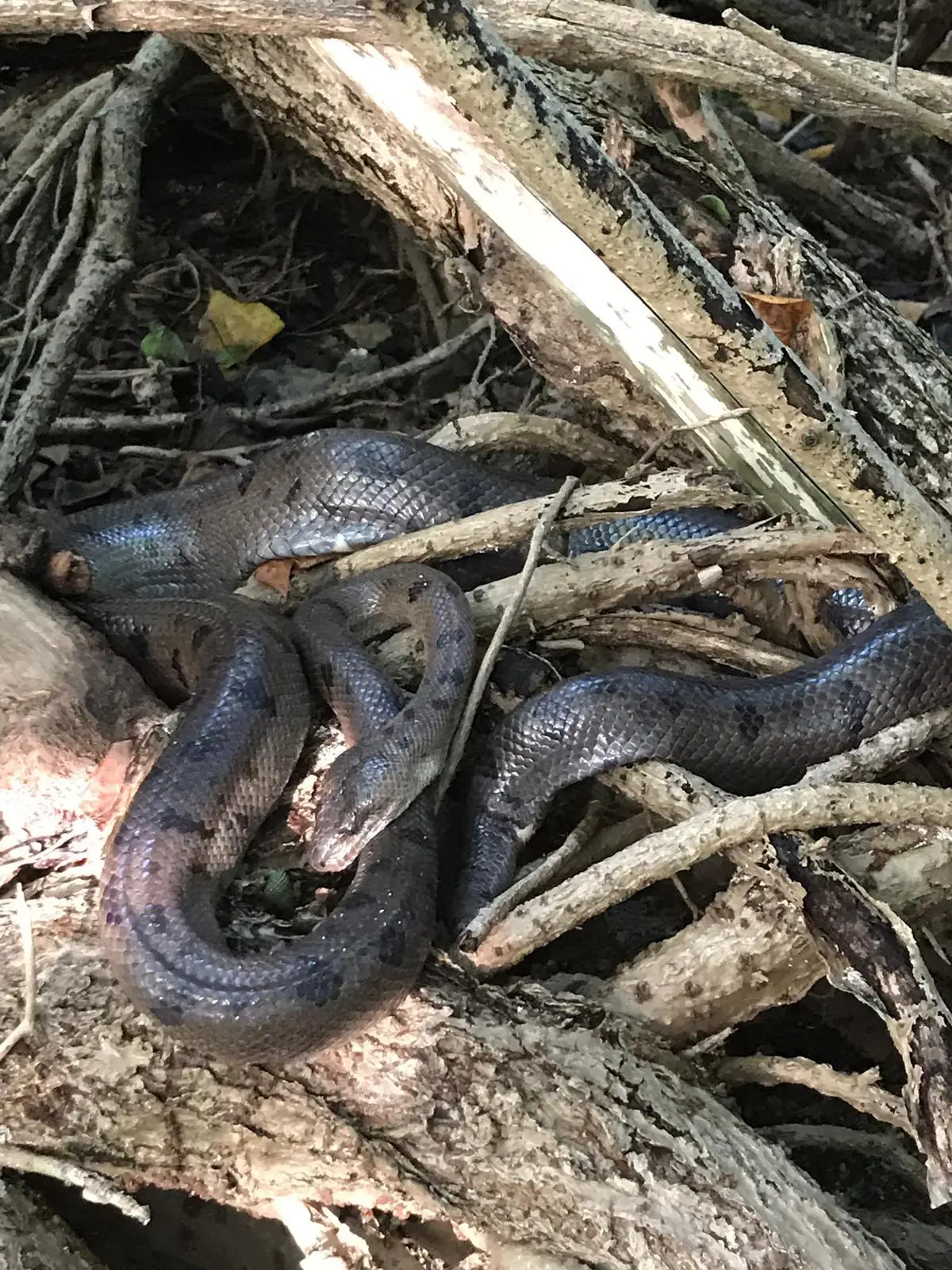
ABACO ISLANDBOA
Chilabothrus exsul · Family Boidae
KEY TAKEAWAYS
The Abaco Island boa (Chilabothrus exsul) is a small, slender boa found only on the Abaco Islands of the northern Bahamas. It is not venomous and poses no danger to people. The IUCN lists it as Vulnerable, mainly because of traffic, feral cats and habitat loss.
- It is not venomous. It kills lizards, small birds and rodents by constriction.
- It is one of the smaller West Indian boas: the largest measured female was 810 mm (32 in) from snout to vent.
- Its whole known range is Great Abaco, Little Abaco and a few cays such as Elbow Cay, Green Turtle Cay and Tilloo Cay.
- A 2016 road survey on Abaco found 11 boas over 1,379 km of repeated road surveys, and road deaths are now a recognized threat.
Abaco Island boa quick facts
| Common name | Abaco Island boa, Abaco Islands boa, Northern Bahamas boa |
|---|---|
| Scientific name | Chilabothrus exsul (Netting & Goin, 1944); formerly Epicrates exsul |
| Family | Boidae (boas) |
| Venomous | No, a constrictor |
| Adult length | About 2-3 ft (0.6-0.9 m); maximum snout-vent length 566 mm in males and 810 mm in females |
| Newborn size | 231-280 mm (9-11 in) snout-vent length, 4.5-7.3 g |
| Range | Endemic to the Bahamas: Great Abaco, Little Abaco, Elbow Cay, Green Turtle Cay, Tilloo Cay; possibly eastern Grand Bahama |
| Habitat | Coppice (dry hardwood forest), pine forest, scrub and gardens on limestone |
| Diet | Lizards, small birds and rodents; young eat anoles |
| Reproduction | Live-bearing, 2-11 young per litter in captivity |
| Lifespan | Over 24 years in zoos; some captive animals are over 40 |
| Conservation | IUCN Vulnerable; CITES Appendix II; protected under Bahamian law |
How to identify an Abaco Island boa
An Abaco Island boa is a thin, small boa with a head clearly wider than its neck and a body that is slightly flattened from side to side. Adults are gray to reddish or greenish gray with irregular dark blotches down the back and a faint rainbow sheen in sunlight. Young ones look completely different: newborns are bright red and turn orange before they darken, a color change found in many West Indian boas, according to the West Indian Boas project.
- 1Slim build: a narrow, laterally compressed body that looks more like a climbing snake than a heavy ground boa.
- 2Distinct head: the head is noticeably wider than the thin neck.
- 3Blotched back: irregular dark blotches on a gray, reddish or green-gray background, with iridescence along the flanks.
- 4No stripe behind the eye: it lacks the dark postorbital stripe that marks the related Turks and Caicos boa.
- 5Red or orange young: babies are red at birth and orange as juveniles, so a small orange snake on Abaco may be a young boa.
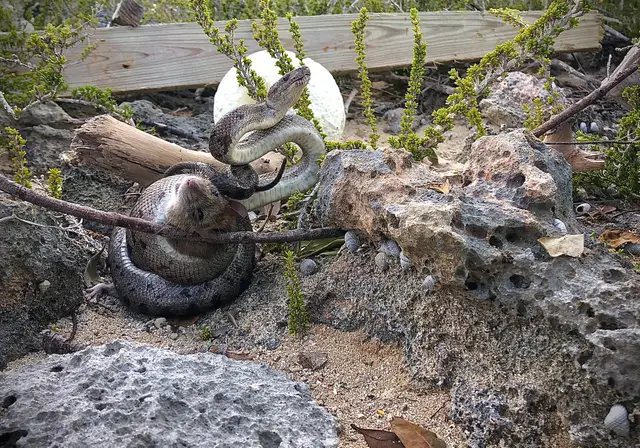
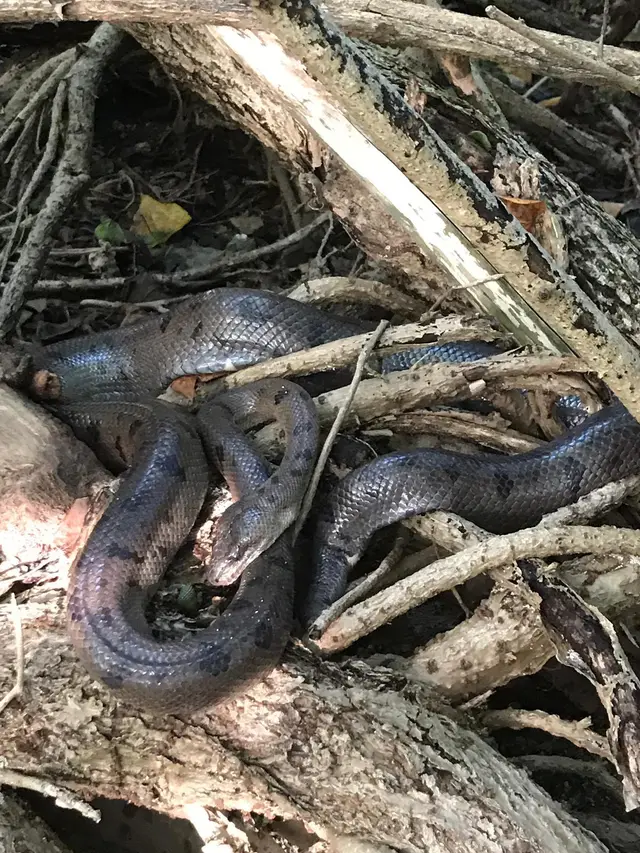
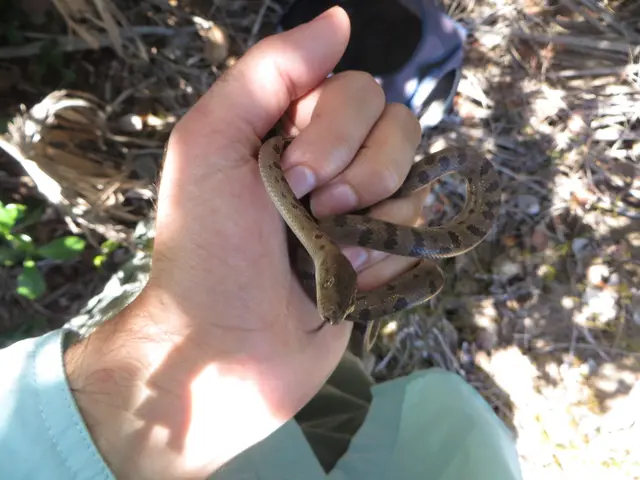
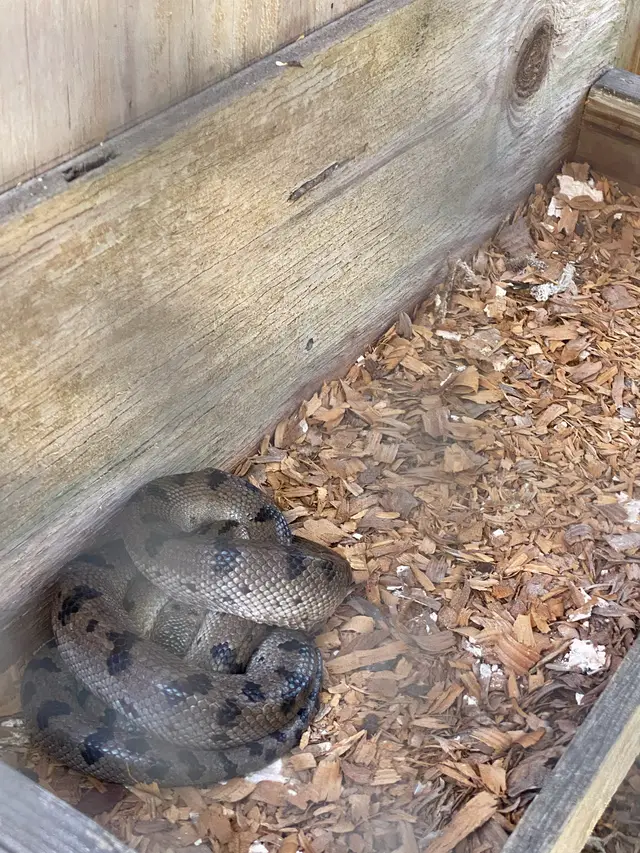
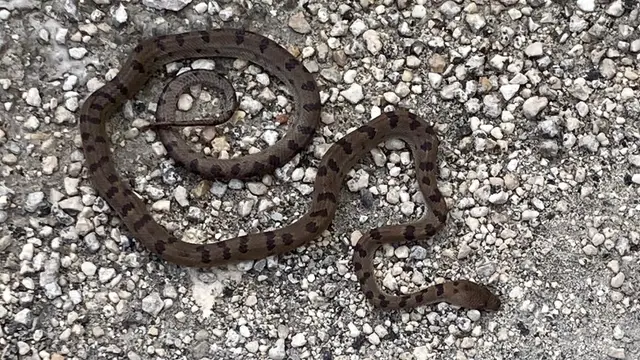
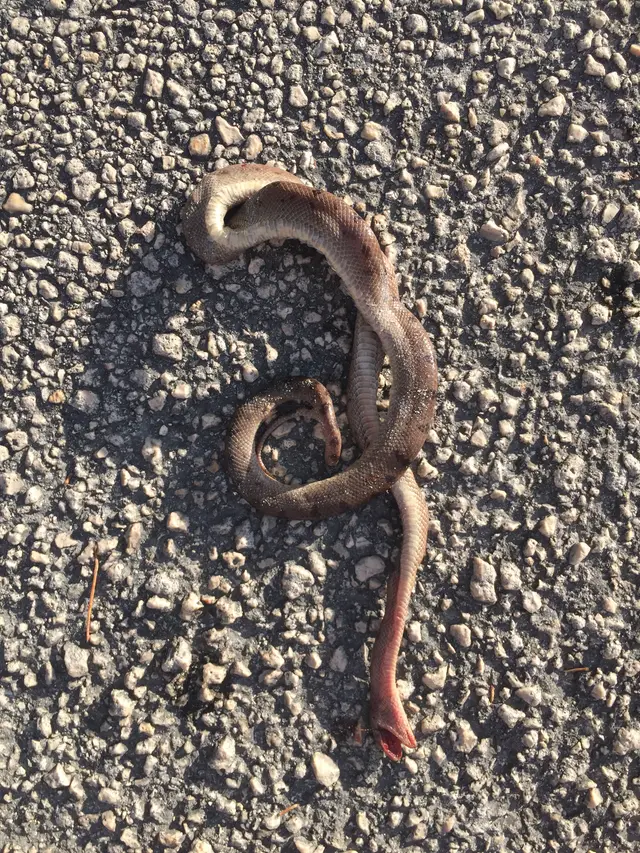
The species was described in 1944 by Maurice Netting and Coleman Goin from a male caught near Blackrock on the east coast of Great Abaco. They named it exsul, Latin for an exile, a nod to its isolated home. Like the Cuban boa and the Jamaican boa, it was moved from Epicrates to the West Indian genus Chilabothrus in 2013.
How big do Abaco Island boas get?
Abaco Island boas are small for boas, usually 2 to 3 ft (0.6-0.9 m) long. Many references give a maximum of about 80 cm (31 in). Measurements compiled by the West Indian Boas project put the largest male at 566 mm and the largest female at 810 mm snout-vent length, so females grow noticeably bigger.
| Measure | Figure | Source |
|---|---|---|
| Largest male (snout-vent) | 566 mm (22 in) | West Indian Boas project |
| Largest female (snout-vent) | 810 mm (32 in) | West Indian Boas project |
| Largest Great Abaco male in 1974 study | 525 mm (21 in) | Sheplan & Schwartz 1974 |
| Newborns | 231-280 mm (9-11 in), 4.5-7.3 g | Toledo Zoo litter, via West Indian Boas project |
Snout-vent length leaves out the tail, so total length is a little longer. A possibly larger boa photographed on Tilloo Cay in 2008 has never been confirmed. Fossils from Sawmill Sink, a blue hole on Abaco dated to between 4,200 and 1,000 years ago, include a boa identified as Chilabothrus cf. exsul that was bigger than today's animals.
Where does the Abaco Island boa live?
Short answer: the Abaco Island boa lives only in the northern Bahamas, on Great Abaco, Little Abaco and several small cays. The Reptile Database lists it from the Abaco Islands alone.
Records come from Great Abaco, Little Abaco, Elbow Cay, Green Turtle Cay and Tilloo Cay. Some sources add Grand Bahama, but the West Indian Boas project treats the eastern end of Grand Bahama only as a possible locality. It is the only native Bahamian reptile or amphibian restricted to the Little Bahama Bank. See how its tiny range compares with other boas on the world snake map.
Habitat
The Abaco Island boa lives mostly in coppice, the dry broadleaf hardwood forest of the Bahamas, and turns up less often in Caribbean pine forest and village gardens. Netting and Goin found the first boas in old pinewoods with dense undergrowth, and later collectors found them in burned pine and cut-over scrub on Great Abaco.
The ground under all of these habitats is karst limestone, full of holes and cracks, and the boas hide in those crevices by day. Abaco covers about 1,350 km² (520 sq mi), and the West Indian Boas project estimates that only about 10% of its original coppice is still intact. The northern Bahamas get 1,250-1,500 mm of rain a year and are cooler and more seasonal than the islands to the south.
Behavior
Abaco Island boas are secretive and seldom seen. Reynolds and colleagues, writing in the Caribbean Naturalist in 2016, noted that little is known about the species' natural history. Most of what is known comes from scattered field notes and zoo records.
The collector Arthur Twomey watched three boas come out of holes in coral rock to bask along the edge of a clearing. Two pregnant females were found under debris at the high-tide line on Little Abaco, probably warming themselves. Males fight each other, a behavior Peter Tolson recorded. A study of arboreal snakes by Harrington and colleagues in 2018 called the species partly arboreal, and its slim, flattened body suits climbing.
What do Abaco Island boas eat?
The Abaco Island boa is an opportunistic hunter of lizards, small birds and rodents. Peter Tolson and Robert Henderson described its diet that way in their 1993 book on West Indian boas, and later work by Graham Reynolds and colleagues found the same pattern, with young boas eating anole lizards.
| Prey | Who eats it |
|---|---|
| Anole lizards (Anolis) | Mainly juveniles |
| Other lizards | Adults |
| Small birds | Adults; one author lists it as a predator of the Abaco parrot |
| Rodents | Adults, including introduced rats |
No detailed diet study exists for this species. The claim that it preys on the Abaco parrot, which nests in limestone holes in the ground, comes from a single author cited by the West Indian Boas project and should be treated with care.
Is the Abaco Island boa venomous or dangerous?
No, the Abaco Island boa is not venomous and is not dangerous to people. Like all boas it has no venom glands. It grabs prey with small, backward-curved teeth and squeezes until the animal stops breathing.
An adult is under 3 ft long and slim, so the worst it can do is a nip. If one does bite, wash the small cuts with soap and water and watch for infection. The snakebite FAQ has more first-aid basics. The bigger risk runs the other way: the snake is protected, so it should be left alone and never collected.
Snakes confused with the Abaco Island boa
On Abaco itself a slim, blotched boa is hard to mistake. Mix-ups happen mostly with its Bahamian relatives and with other iridescent boas in photos and collections.
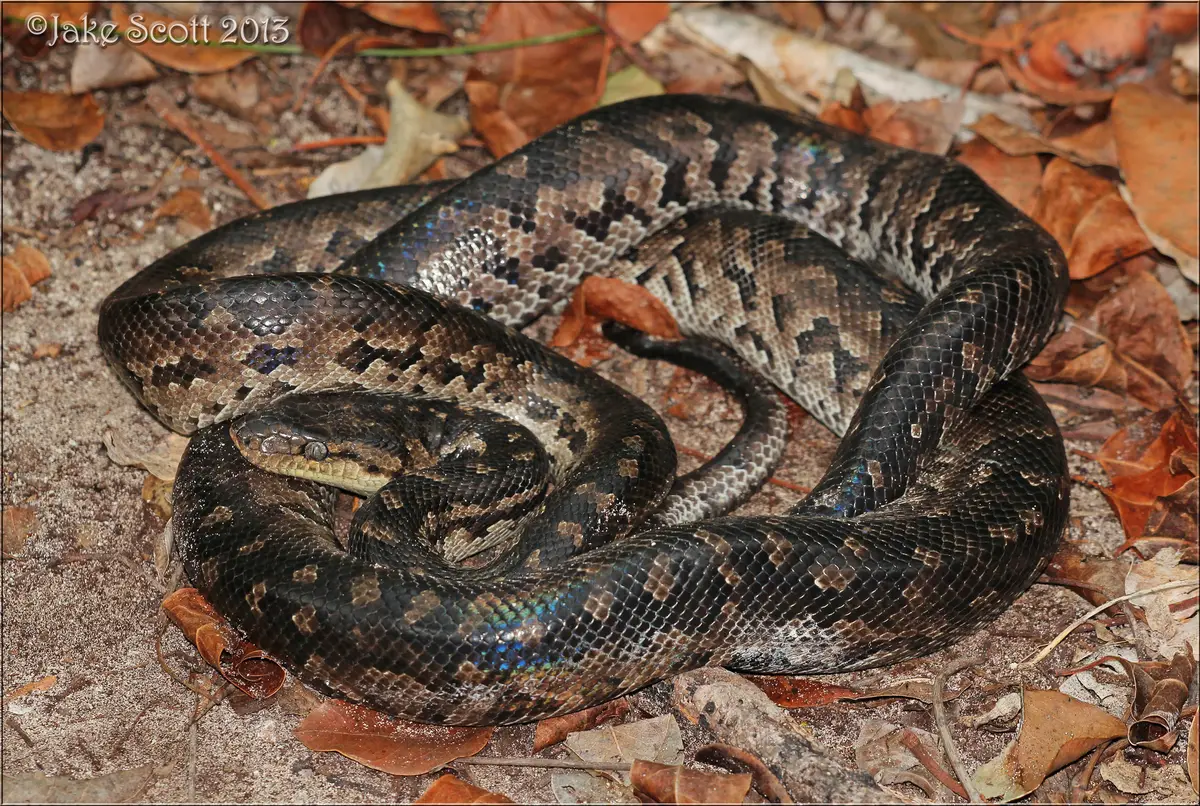
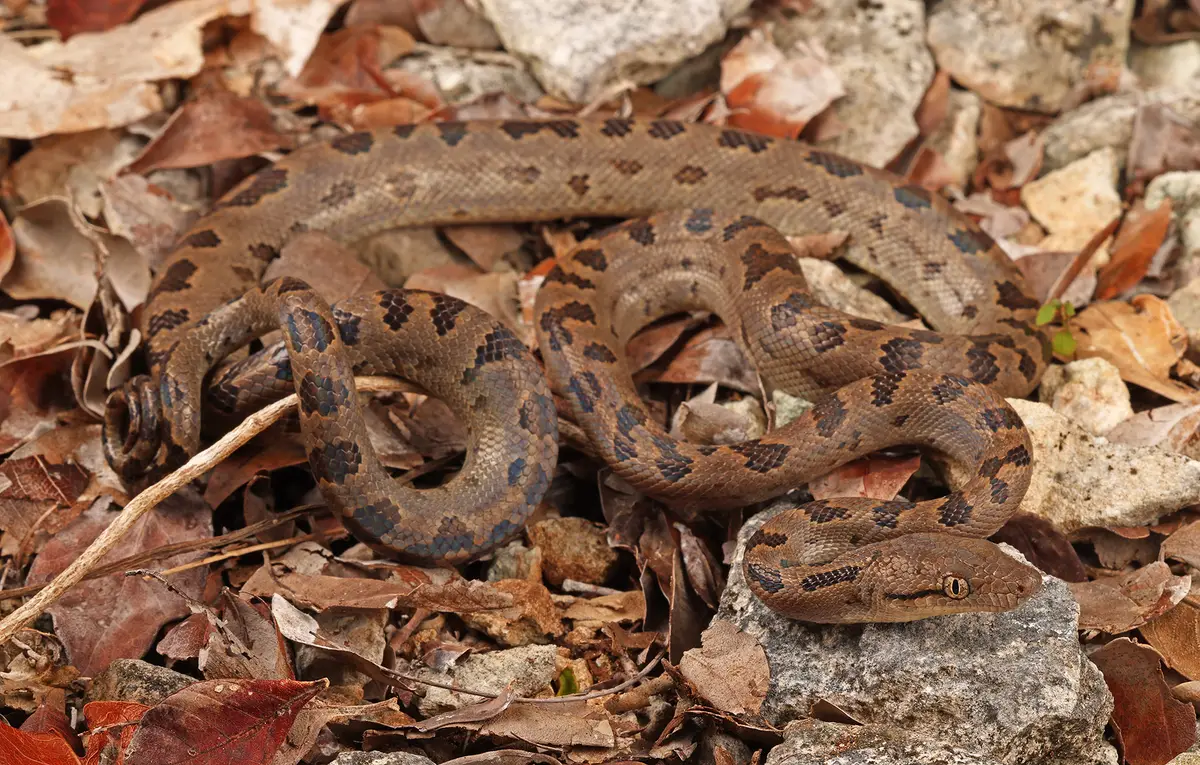
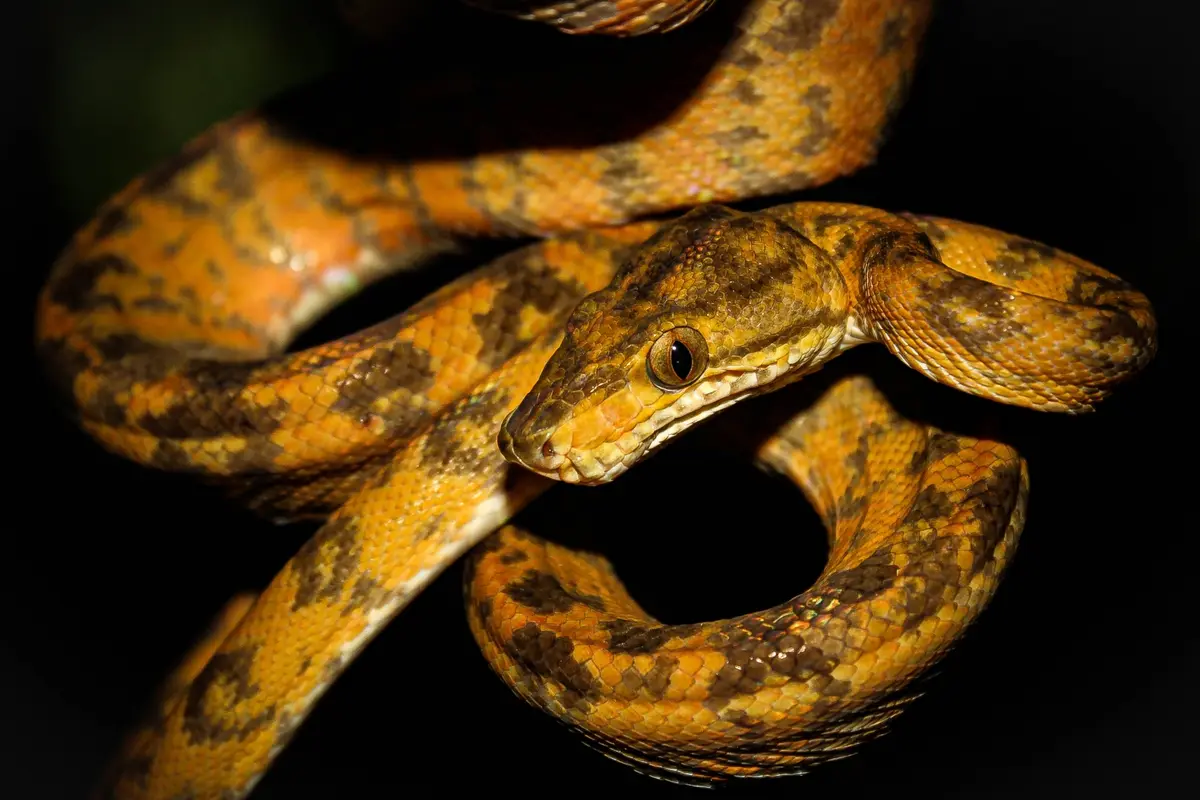
Bahamas boa
Chilabothrus strigilatus · Harmless
Probably its closest relative, according to the West Indian Boas project. It is a larger boa of the Great Bahama Bank, on islands such as Eleuthera, and does not live on Abaco.
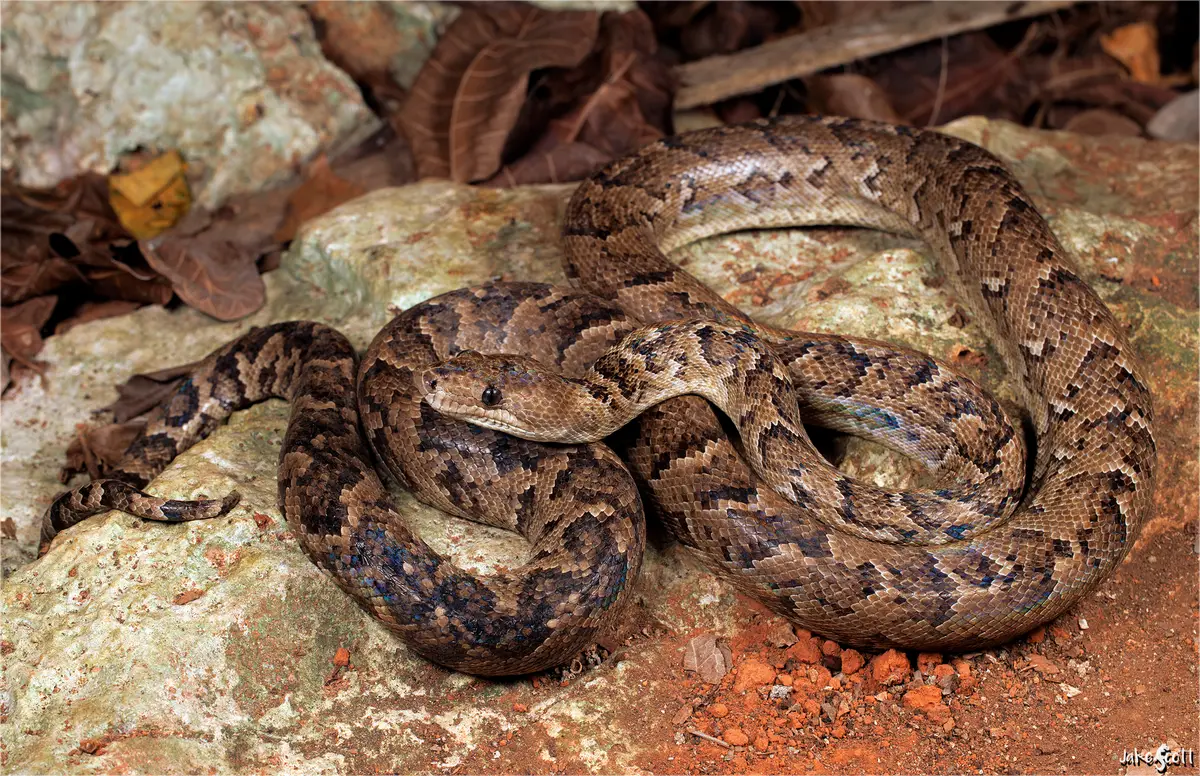
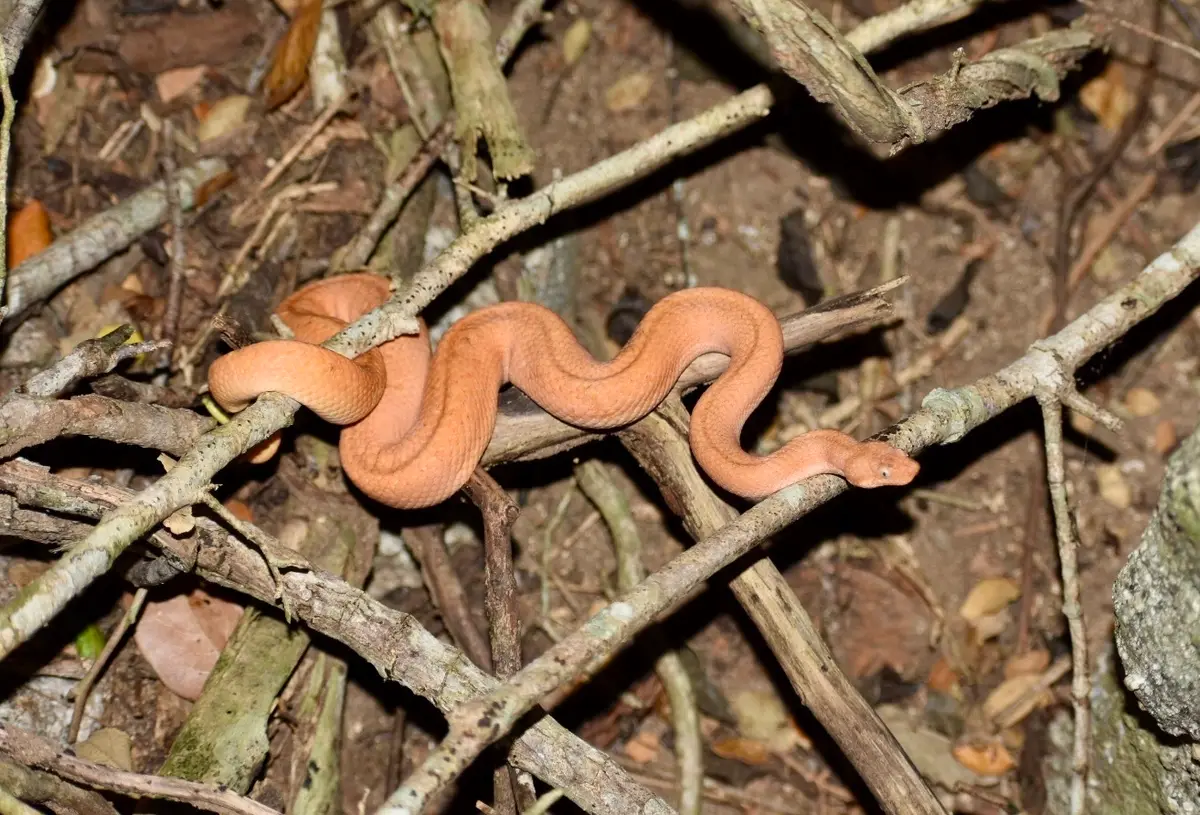
Turks and Caicos boa
Chilabothrus chrysogaster · Harmless
A related island boa from the southern Bahamas and Turks and Caicos. It has a dark stripe behind the eye, which the Abaco Island boa lacks.
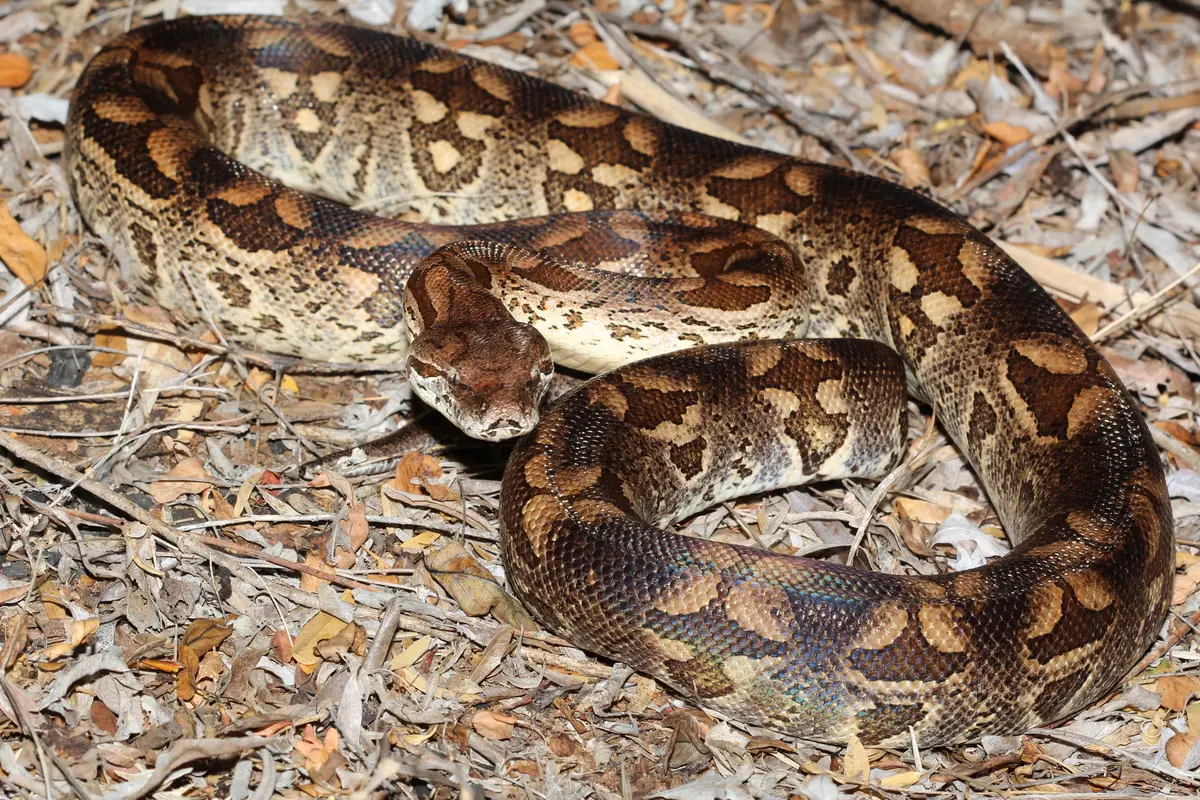
Cuban boa
Chilabothrus angulifer · Harmless
The Cuban boa is a much bigger, heavy-bodied relative with angular dark blotches. It lives only in Cuba.
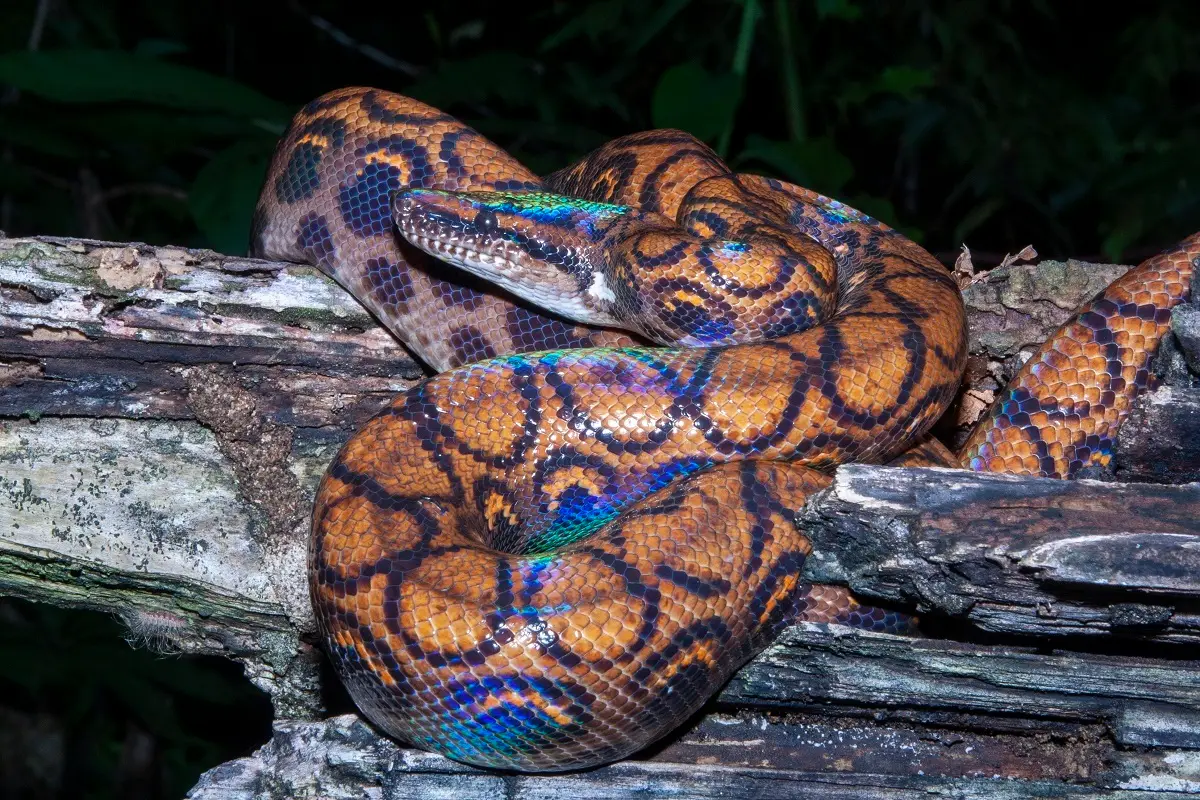
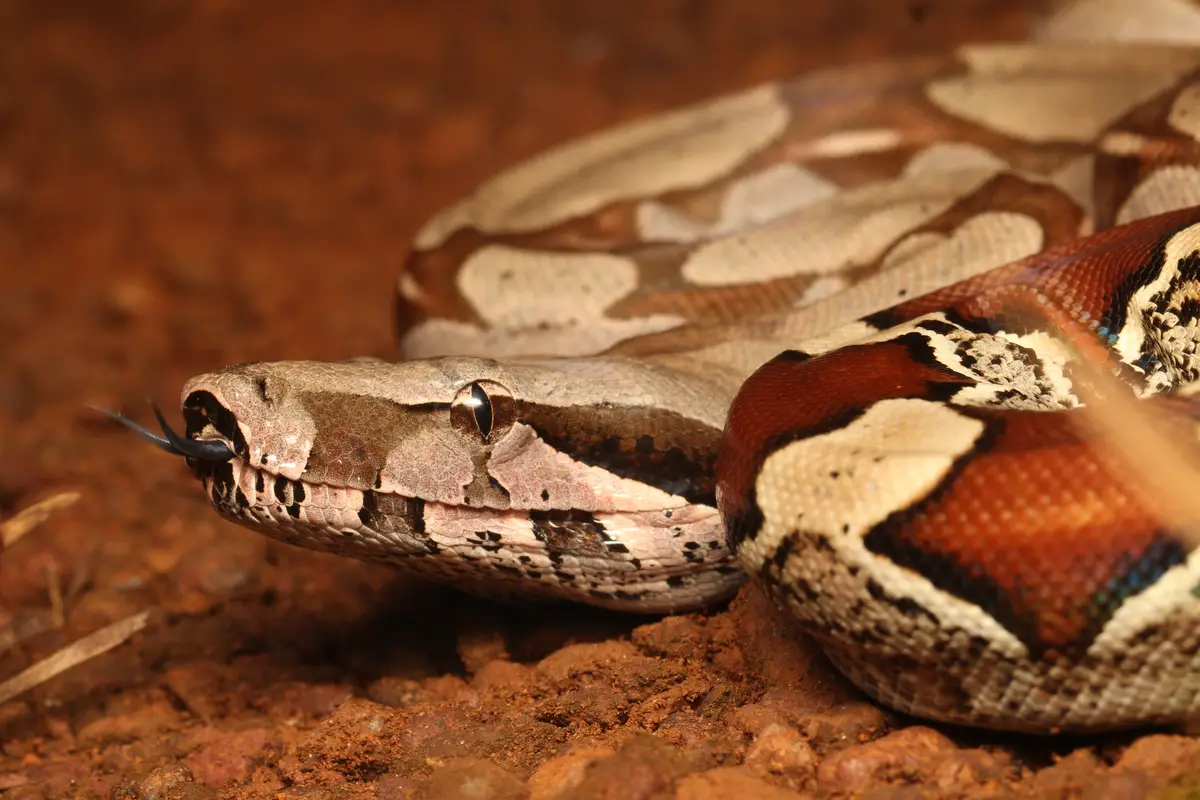
Rainbow boa
Epicrates cenchria · Harmless
The South American rainbow boa has a similar sheen but is thicker, with round dark-ringed spots instead of irregular blotches.
Reproduction and lifespan
Abaco Island boas give birth to live young, like other boas. Almost everything known about their breeding comes from zoos and private breeders, since births have not been studied in the wild.
Captive litters range from 2 to 11 young. A litter of nine born at the Toledo Zoo gave the newborn measurements of 231-280 mm snout-vent length and 4.5-7.3 g. Zoos in the United States bred the species several times between 1977 and 1995. In 2013 a private breeder got a litter of six from parents both over 30 years old, using a winter cool-down, misting and timed introduction of males. Two of the six were premature and died.
These are long-lived snakes. The Houston Zoo kept a wild-caught female for 24 years and 8 months, and some captive animals are over 40. Zoo interest faded in the 1990s, and the West Indian Boas project describes the captive population as close to collapse.
Is the Abaco Island boa endangered?
The Abaco Island boa is listed as Vulnerable on the IUCN Red List, assessed in 2015 by Reynolds and Buckner. Its extent of occurrence is under 13,500 km², and the population is thought to be shrinking, though no full population study exists.
| Authority | Status |
|---|---|
| IUCN Red List | Vulnerable (assessed 2015) |
| CITES | Appendix II (international trade regulated) |
| Bahamas | Protected under the Wild Animals (Protection) Act 1968 and Wildlife Conservation and Trade Act 2004 |
Roads are the best-measured threat. In June 2015, August 2015 and January 2016, Reynolds, Giery, Jesse and Quach drove 21 surveys along two road transects on Abaco and found 11 boas over 1,379.2 km, published as a road mortality study in the Caribbean Naturalist. The West Indian Boas project cites the study as showing about 1.6 boas killed on Abaco's roads each week. Feral cats, dogs, pigs, raccoons and rats prey on boas, and coppice is being cleared for building.
Newer problems include cane toads, recently reported on Abaco, and storms. Hurricane Dorian flooded much of the island in 2019, and nobody knows how many boas it killed. In 1993 Tolson and Henderson called the species common and not endangered. That is no longer true.
Abaco Island boa FAQ
Is the Abaco Island boa venomous?
No. The Abaco Island boa has no venom and kills its prey by constriction. It is small and slender, usually under 3 ft long, so a bite from a handled snake is no more than a few small cuts. Wash any bite with soap and water. The species is protected in the Bahamas and should be left alone.
How big does the Abaco Island boa get?
Adults are usually 2 to 3 ft (0.6-0.9 m) long. The largest female measured by the West Indian Boas project was 810 mm (32 in) from snout to vent, and the largest male 566 mm (22 in). Females grow bigger than males. Newborns are only about 9 to 11 in long.
Where does the Abaco Island boa live?
It lives only in the northern Bahamas, on Great Abaco, Little Abaco, Elbow Cay, Green Turtle Cay and Tilloo Cay. The eastern end of Grand Bahama is a possible but unconfirmed locality. Within that range it prefers coppice hardwood forest on limestone, and also uses pine forest, scrub and gardens.
Are there boas in the Bahamas?
Yes. The Bahamas have several native boas in the genus Chilabothrus. The Abaco Island boa lives on the Abaco Islands, the Bahamas boa (Chilabothrus strigilatus) lives on islands of the Great Bahama Bank, and the Turks and Caicos boa reaches the southern Bahamas. All are harmless to people.
What does the Abaco Island boa eat?
It eats lizards, small birds and rodents, including introduced rats, according to Tolson and Henderson's 1993 natural history of West Indian boas. Young boas eat mostly anole lizards. One author also lists it as a predator of the ground-nesting Abaco parrot, but no detailed diet study of the species exists.
Why is the Abaco Island boa Vulnerable?
Its range is tiny. Cars, feral cats and other introduced predators kill boas, while forest clearing shrinks what habitat is left. A 2016 road survey suggested about 1.6 boas die on Abaco's roads each week. Cane toads and hurricanes, including Dorian in 2019, add to the pressure.
Related snakes
Sources
- Reptile Database: Chilabothrus exsul
- West Indian Boas project: Chilabothrus exsul
- Reynolds, Giery, Jesse & Quach (2016). Preliminary assessment of road mortality in Chilabothrus exsul, the Northern Bahamas boa. Caribbean Naturalist 34
- IUCN Red List: Chilabothrus exsul
- iNaturalist: Chilabothrus exsul observations