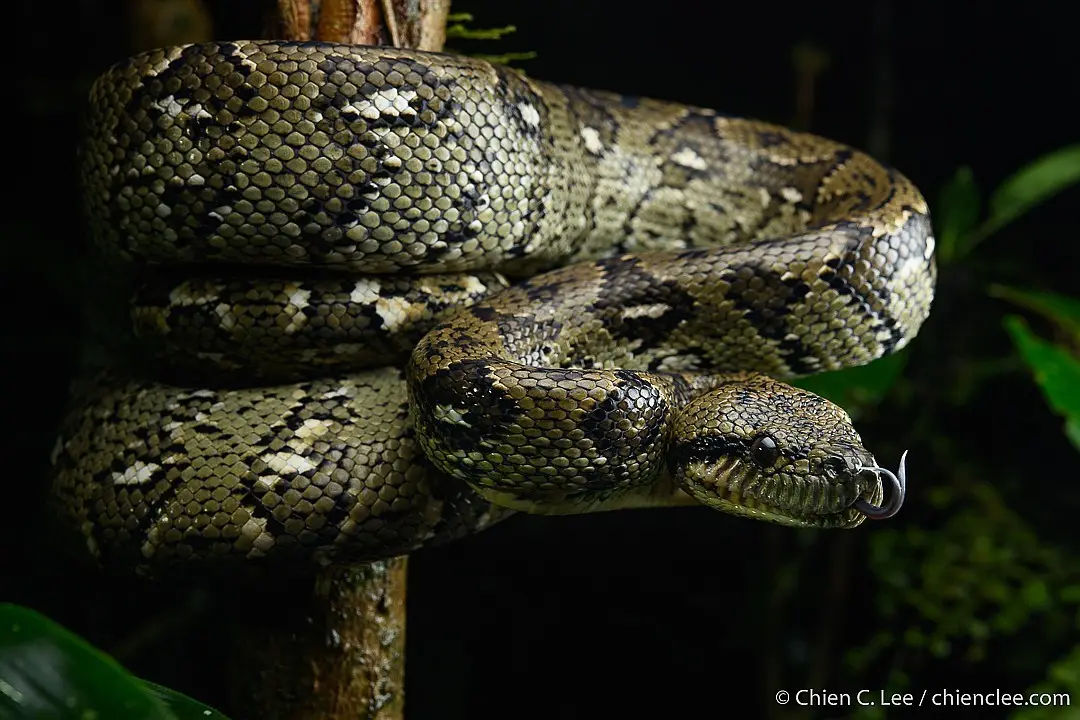
MADAGASCAR TREEBOA
Sanzinia madagascariensis · Family Boidae
KEY TAKEAWAYS
The Madagascar tree boa (Sanzinia madagascariensis) is a medium-sized boa found only on Madagascar and a few nearby islands. It is not venomous and is harmless to people.
- It is not venomous. It kills rats, small lemurs, birds and bats by constriction.
- Adults usually reach about 4-5 ft (1.2-1.5 m). No scientifically measured snake has topped 6 ft 1 in (1.85 m).
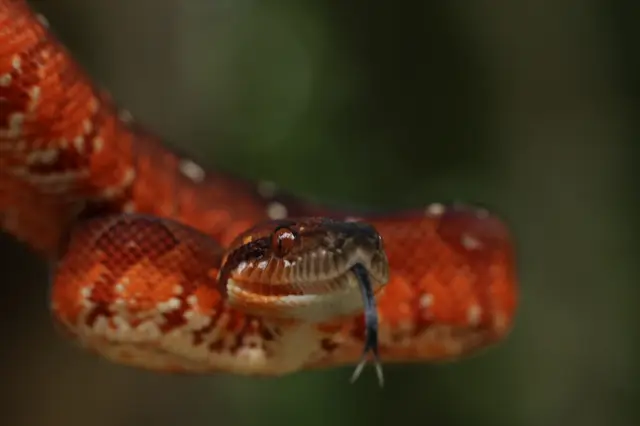
- Snakes in the rainforests of the east are greenish; a brown form called volontany lives in the drier west. Newborns of both are red and change color within one to two years.
- The IUCN lists it as Least Concern, but it is on CITES Appendix I, which bans commercial international trade in wild snakes.
Madagascar tree boa quick facts
| Common name | Madagascar tree boa, Malagasy tree boa, manditra |
|---|---|
| Scientific name | Sanzinia madagascariensis (Dumeril and Bibron, 1844); western form volontany Vences and Glaw, 2004 |
| Family | Boidae (boas) |
| Venomous | No, a constrictor |
| Adult length | Usually 4-5 ft (1.2-1.5 m); documented maximum about 6 ft 1 in (1.85 m) |
| Range | Madagascar: eastern form in the east and on Nosy Be, brown volontany form in the west and south |
| Habitat | Rainforest, dry forest, trees near streams and swamps, plantations and village edges |
| Diet | Rats, mouse lemurs and other small mammals, birds, bats, occasionally frogs |
| Reproduction | Live-bearing, usually 4-12 young (up to 19) |
| Conservation | IUCN Least Concern (2011); CITES Appendix I |
How to identify a Madagascar tree boa
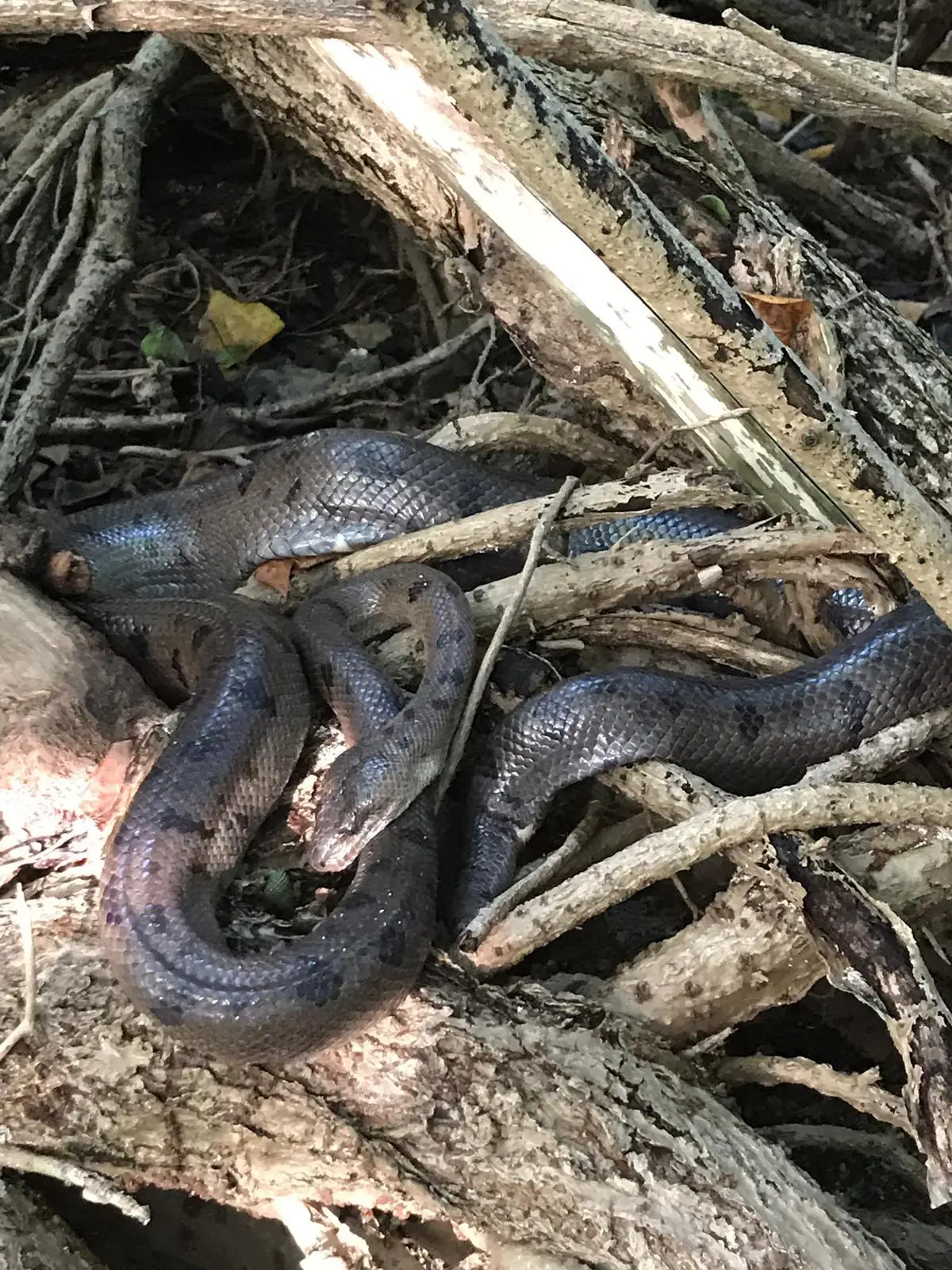
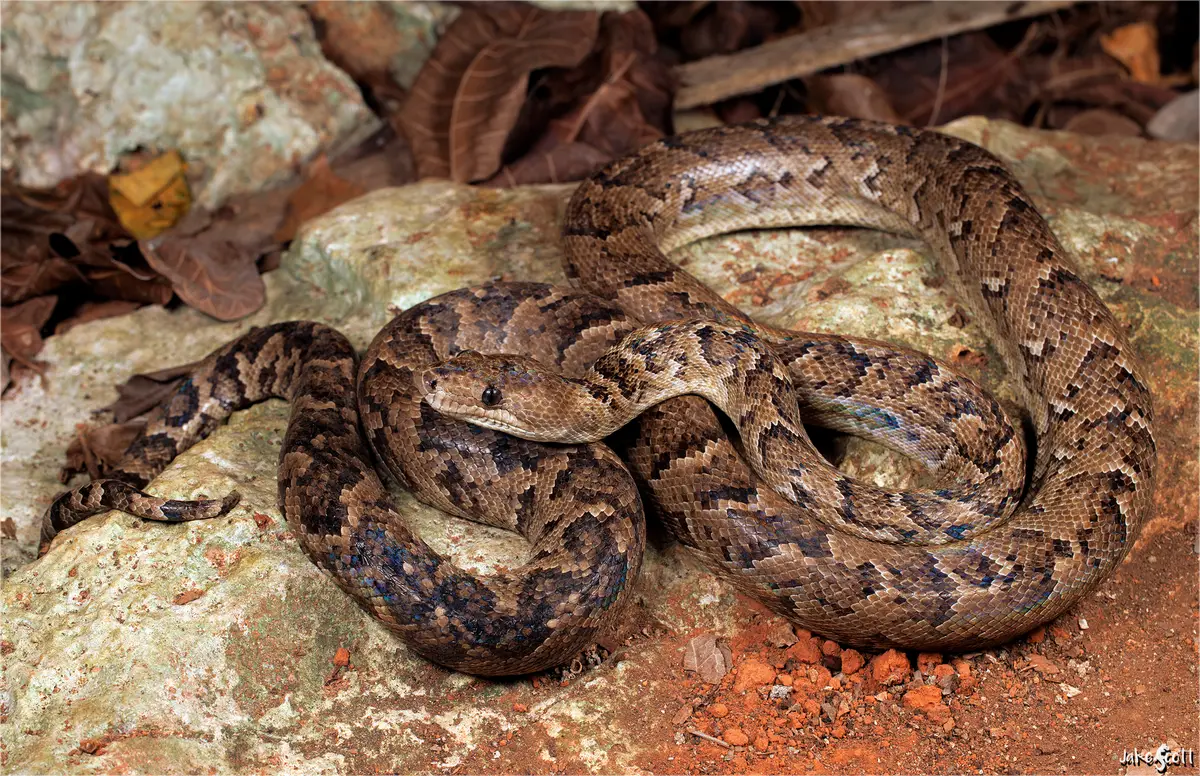
A Madagascar tree boa is a medium-sized boa with a wide pattern of darker markings along the body. Color depends on where it comes from. Snakes from the eastern rainforests are greenish to olive, while the western volontany form is mostly brown to yellowish brown. The Reptile Database notes that volontany is the Malagasy word for brown.
- 1Green or brown body: greenish in the east, brown to yellowish brown in the west, with darker markings.
- 2Heat pits between lip scales: a row of deep pits between the scales of the upper and lower lips. These sense the body heat of birds and mammals at night.
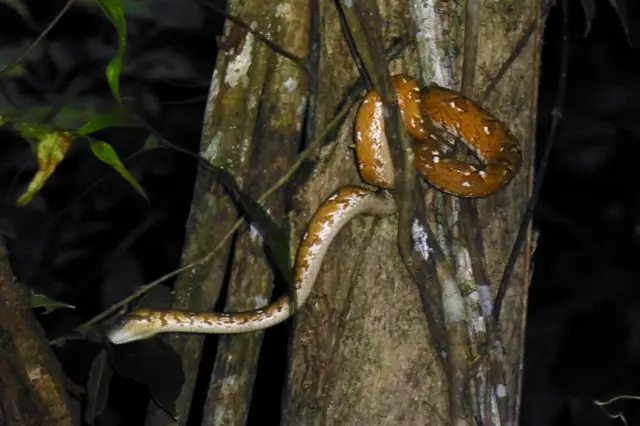
- 3At home in trees: it is usually found resting in trees or shrubs, often near water, rather than on the ground.
- 4Red babies: newborns are bright red and slowly take on the adult color over their first one to two years.
- 5Darker when pregnant: a gravid female turns noticeably darker and returns to normal after her next shed.
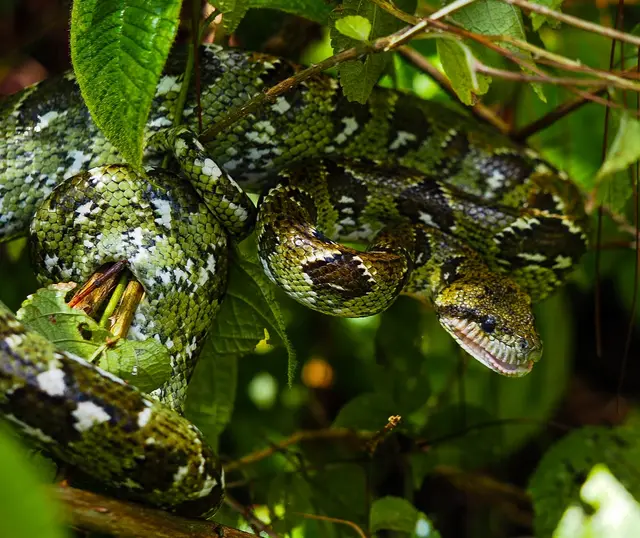
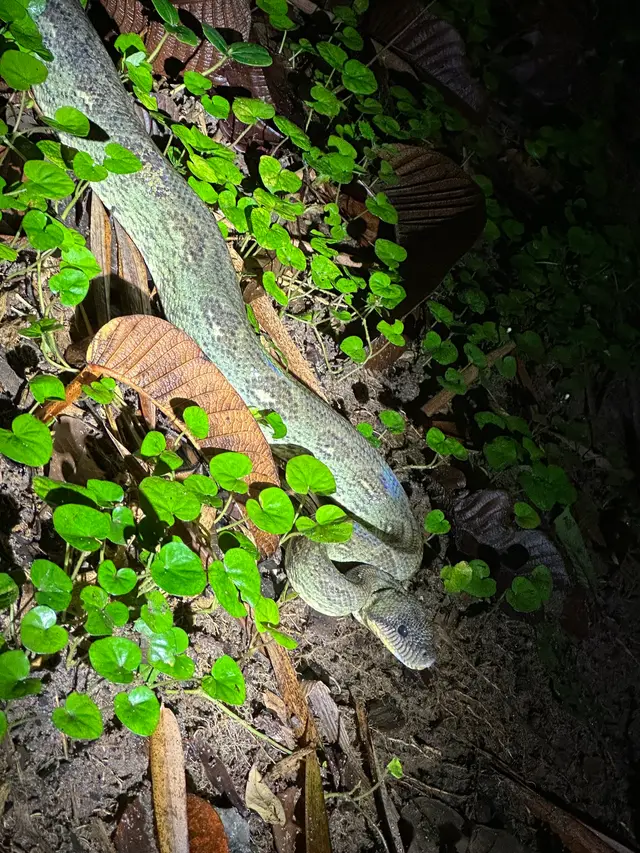
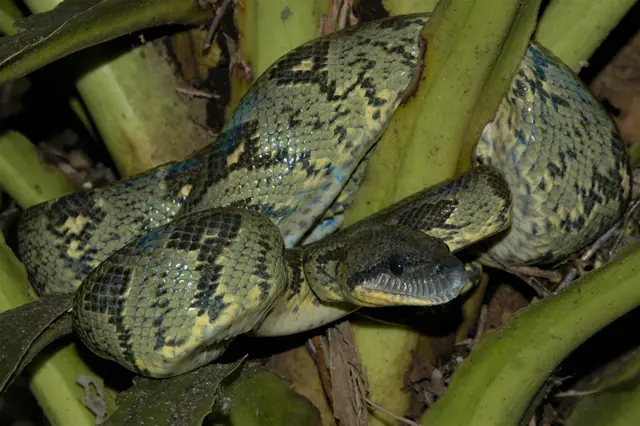
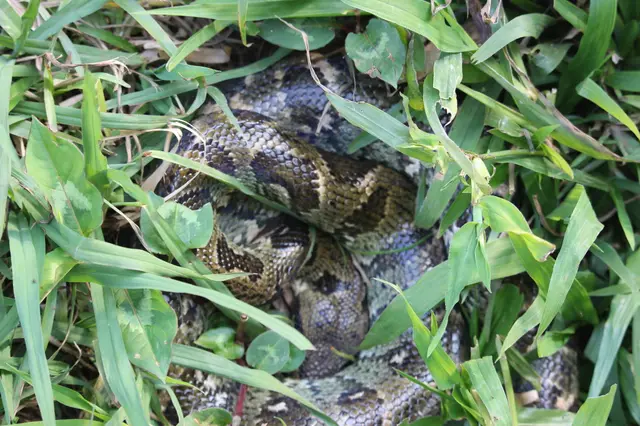
The pits are the quickest way to tell it from Madagascar's ground boas, which have no lip pits. South American tree boas, such as the emerald tree boa, also have lip pits, but they are not close relatives.
How big do Madagascar tree boas get?
Madagascar tree boas average about 1.5 m (5 ft) long, according to an overview in MadaMagazine, which adds that no scientifically documented snake has exceeded 1.85 m (6 ft 1 in). Travelers' reports of 2.5 m (8 ft) snakes have not been confirmed. Belfast Zoo gives adults up to roughly 160 cm (5 ft 3 in). Females are larger than males.
| Measure | Figure | Source |
|---|---|---|
| Average adult | About 1.5 m (5 ft) | MadaMagazine |
| Documented maximum | 1.85 m (6 ft 1 in) | MadaMagazine |
| Unconfirmed reports | Up to 2.5 m (8 ft) | Travelers' accounts, via MadaMagazine |
| Newborns | About 38 cm (15 in) | Belfast Zoo |
It is a medium-sized boa: much smaller than a boa constrictor, and lighter in build than Madagascar's ground boas.
Where do Madagascar tree boas live?
Short answer: Madagascar tree boas live only on Madagascar and some of its offshore islands. The greenish form lives in the east and on Nosy Be in the northwest, and the brown volontany form lives in the west and south. The two meet only in the far south of the island.
The western form was described from Ampijoroa, in Ankarafantsika National Park, and is also known from the island of Nosy Komba. The Reptile Database entry for Sanzinia madagascariensis gives the species' range as eastern Madagascar and Nosy Be. Compare it with other snakes on the world snake map.
Habitat
Eastern tree boas live mainly in rainforest, while the western form lives in the drier forests of the west and south. Both favor trees and shrubs near water: streams, rivers, ponds and swamps. They also turn up in plantations and around houses, and the species copes with damaged forest better than many Malagasy animals.
This boa is built for climbing. A worldwide review of tree snakes by Harrington and colleagues (2018) classed it as fully arboreal, and young snakes in particular stay in the branches, where they are safer from predators.
Behavior
Madagascar tree boas rest in trees by day and hunt at night. They often wait in ambush on a branch, but adults also come down to hunt small mammals on the ground.
Males fight over females at the start of the rainy season. A 1978 paper by Carpenter, Murphy and Mitchell in Herpetologica described combat bouts in which males used their vent spurs against each other.
What do Madagascar tree boas eat?
Madagascar tree boas eat mostly small warm-blooded animals, which they find in the dark with their heat pits. MadaMagazine lists rats, mouse lemurs and other small mammals, with the occasional frog or young bird. Other accounts add bats and adult birds.
| Prey | Notes |
|---|---|
| Rodents | Rats and other small mammals; adults also hunt on the ground at night (MadaMagazine) |
| Mouse lemurs | Small nocturnal primates named as prey by MadaMagazine |
| Birds | Young birds (MadaMagazine) and birds in general (Belfast Zoo) |
| Bats | Listed in general accounts of the species |
| Frogs | Occasional (MadaMagazine) |
Is the Madagascar tree boa venomous?
No, the Madagascar tree boa is not venomous and is harmless to people. It has no venom glands and kills prey by constriction.
It can still bite if grabbed. A bite causes small puncture wounds that may bleed freely. Wash it with soap and water and see a doctor if it becomes red or swollen in the next few days. The snakebite FAQ has basic first aid.
Madagascar has no vipers or cobras. Some of its smaller rear-fanged snakes have mild venom, but the island has no snakes that are a serious danger to people.
Snakes confused with the Madagascar tree boa
On Madagascar the main confusion is with the island's two ground boas. In the pet trade, it is sometimes mixed up with South American tree boas.
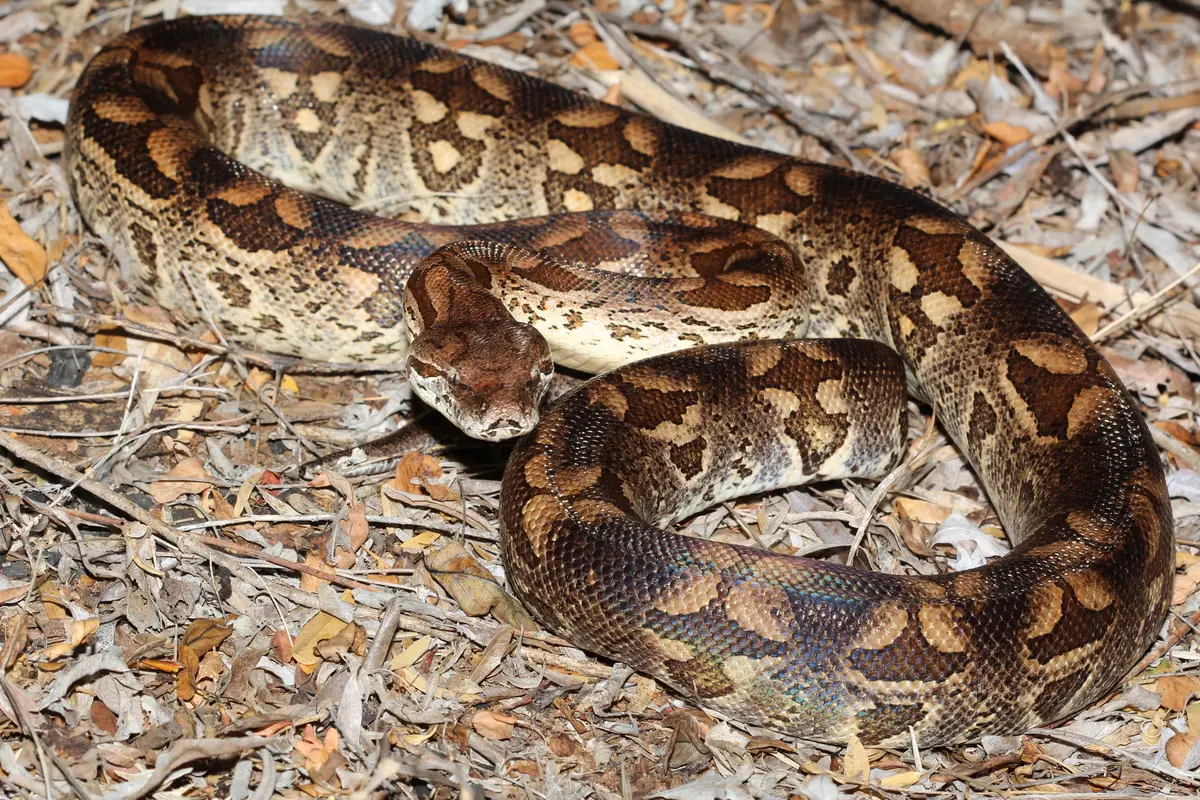
Dumeril's boa
Acrantophis dumerili · Harmless
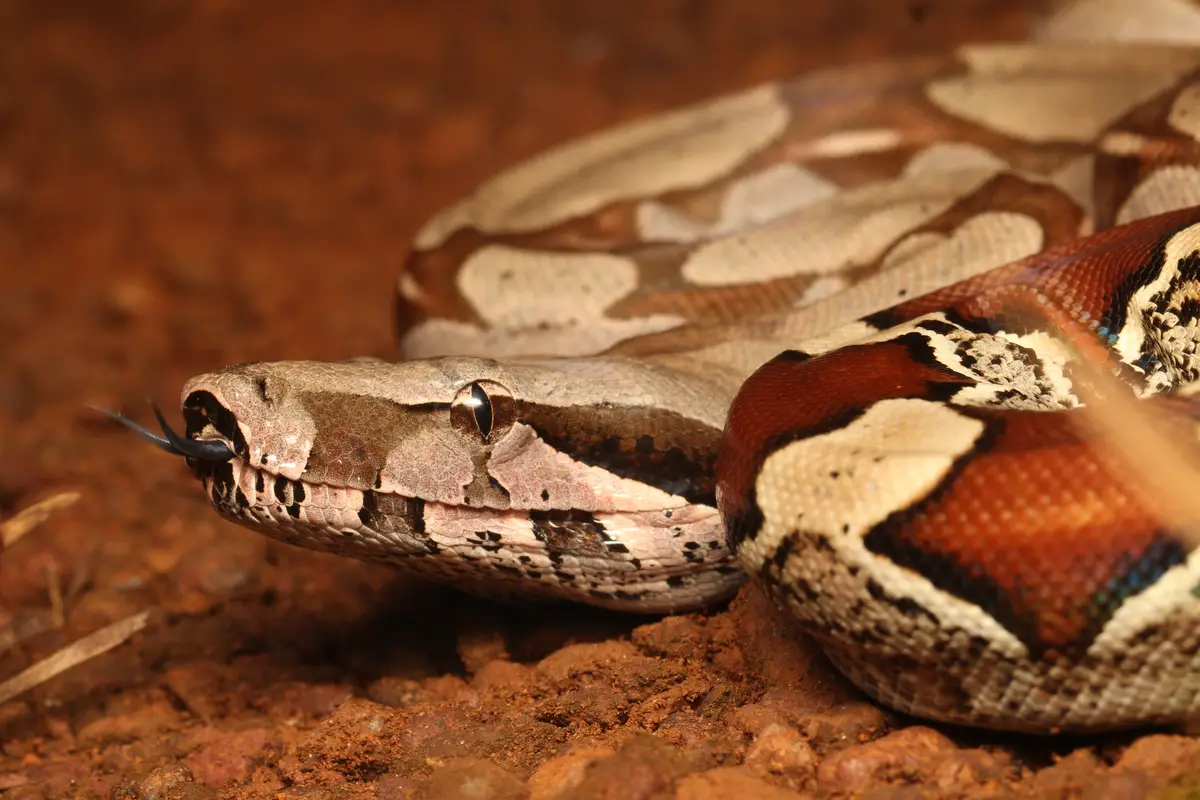
A heavier ground boa of southern and southwestern Madagascar. It is gray-brown with dark patches, lives on the ground and has no heat pits on its lips.
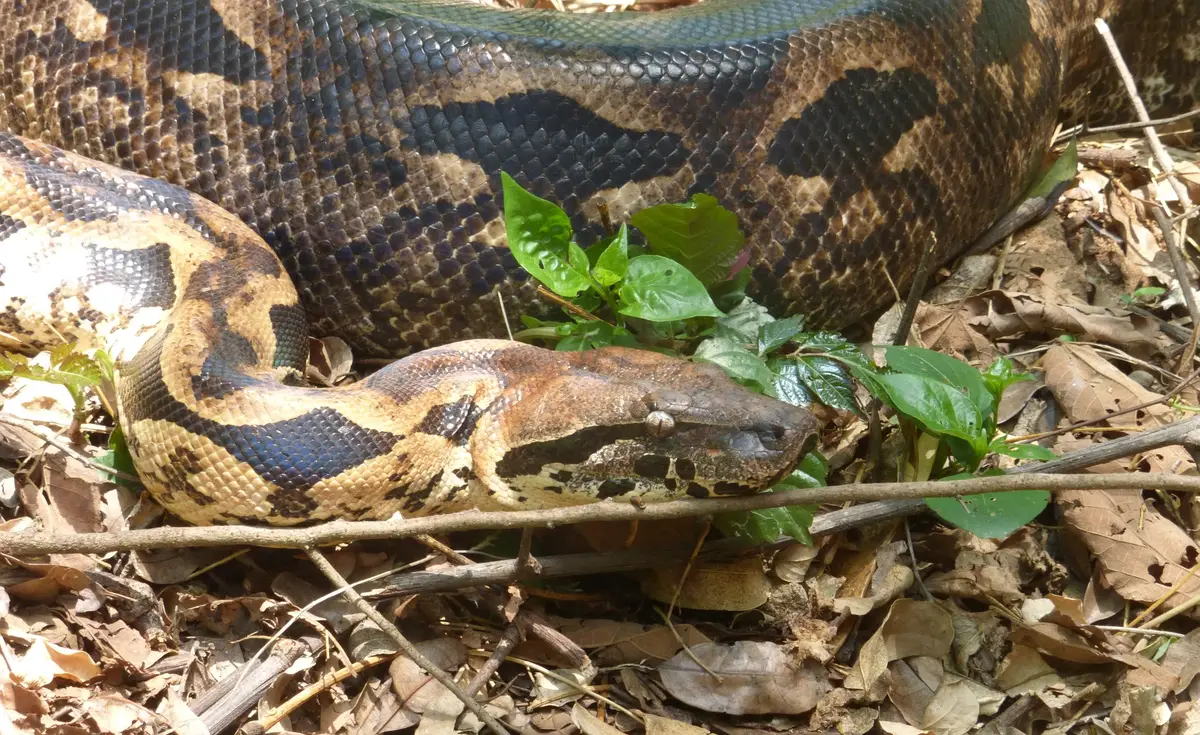
Madagascar ground boa
Acrantophis madagascariensis · Harmless
The other ground boa, widespread in the north of the island. It is bulky and brown, lacks lip pits and spends its time on the ground.
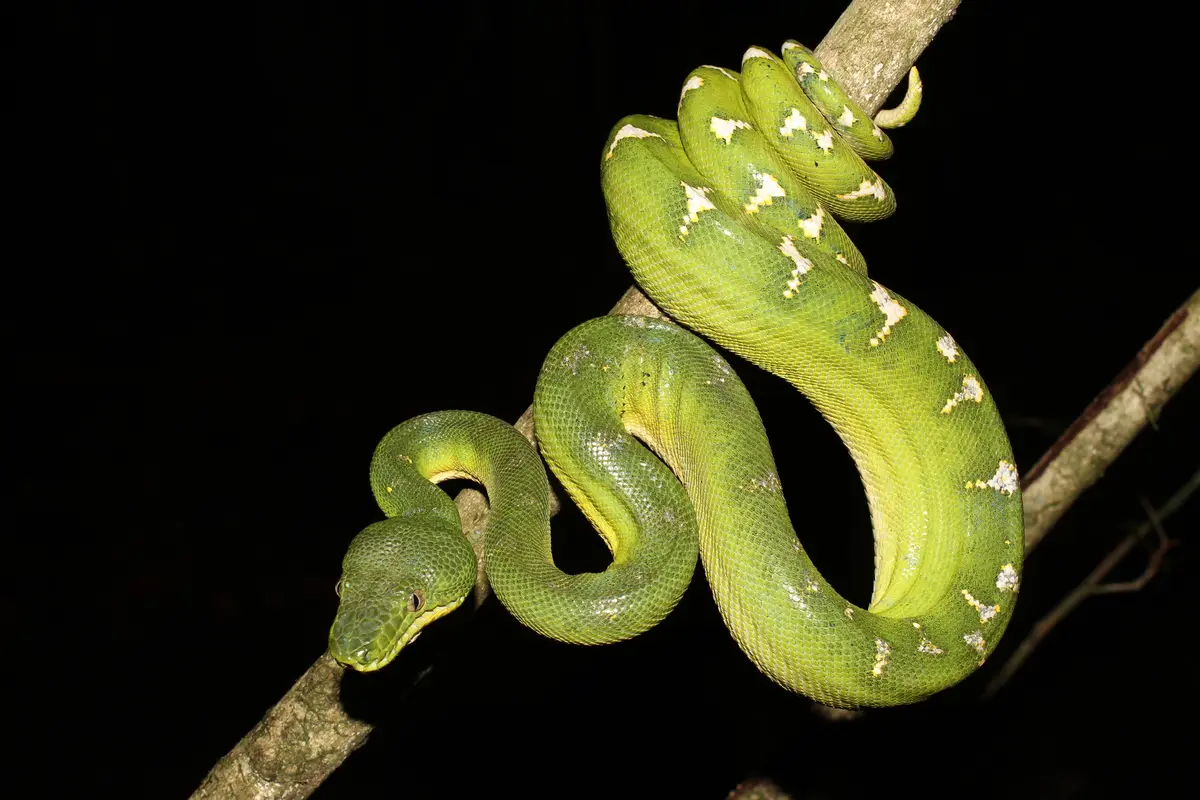
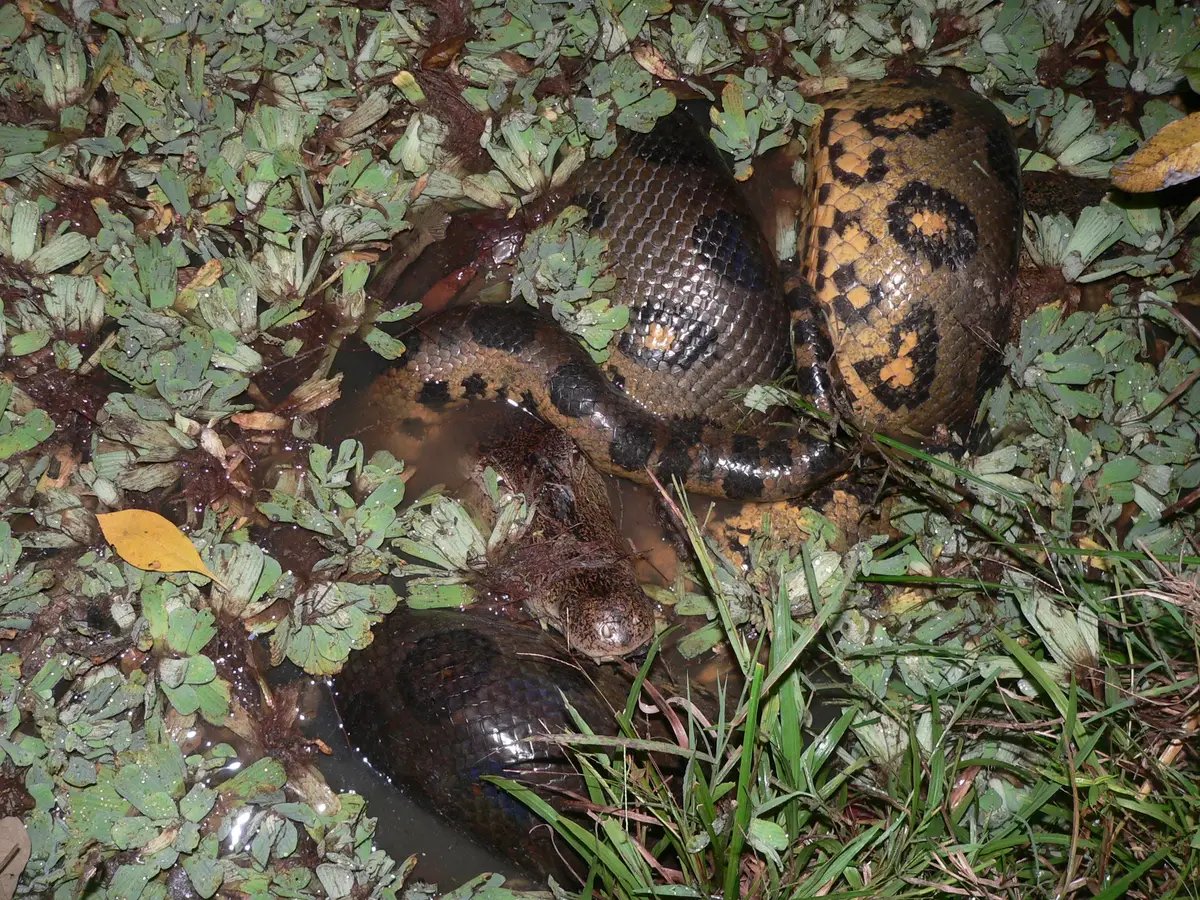
Emerald tree boa
Corallus caninus · Harmless
The South American emerald tree boa is bright green with white bars along the back and rests draped over a branch. Its babies are also red or orange, but it lives in the Amazon basin.
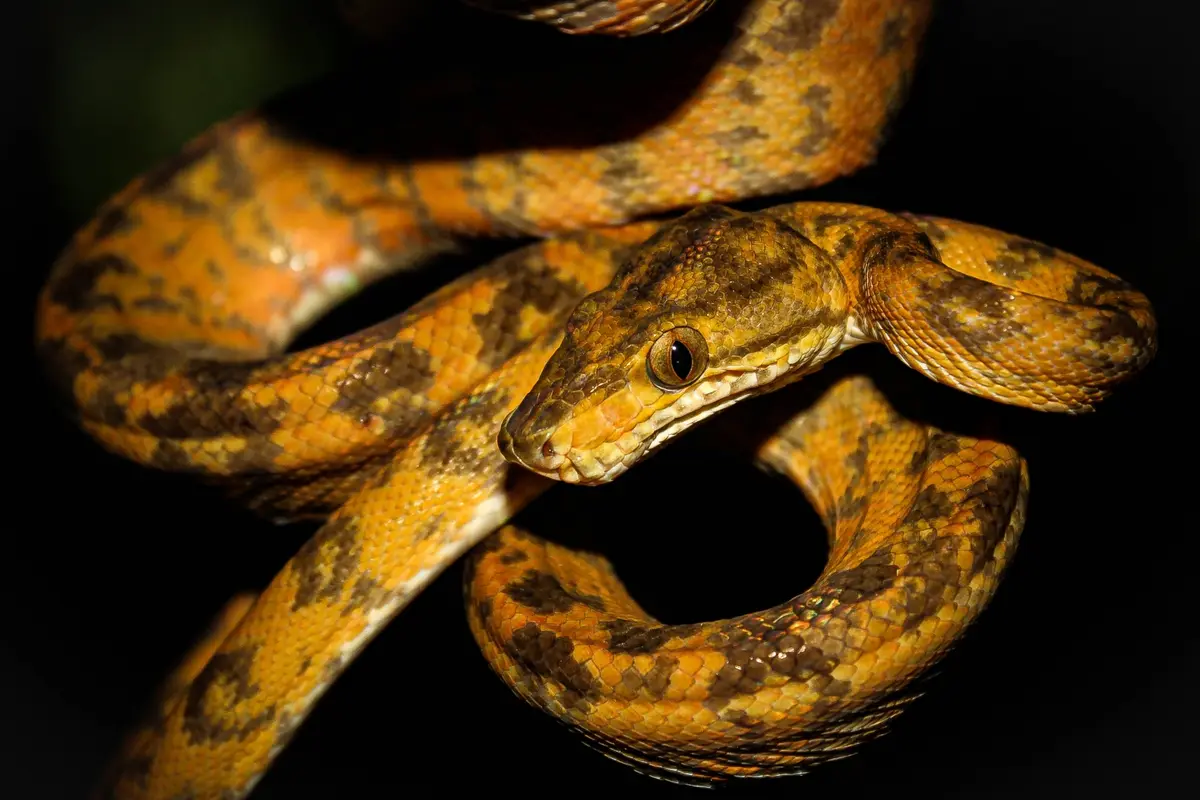
Amazon tree boa
Corallus hortulana · Harmless
The Amazon tree boa is slimmer, with a very thin neck and a pattern that varies from gray to yellow or red. It lives in South America.
Reproduction
Madagascar tree boas give birth to live young. Mating starts with the rainy season, and after five to eight months females give birth to 4 to 12 young, or up to 19 in good years, according to MadaMagazine. Belfast Zoo puts the usual maximum at 12, each about 38 cm (15 in) long.
Pregnant females turn darker. Belfast Zoo suggests the darker skin helps them absorb heat for the developing young; the normal color returns at the first shed after birth. The newborns are bright red, which may warn predators away, and they change to the adult green or brown within one to two years.
Conservation status
| Authority | Status |
|---|---|
| IUCN Red List (2011, Vences et al.) | Least Concern |
| IUCN Red List (older assessment) | Vulnerable |
| CITES | Appendix I (commercial trade in wild-caught snakes banned) |
The IUCN moved the species from Vulnerable to Least Concern because it is widespread, survives in heavily degraded habitat and faces no major known threat. Belfast Zoo still lists habitat loss from mining and the illegal pet trade as pressures.
Its Appendix I listing means wild Madagascar tree boas cannot be exported for commercial trade.
Madagascar tree boa FAQ
Is the Madagascar tree boa venomous?
No. The Madagascar tree boa has no venom and kills prey by constriction. It can bite if grabbed, leaving small puncture wounds that should be washed with soap and water. Madagascar has no vipers or cobras and no snakes that are a serious danger to people.
How big do Madagascar tree boas get?
Most adults are about 1.2-1.5 m (4-5 ft) long. MadaMagazine reports that no scientifically documented snake has exceeded 1.85 m (6 ft 1 in), and that travelers' reports of 2.5 m snakes are unconfirmed. Females grow larger than males.
Why are baby Madagascar tree boas red?
Newborn Madagascar tree boas are bright red, a color Belfast Zoo suggests may warn predators away. The red fades over the first one to two years as the snake takes on the adult green or brown. Babies of the South American emerald tree boa show a similar change.
What is the difference between green and brown Madagascar tree boas?
Green snakes come from the eastern rainforests and brown ones, called volontany, from the drier west and south. Vences and Glaw described the brown form in 2004. Some authors treat it as a separate species, Sanzinia volontany, but the body differences between the two are slight.
What do Madagascar tree boas eat?
They eat rats, mouse lemurs and other small mammals, plus birds and bats, and sometimes frogs. They find warm-blooded prey at night with heat-sensing pits between their lip scales, hunting both in trees and on the ground.
Is the Madagascar tree boa endangered?
No. The IUCN rated it Least Concern in 2011 because it is widespread and tolerates damaged forest. It is still listed on CITES Appendix I, which bans commercial international trade in wild-caught snakes.