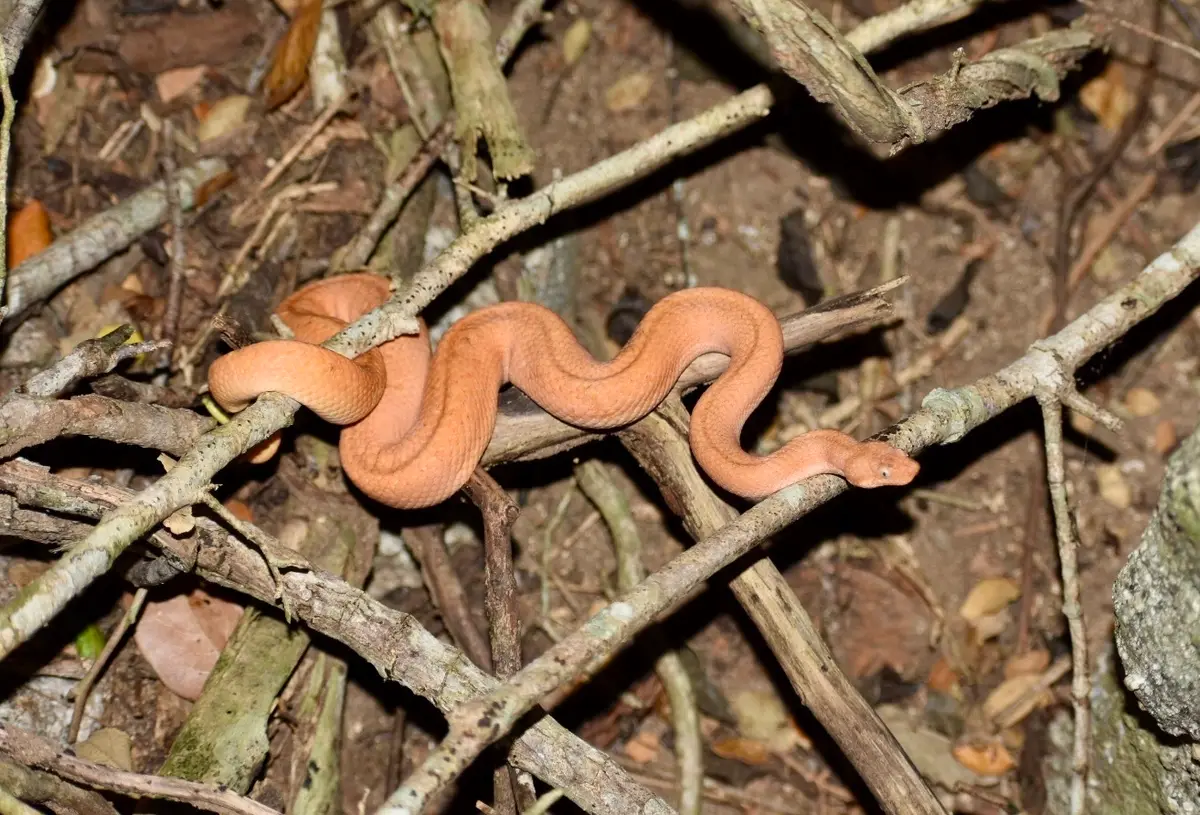
DWARFBOA
Tropidophis · Family Tropidophiidae
KEY TAKEAWAYS
A dwarf boa is any of the small, live-bearing snakes in the family Tropidophiidae (genus Tropidophis), found in the West Indies and parts of Central and South America. Dwarf boas are not venomous and are harmless to people, and despite the name they are not true boas.
- There are 37 species in a single genus, Tropidophis, and 17 of them live only in Cuba.
- Most are small: under about 2 ft (60 cm) from snout to vent. The giant trope of Cuba is the exception, passing 3.3 ft (1 m).
- When handled, many species roll into a ball, release musk and can flood their eyes with blood and drip it from the mouth.
- Several Cuban species are threatened, and the Navassa Island dwarf boa has not been found in modern times.
Dwarf boa quick facts
| Common names | Dwarf boa, wood snake, trope, pygmy boa, eyelash boa (for two mainland species) |
|---|---|
| Scientific name | Tropidophis Bibron, 1840; family Tropidophiidae Brongersma, 1951 |
| Family | Tropidophiidae (dwarf boas), not Boidae |
| Number of species | 37 in the Reptile Database, all now placed in Tropidophis |
| Venomous | No, a constrictor |
| Adult length | Most under 2 ft (60 cm) snout to vent; many species 1-1.5 ft (30-45 cm) in total length |
| Largest species | Giant trope (Tropidophis melanurus), over 3.3 ft (1 m) snout to vent and over 1.8 lb (800 g) |
| Range | Cuba, the Bahamas, Turks and Caicos, Cayman Islands, Jamaica, Hispaniola and Navassa; Panama, Colombia, Ecuador, Peru and Brazil |
| Habitat | Forest floor, shrubland, rocky ground and caves; some climb into trees and bromeliads |
| Diet | Mostly Anolis lizards and frogs; the giant trope also takes toads, rodents and small birds |
| Reproduction | Live-bearing |
| Conservation | Ranges from Least Concern to Critically Endangered; nine Cuban species are in a threatened IUCN category |
How to identify a dwarf boa
A dwarf boa is a short, stout snake with a small head and a short tail. It moves slowly and deliberately. Most are brown, gray or tan with rows of darker spots, and many have a contrasting tail tip that is yellow, black or pale. In the hand they often coil into a tight ball with the head hidden in the middle.
- 1Small, thick body: most adults are 1-2 ft (30-60 cm) long and feel heavy for their length. The Highland pygmy-boa of Ecuador tops out near 15 in (39 cm).
- 2Keeled scales: the genus name means "keel snake". Many species have a faint ridge down each body scale, and the two eyelash boas of Panama to Ecuador have strongly keeled, rough scales.
- 3Spotted pattern: rows of dark brown blotches on a lighter brown, gray or cream ground. Some Cuban species are banded instead.
- 4Colored tail: a yellow, orange or dark tail tip is common. The Bahamian pygmy boa has a yellow underside to the tail.
- 5Color that changes: some dwarf boas are pale at night, when they hunt, and turn darker by day as dark pigment spreads in the skin.
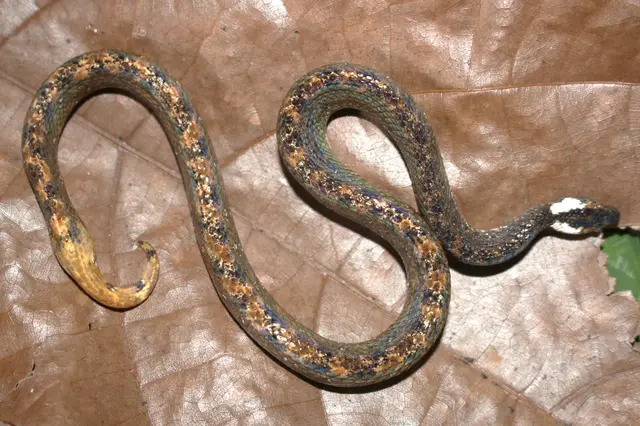
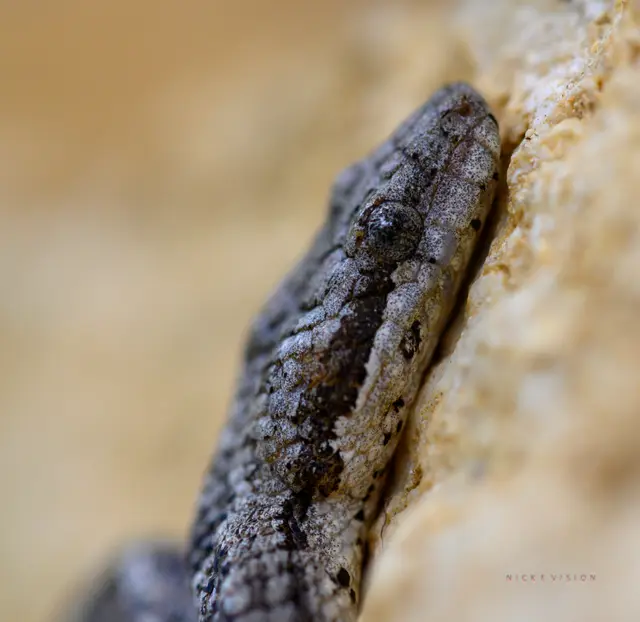
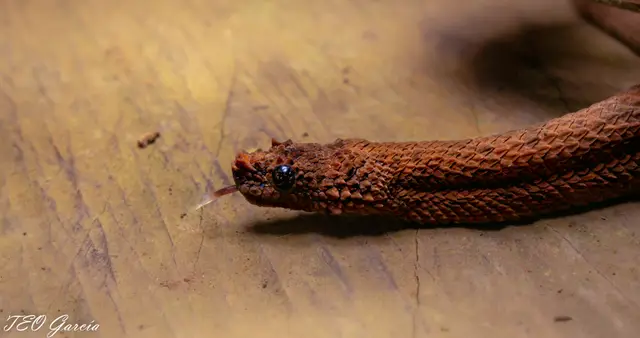
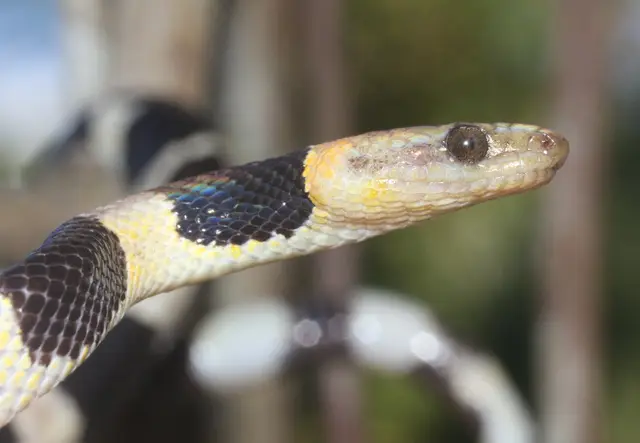
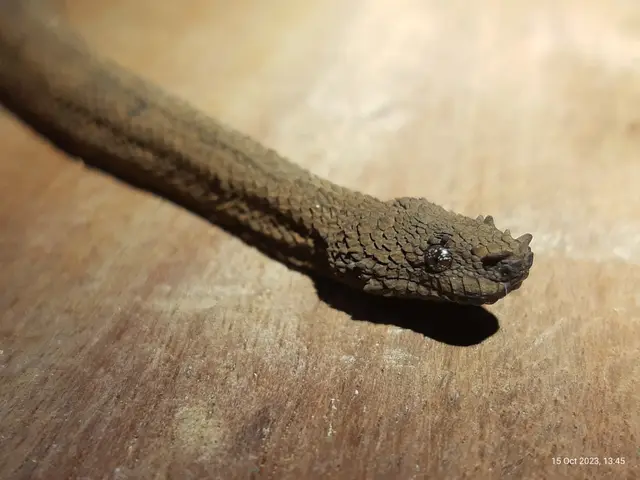
Color change is a field clue and a source of confusion at the same time. Hoefer and colleagues (2019) note that some Tropidophis species can change color, a trait first described in detail by Hedges, Haas and Maugel in 1989. A snake that looks light tan at night can look much darker by day, so shade alone is a poor way to name a species.
Telling the 37 species apart usually needs scale counts, locality and sometimes DNA. In Cuba, where several species share the same patch of forest, a field guide or a local expert is the honest answer. The Reptile Database entry for the giant trope lists the characters herpetologists use for the genus.
How big do dwarf boas get?
Most dwarf boas stay under 2 ft (60 cm) from snout to vent. A review of Tropidophis prey by Rodriguez-Cabrera and colleagues (2021) notes that most species are below 600 mm snout-vent length, and that small size limits what they can swallow. The giant trope of Cuba is the outlier and the largest member of the family.
| Species | Where | Size |
|---|---|---|
| Giant trope (T. melanurus) | Cuba | Over 3.3 ft (1,000 mm) snout to vent; adults can top 1.8 lb (800 g); newborns about 9 in (230 mm) |
| Navassa dwarf boa (T. bucculentus) | Navassa Island | Up to 23 in (596 mm) snout to vent in females |
| Yellow-banded trope (T. semicinctus) | Western and central Cuba | About 16 in (408 mm) snout to vent |
| Canasi trope (T. celiae) | Northwest Cuba | One adult about 18 in (450 mm) in total length |
| Bahamian pygmy boa (T. curtus barbouri) | Bahamas | One adult 13.9 in (352 mm) snout to vent plus a 1.7 in (42 mm) tail |
| Spotted brown trope (T. pardalis) | Cuba | About 11 in (287 mm) snout to vent |
| Highland pygmy-boa (T. taczanowskyi) | Ecuador and Peru | Up to about 15 in (39 cm) total length |
| Northern eyelash boa (T. boulengeri) | Panama to Ecuador | Up to about 14 in (35 cm) total length |
Figures come from the Herpetozoa diet study for the three central Cuban species, the Reptile Database for the Navassa dwarf boa, field notes for the Canasi trope and the Bahamian pygmy boa, and Reptiles of Ecuador for the two mainland species. Snout-vent length leaves out the tail, which in dwarf boas is short, so total length is only a little longer.
Even the giant trope is small next to a real boa. A big female boa constrictor can be several times longer and many times heavier.
Where do dwarf boas live?
Short answer: dwarf boas live in the West Indies and in scattered parts of Central and South America, from Panama to southeastern Brazil. None live in the United States or Mexico.
Cuba is the center of the family. The island and its satellite cays hold 17 species, all endemic, according to Rodriguez-Cabrera and Teruel (2022). It is also the only place where several species live side by side. Other islands have one or a few: the Bahamas (the northern Bahamas trope and the Inagua trope), the Caicos Islands, Grand Cayman, Jamaica, Hispaniola and tiny Navassa Island.
On the mainland the species are few and patchy. The two eyelash boas live from Panama through western Colombia to Ecuador. Battersby's dwarf boa and Tropidophis cacuangoae, described in 2022, are known only from Ecuador, and Taczanowsky's dwarf boa lives east of the Andes in Ecuador and northern Peru. Three more live in the Atlantic Forest and highlands of southeastern Brazil, in Bahia, Minas Gerais and from Espirito Santo to Parana. The world map shows where other snake groups are found.
Habitat
Dwarf boas are mostly ground snakes of forest and scrub. They spend the day under rocks, logs, leaf litter and loose bark, and some climb into shrubs, trees or bromeliads. The 2025 Cuban diet study worked in dry serpentine shrubland called cuabal near Santa Clara, where three species share the same ground.
Habitats vary by species. The Highland pygmy-boa lives in cloud forest and wet montane shrubland at forest edges. The northern eyelash boa lives in the Choco rainforest from eastern Panama to northwestern Ecuador and hunts beside streams and ponds, often waiting in shallow water with its head under the surface. The rare Canasi trope has been found deep inside a limestone cave in Matanzas, Cuba, on damp clay about 330 ft (100 m) from the entrance, where humidity stays near 97-98 percent.
Why do dwarf boas bleed from their eyes?
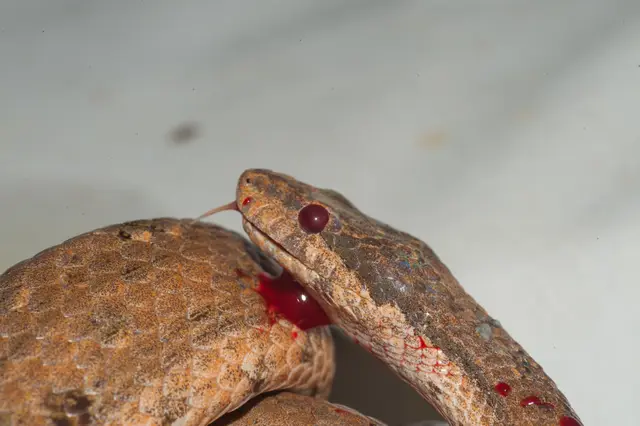
Dwarf boas bleed from their eyes as a defense. When grabbed or pressed, many species fill their eyes with blood and let drops run from the mouth and nostrils. Biologists call this cephalic autohaemorrhaging. It is the trait the family is best known for, and it is harmless to the snake.
Hoefer, Mills and Robinson (2019) timed it in a Bahamian pygmy boa found under a rock on Eleuthera. After 2.4 seconds of gentle pressure on the head, both eyes began to fill with blood and were fully flooded 0.7 seconds later. Two drops came from the mouth. The eyes cleared again within a few seconds, and the whole display lasted 6.7 seconds. The snake also defecated, released musk and rolled into a tight ball. The same note says the behavior had been recorded in 13 of 32 Tropidophis species at the time.
Nobody is sure exactly how it works on a predator. A 1955 test, in which the blood of a northern Bahamas trope was injected into a prey animal, found no sign that it was toxic. The likely point is that a balled-up snake oozing blood and musk looks sick, or tastes bad, to whatever picked it up.
Most dwarf boas are active at night or after rain and slow by day. There are exceptions: the Highland pygmy-boa of Ecuador is a slow, diurnal snake. All of them kill prey by constriction, like true boas. They are calm snakes that rarely try to bite, and a bite from a snake this size is no more than a pinprick.
What do dwarf boas eat?
Dwarf boas eat mainly lizards and frogs. A review of nearly a hundred prey items from eleven Tropidophis species by Harry Greene (1983) found that most were dietary specialists on these two groups. Mammals and birds are rare in their diet because most species are too small to swallow them.
The best numbers come from central Cuba. Rodriguez-Cabrera, Torres and Morell Savall (2025) studied 127 dwarf boas of three species collected between about 1980 and 2021:
| Species | What they ate |
|---|---|
| Spotted brown trope (T. pardalis) | Only Anolis lizards (the brown anole and Anolis ophiolepis) |
| Yellow-banded trope (T. semicinctus) | Only Anolis lizards |
| Giant trope, young (under 14 in or 350 mm) | Only Anolis lizards |
| Giant trope, adult | About 95 percent amphibians: Cuban treefrogs (nearly 70 percent) and two Peltophryne toads (over 26 percent), plus a few house mice, black rats and small songbirds |
So the giant trope switches from lizards to frogs and toads as it grows. Adults can also take rodents: one female near El Nicho in Cienfuegos Province regurgitated a house mouse and the remains of a second rodent, a record published by Rodriguez-Cabrera and colleagues in 2021. Mainland species such as the Highland pygmy-boa eat frogs and tadpoles, and the northern eyelash boa adds fish. It sometimes constricts prey for 30 minutes to two hours and sometimes just swallows it, according to Reptiles of Ecuador.
Are dwarf boas venomous?
No. Dwarf boas have no venom and are harmless to people. They kill prey by squeezing it, and even the largest species is far too small to constrict anything bigger than a rat. A bite, which is rare, can be cleaned with soap and water. The venom FAQ explains how venomous and non-venomous snakes differ.
The bleeding display alarms people who see it for the first time. It looks like a badly injured or dangerous animal. It is neither. The blood is the snake's own, it stops within seconds, and the 1955 test found nothing toxic in it. Put the snake down and it will usually unroll and crawl away. Being mistaken for a venomous snake is a real risk for the animals: Reptiles of Ecuador lists people killing northern eyelash boas for this reason as one of the threats the species faces.
Are they real boas? No. Dwarf boas look like small boas and constrict like boas, but DNA studies place them in a separate, old lineage. A summary by Vidal and Hedges (2009) groups the Tropidophiidae with the South American coral pipe snake (Anilius) at the base of the living snake tree, far from the boa family Boidae.
Snakes confused with dwarf boas
The name "dwarf boa" causes most of the mix-ups. Pet keepers use it for small island forms of real boas, and a few true boas carry it as a common name too.
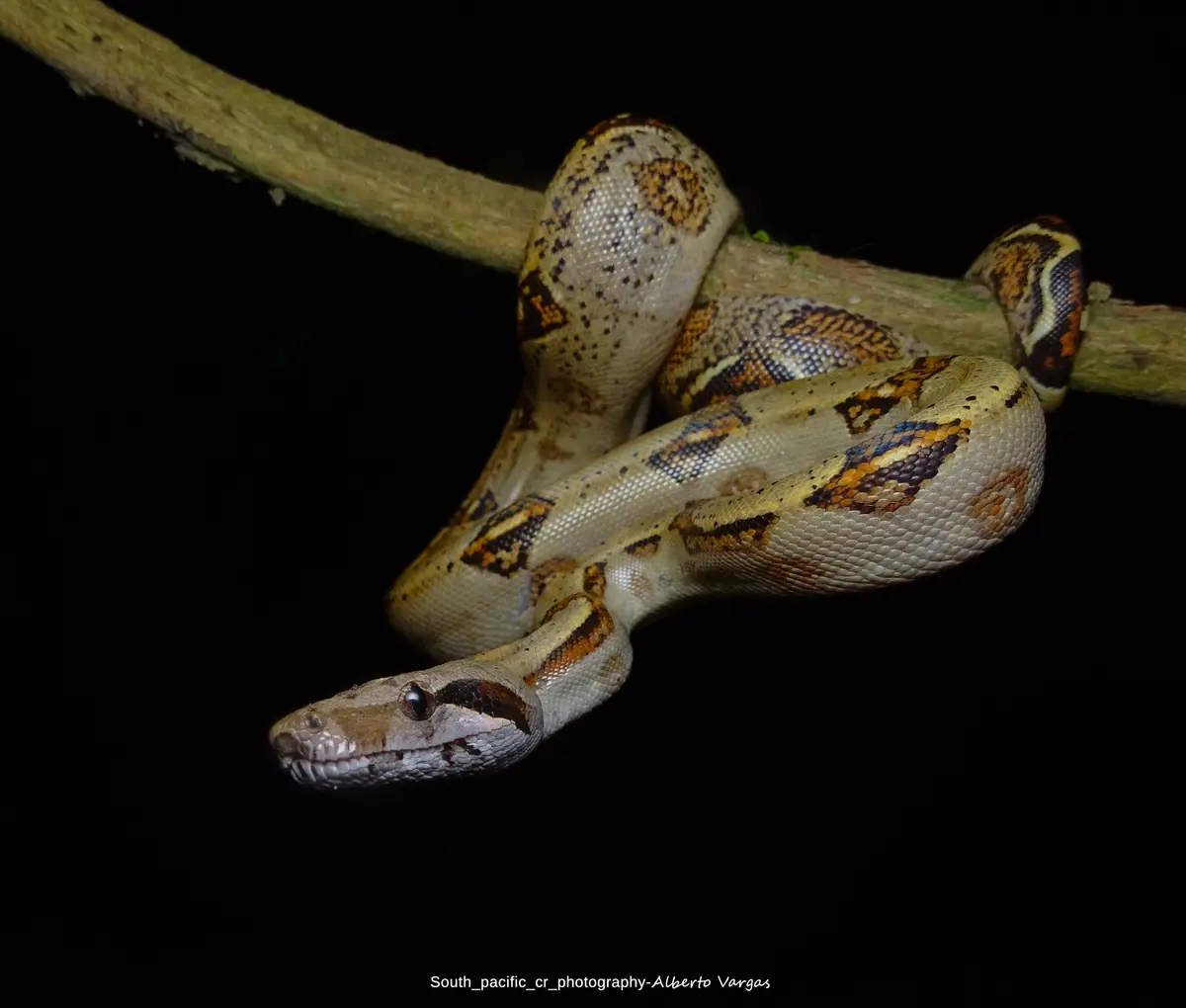
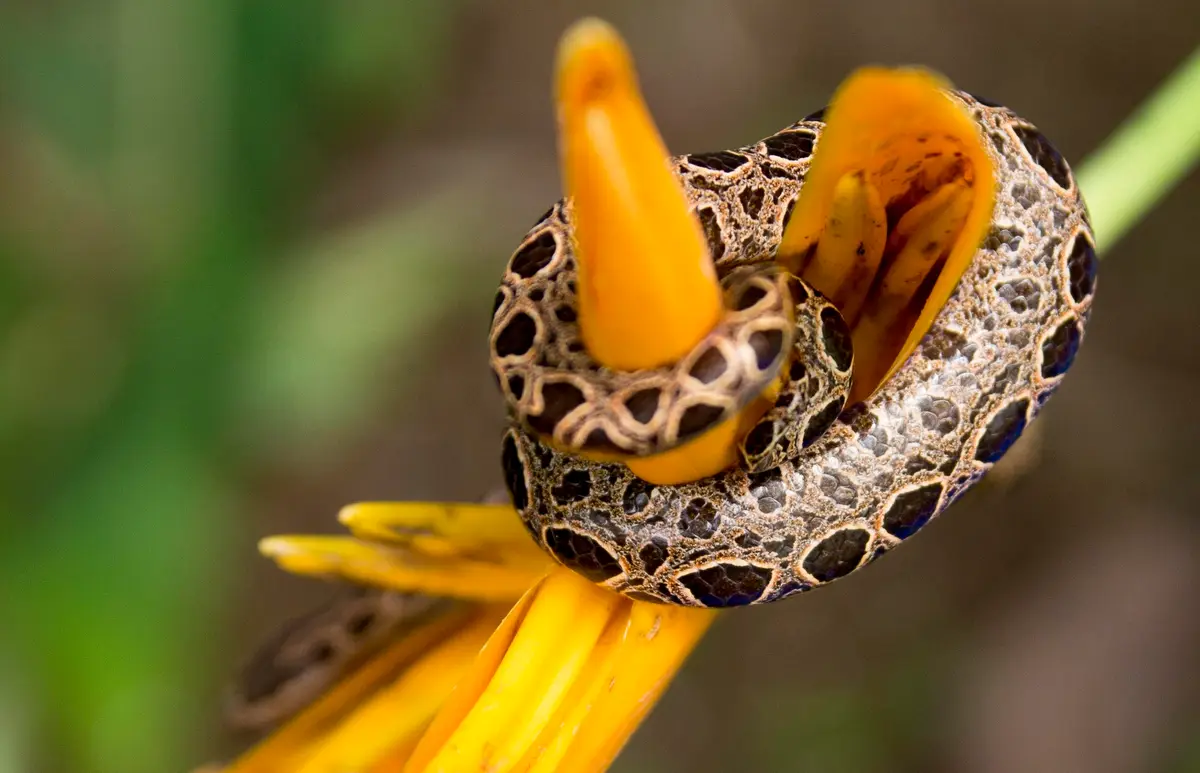
Hogg Island boa and other dwarf boa constrictors
Boa imperator · Harmless
In the pet trade "dwarf boa" often means a small island or locality form of a real boa, such as the Hogg Island boa. These reach 5-6 ft (1.5-1.8 m), far bigger than any Tropidophis, and have the boa constrictor's saddle pattern.
Panamanian and Oaxacan dwarf boas
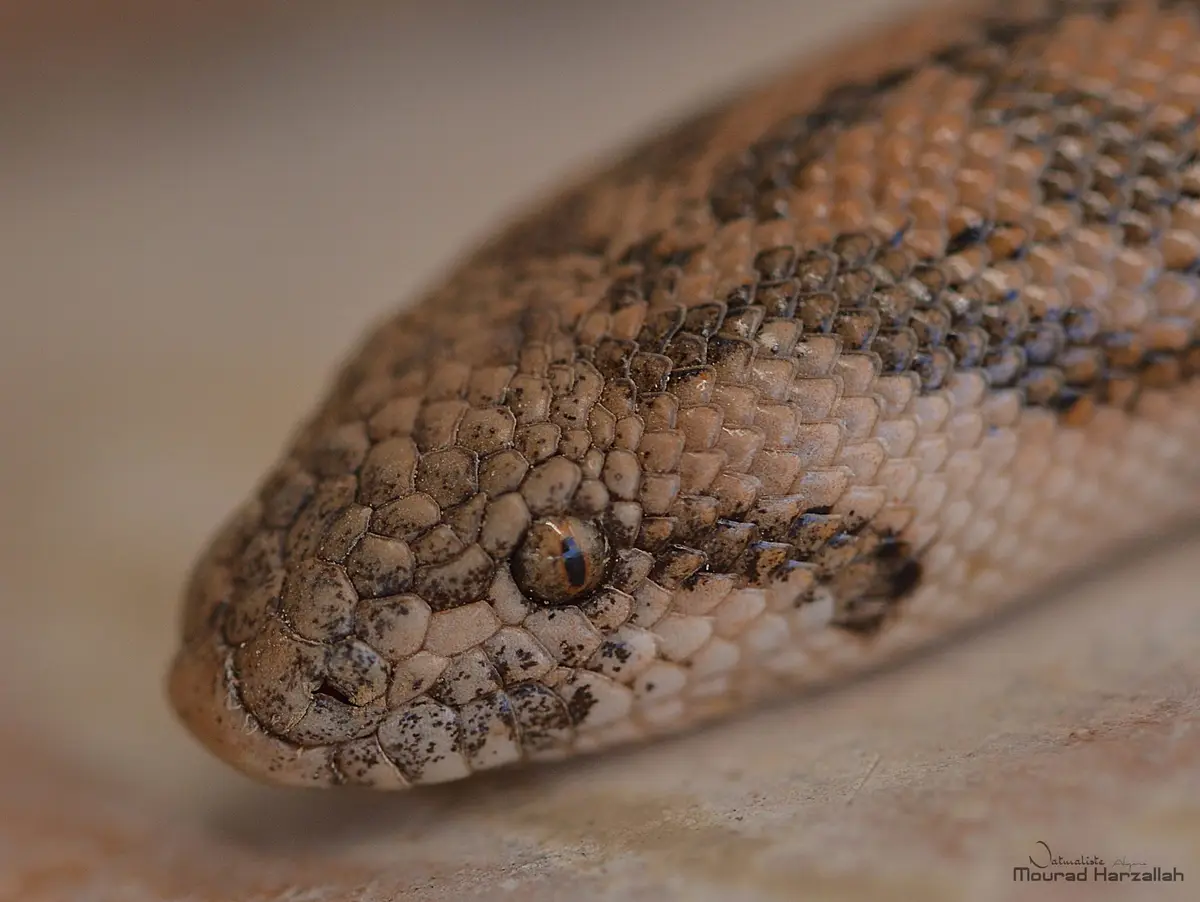
Ungaliophis and Exiliboa · Harmless
These small Central American and Mexican snakes are also called dwarf boas, but the Reptile Database places them in the boa family, Boidae (subfamily Ungaliophiinae), not in Tropidophiidae. They live from Oaxaca, Mexico, to Colombia.
Sand boas
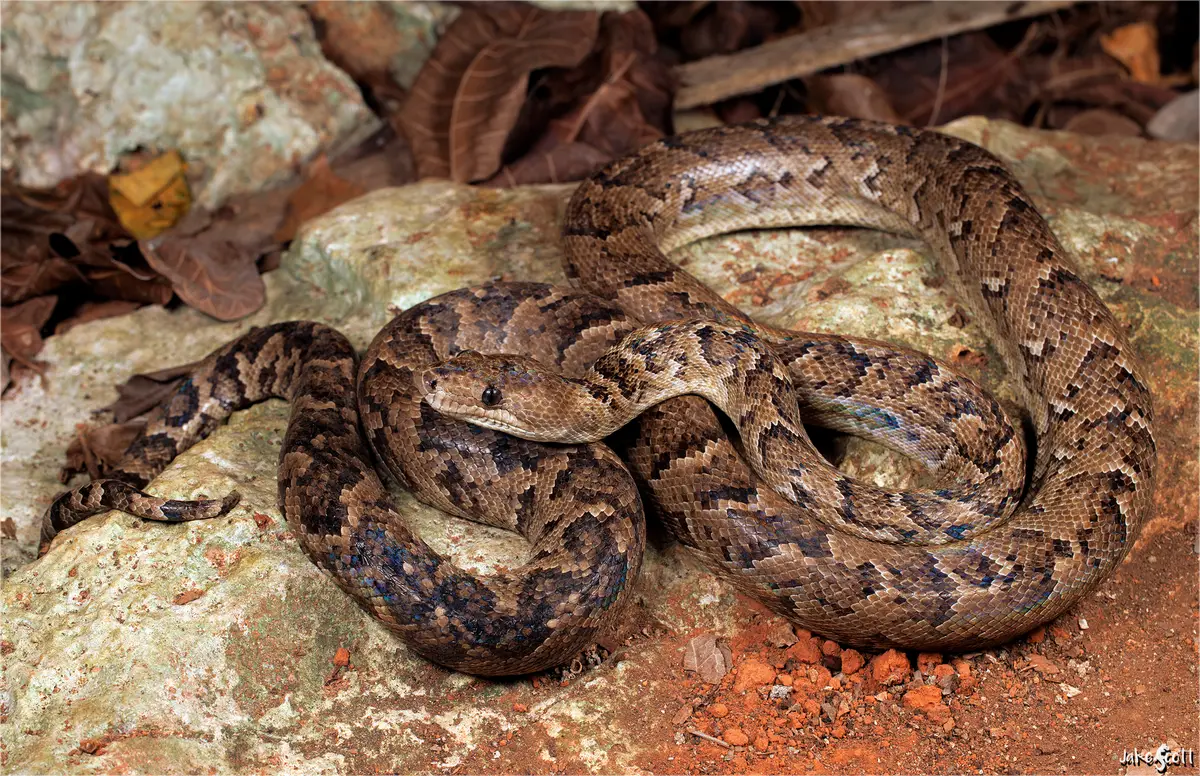
Eryx · Harmless
The desert sand boa (Eryx miliaris) is sometimes called the dwarf sand boa. Sand boas are Old World burrowers from Africa and Asia with tiny eyes on top of the head, and none live in the Americas.
Cuban boa
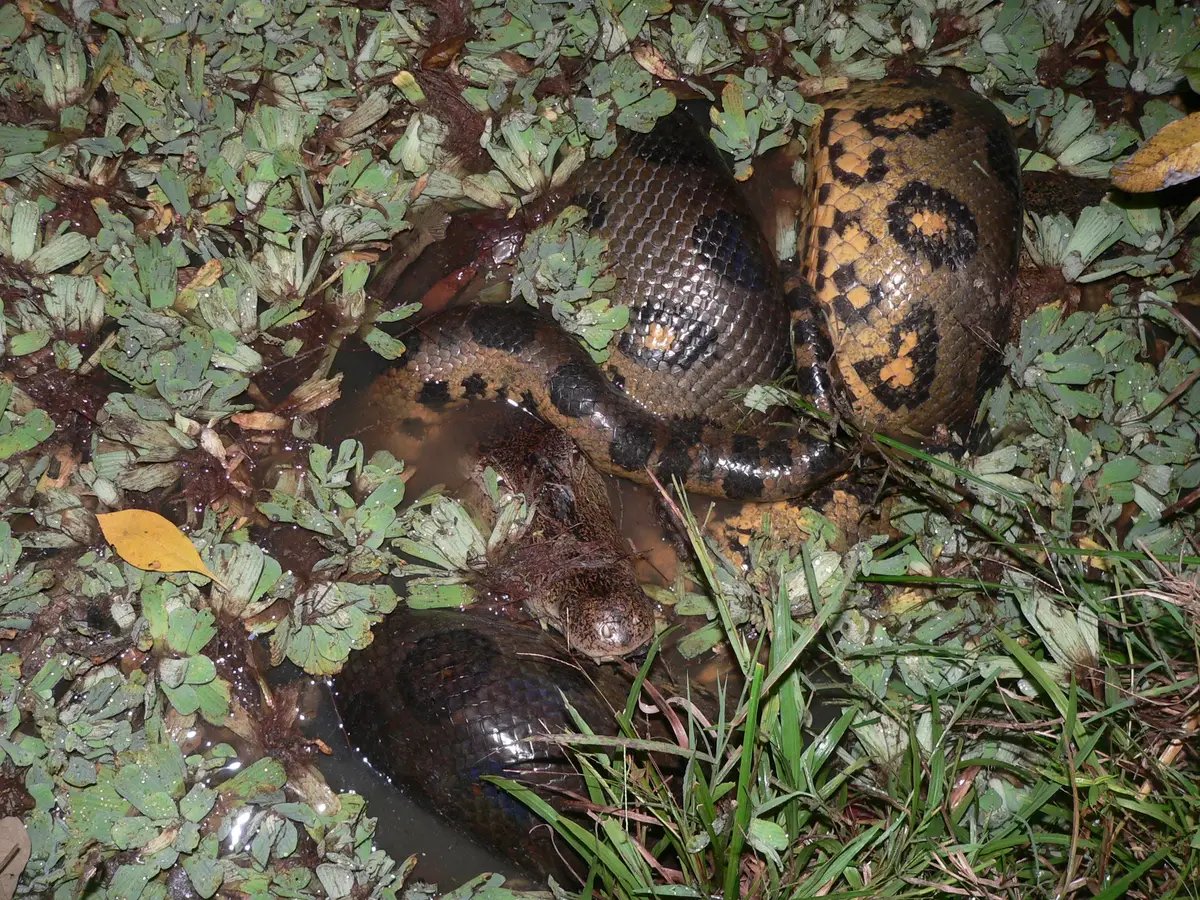
Chilabothrus angulifer · Harmless
The Cuban boa shares its island with 17 dwarf boa species, but adults are many feet long and heavy-bodied. A snake in Cuba much longer than about 3.5 ft (1.1 m) is not a dwarf boa.
Reproduction
Dwarf boas give birth to live young, like true boas. The Reptile Database lists every species it has data for as live-bearing, and the 2025 Herpetozoa study describes the genus as viviparous.
Litters are small. A gravid Highland pygmy-boa from Ecuador carried five fully formed young of about 3 in (7.6 cm), and a captive Canasi trope gave birth to two. Northern eyelash boa litters of six are on record, with newborns about 5 in (12.6-12.8 cm) long. Newborn giant tropes measure about 9 in (230 mm) from snout to vent, big enough to start on small anoles.
Are dwarf boas endangered?
Some are. Of Cuba's 17 dwarf boas, nine have small ranges and are listed in a threatened category on the IUCN Red List, according to Rodriguez-Cabrera and Teruel (2022). Mainland species are often safer: Reptiles of Ecuador lists the northern eyelash boa as Least Concern and the Highland pygmy-boa as Near Threatened.
| Species | Status | Notes |
|---|---|---|
| Canasi trope (T. celiae) | IUCN Endangered (2019) | Known from only a handful of individuals; area of occupancy estimated at 3 sq mi (8 km2). Cuban researchers argue it should be Critically Endangered. |
| Navassa dwarf boa (T. bucculentus) | Possibly extinct | Known only from Navassa Island, an uninhabited US territory west of Haiti; no modern records. |
| Highland pygmy-boa (T. taczanowskyi) | Near Threatened (Reptiles of Ecuador) | Threatened by farming, roads and mining; occurs in Podocarpus National Park. |
| Northern eyelash boa (T. boulengeri) | Least Concern (Reptiles of Ecuador) | Widespread from Panama to Ecuador. |
The main threat is habitat loss. Many Cuban species are known from a single valley or cave system, so one quarry or farm clearing can take out most of a species' range.
New species are still being found. A 2024 DNA study by Zaher and colleagues sampled 25 of the 37 known species and moved the two eyelash boas from the old genus Trachyboa into Tropidophis. Tropidophis cacuangoae, named in 2022 after the Ecuadorian Indigenous rights leader Dolores Cacuango, is known from just two specimens collected within about 30 miles (50 km) of each other.
Dwarf boa FAQ
Is a dwarf boa venomous?
No. Dwarf boas have no venom and no fangs. They are small constrictors that eat lizards and frogs, and most species are under 2 ft (60 cm) long. A bite is rare and amounts to a few pinpricks from tiny teeth, which only need washing with soap and water. The blood some species release from the eyes is not toxic.
Why do dwarf boas bleed from their eyes?
It is a defense against predators. When a dwarf boa is grabbed, it can flood its eyes with blood and drip it from the mouth, often while balling up and releasing musk. A 2019 note on a Bahamian pygmy boa timed the whole display at 6.7 seconds. The snake is not hurt, and the bleeding stops on its own.
Are dwarf boas real boas?
No. Dwarf boas belong to their own family, Tropidophiidae, not to the boa family Boidae. DNA studies place them next to the South American coral pipe snake in an old lineage called Amerophidia. They look and act like small boas, constricting prey and giving live birth, because they evolved a similar way of life.
How many species of dwarf boa are there?
The Reptile Database lists 37 species, all in the genus Tropidophis since a 2024 study merged the eyelash boas into it. Seventeen live only in Cuba. The rest live elsewhere in the West Indies and in Panama, Colombia, Ecuador, Peru and southeastern Brazil. New species are still being described, including one from Ecuador in 2022.
What is the largest dwarf boa?
The giant trope (Tropidophis melanurus) of Cuba is the largest. It can pass 1,000 mm (3.3 ft) from snout to vent and weigh over 800 g (1.8 lb), according to a 2025 study in Herpetozoa. Most other dwarf boas are half that length or less. Large giant tropes eat mostly frogs and toads.
Do dwarf boas live in the United States?
No living dwarf boas are native to the United States. The closest wild populations are in Cuba and the Bahamas, under 100 miles from Florida. Navassa Island, a small US territory in the Caribbean, had its own species, the Navassa dwarf boa, but it has not been found there in modern times and may be extinct.
Related snakes
Sources
- Reptile Database: Tropidophis melanurus and genus diagnosis for Tropidophiidae
- Rodriguez-Cabrera, Torres and Morell Savall (2025), Co-occurring Cuban dwarf boas (Tropidophis) show limited dietary differentiation, Herpetozoa 38
- Hoefer, Mills and Robinson (2019), Autohaemorrhaging in a Bahamian pygmy boa, Herpetological Bulletin 150
- Rodriguez-Cabrera and Teruel (2022), Third locality record of the rare Canasi trope, Reptiles and Amphibians 29
- Rodriguez-Cabrera et al. (2021), Predation on murid rodents by the giant trope, Reptiles and Amphibians 28
- Reptiles of Ecuador: Highland pygmy-boa (Tropidophis taczanowskyi)
- Reptiles of Ecuador: Northern eyelash-boa (Tropidophis boulengeri)
- Zaher et al. (2024), Molecular phylogeny and biogeography of the dwarf boas of the family Tropidophiidae, Systematics and Biodiversity
- Vidal and Hedges (2009), Basal snakes (Alethinophidia), in The Timetree of Life