JAMAICANBOA
Chilabothrus subflavus · Family Boidae
KEY TAKEAWAYS
The Jamaican boa (Chilabothrus subflavus) is a yellow-and-black boa found only in Jamaica, where locals also call it the yellow snake or nanka. It is not venomous and is no danger to people, but it is rare: the IUCN lists it as Vulnerable.
- It is not venomous. It kills rats, birds and bats by constriction.
- Adults are usually 5-7.5 ft (1.5-2.3 m) long and can weigh close to 11 lb (5 kg).
- Introduced mongooses, forest clearing and people killing it on sight have pushed it into about 20 isolated pockets covering less than 10% of Jamaica.
- It is protected by CITES Appendix I and listed as Endangered under the US Endangered Species Act since 1970.
Jamaican boa quick facts
| Common name | Jamaican boa, Jamaican yellow boa, yellow snake, nanka |
|---|---|
| Scientific name | Chilabothrus subflavus (Stejneger, 1901); formerly Epicrates subflavus |
| Family | Boidae (boas) |
| Venomous | No, a constrictor |
| Adult length | Usually 5-7.5 ft (1.5-2.3 m); maximum snout-vent length about 6.6 ft (200 cm) |
| Weight | Up to about 11 lb (5 kg) |
| Range | Jamaica only; thought to be gone from Goat Island |
| Habitat | Tall forest with closed canopy, including limestone karst forest |
| Diet | Rats, birds and their eggs, bats; young eat lizards and frogs |
| Reproduction | Live-bearing, average about 18 young per litter |
| Lifespan | Up to 30 years in zoos |
| Conservation | IUCN Vulnerable; CITES Appendix I; US Endangered Species Act (Endangered) |
How to identify a Jamaican boa
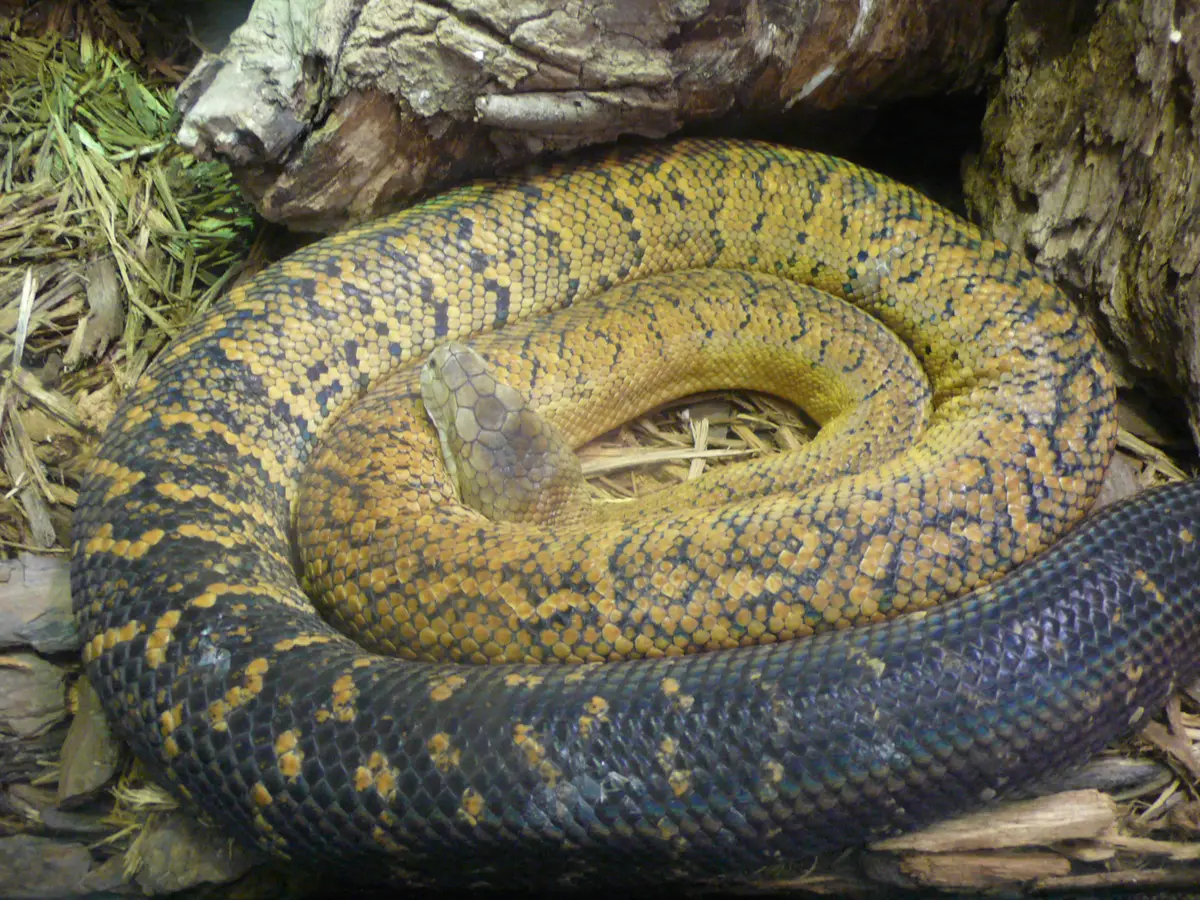
A Jamaican boa is the only big, heavy snake in Jamaica, and its two-tone look makes it easy to name. The front of the body is yellow, from golden to clay-colored, crossed by irregular black bands and spots. Toward the tail the black takes over, so the back third of the snake is mostly black with scattered yellow flecks, according to the West Indian Boas project.
- 1Yellow front, black rear: yellowish green to golden on the head and neck, with black cross bands that merge into an almost black tail.
- 2Iridescent sheen: the scales shine with a rainbow gloss in sunlight, as the Toronto Zoo notes.
- 3Dark stripe behind the eye: most, but not all, have a dark stripe running back from the eye.
- 4Heavy body and long size: adults are thick-bodied and 5 ft or more long. No other native Jamaican snake comes close.
- 5Spurs by the vent: small claw-like spurs on each side of the vent, longer in males, are the remains of hind legs found in all boas.
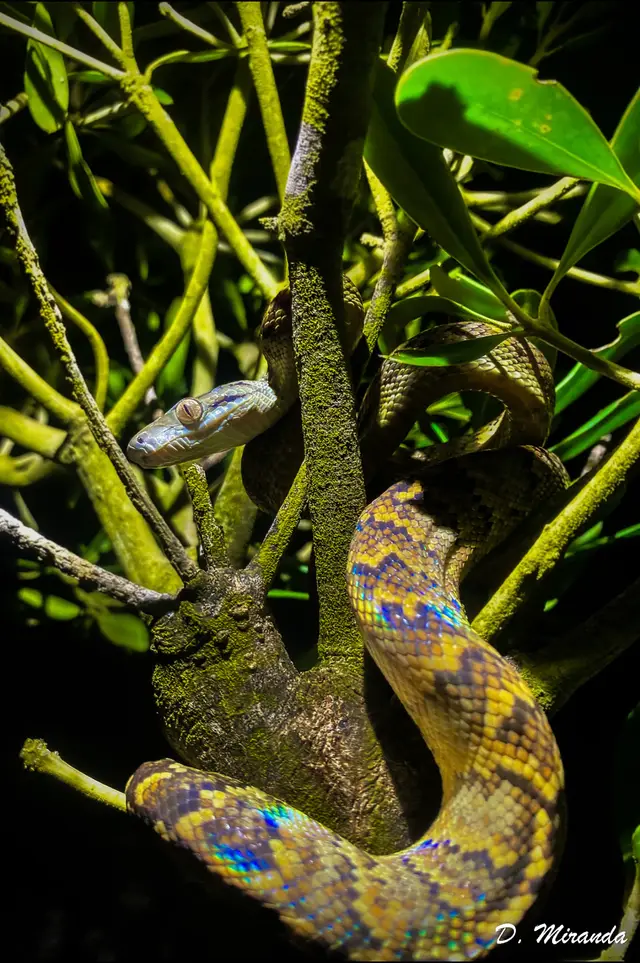
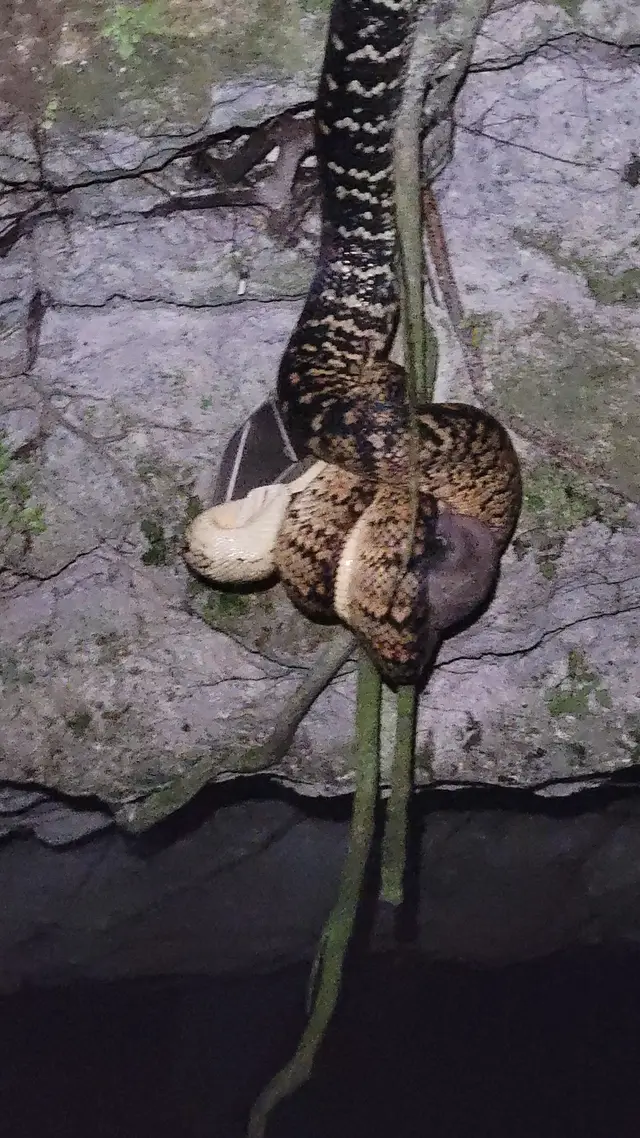
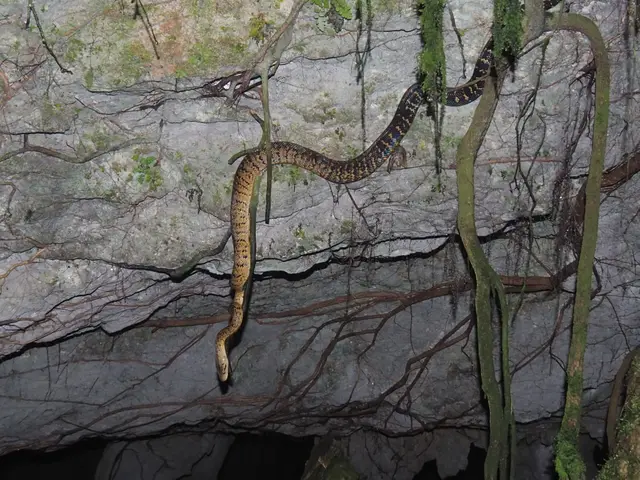
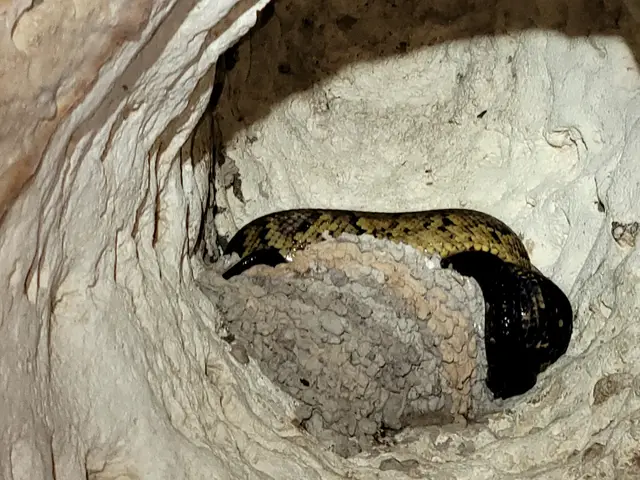
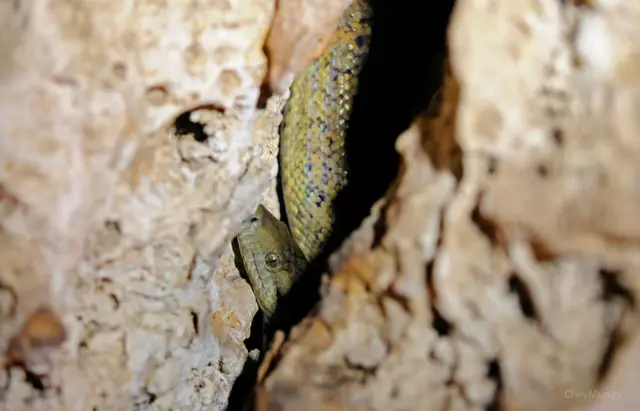
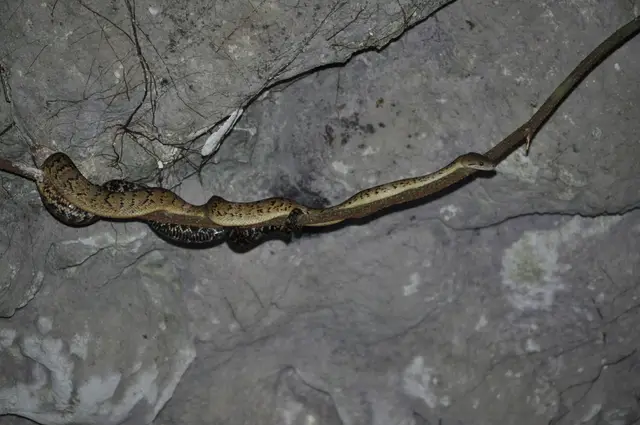
Females are usually longer and thicker than males, while males have longer tails. The species name subflavus means "yellowish", a reference to the yellow belly. Older books call it Epicrates subflavus; the West Indian boas were moved to their own genus, Chilabothrus, in 2013, which also holds the Cuban boa.
How big do Jamaican boas get?
Most adult Jamaican boas are 5 to 7.5 ft (1.5-2.3 m) long. The Toronto Zoo and Belfast Zoo both give that range and a top weight close to 5 kg (11 lb). Modern field accounts gathered by the West Indian Boas project give a maximum snout-vent length of about 200 cm (6.6 ft), not counting the tail. One large wild boa measured exactly that and weighed 3.6 kg (7.9 lb).
| Measure | Figure | Source |
|---|---|---|
| Typical adult length | 5-7.5 ft (1.5-2.3 m) | Toronto Zoo; Belfast Zoo |
| Maximum snout-vent length | About 6.6 ft (200 cm) | West Indian Boas project |
| Large wild boa | 200 cm snout-vent, 3.6 kg (7.9 lb) | West Indian Boas project |
| Heaviest adults | Close to 5 kg (11 lb) | Toronto Zoo |
| Newborns | About 16-20 in (40-50 cm) | West Indian Boas project; Toronto Zoo |
Older reports are bigger. In 1725 Hans Sloane described boas of 7 to 8 ft, and Philip Gosse and Richard Hill wrote of 8 to 10 ft snakes in 1851. Whether boas that large still exist is unknown; most of the old forest they lived in is gone.
Where do Jamaican boas live?
Short answer: Jamaican boas live only in Jamaica. The Reptile Database also lists Goat Island, off the south coast, but the boa is thought to be gone from there.
Within Jamaica the boa now uses less than 10% of the island, split into about 20 isolated pockets. Cockpit Country in the west-central highlands is the largest block of habitat left. The Hellshire Hills, Blue Mountains, Portland Bight and Yallahs area follow. Compare its range with other snakes on the world snake map.
Habitat
Jamaican boas need tall forest with a closed canopy. They do best in undisturbed woodland, especially the wet limestone karst forest of Cockpit Country, where sinkholes, cliffs and caves give plenty of cover. The West Indian Boas project notes that even good habitat goes unused where people are active nearby.
The species is largely arboreal. Boas rest and hunt in trees, on vine tangles and on limestone outcrops, often near cave mouths where bats come and go.
Behavior
Jamaican boas are mostly active at night. They hunt by ambush: a boa waits on a branch or ledge, picks up the scent of prey with its tongue and strikes when an animal comes within reach.
Radio tracking summarized by the West Indian Boas project shows that males travel more than females. Males moved an average of 18.6 m (61 ft) a day against 10.5 m (34 ft) for females, and male home ranges covered 10.5-14 ha, several times the 2.2-3.7 ha used by females. Birds do not take kindly to boas. Jamaican crows and other species have been seen mobbing them, mostly targeting large females.
What do Jamaican boas eat?
Adult Jamaican boas eat mainly rats, birds and bats. Introduced rats are now a staple, and old accounts call the boa a voracious rat eater. Young boas start on small lizards and frogs until they can handle warm-blooded prey.
| Prey | Records |
|---|---|
| Rats | The main prey in many areas; rats are introduced to Jamaica |
| Birds and eggs | Small birds and eggs; one boa held seven unbroken chicken eggs |
| Bats | Boas near caves grab bats in flight; a capture of a Jamaican fruit bat (Artibeus jamaicensis) is confirmed |
| Reptiles | One young Jamaican iguana (Cyclura collei); juveniles eat small lizards |
| Unusual | A mongoose, and a cane toad that killed the boa that ate it |
The cane toad record is a warning. The West Indian Boas project lists introduced cane toads among the threats to the species.
Is the Jamaican boa venomous or dangerous?
No, the Jamaican boa is not venomous and is not dangerous to people. It has no venom glands. It holds prey with fine, backward-pointing teeth and squeezes until the animal's circulation stops.
Many Jamaicans still fear it, and that fear is one of its biggest problems: people kill boas on sight. A large boa can give a painful bite if grabbed, leaving a cluster of small cuts. Wash the bite with soap and water and see a doctor if it becomes red or swollen in the following days. The snakebite FAQ covers basic first aid.
Jamaica has no dangerously venomous snakes at all, so any snake seen on the island is safe to leave alone and watch from a distance.
Snakes confused with the Jamaican boa
In Jamaica no other snake matches the boa's size, and the yellow-front, black-rear pattern is distinctive. Confusion is more likely in zoos and the pet trade, where several Caribbean and South American boas are kept.
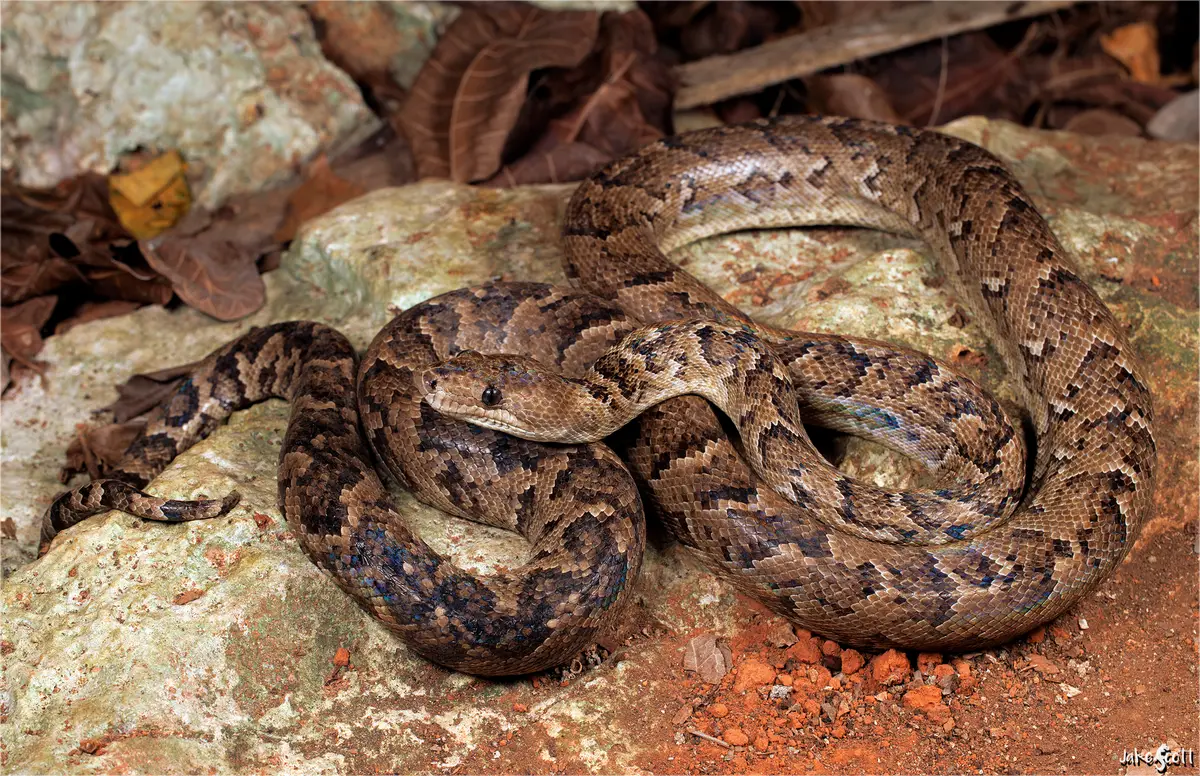
Cuban boa
Chilabothrus angulifer · Harmless
A close relative, the Cuban boa is much larger, with dark angular blotches on a tan body rather than black bands on yellow. It lives only in Cuba.
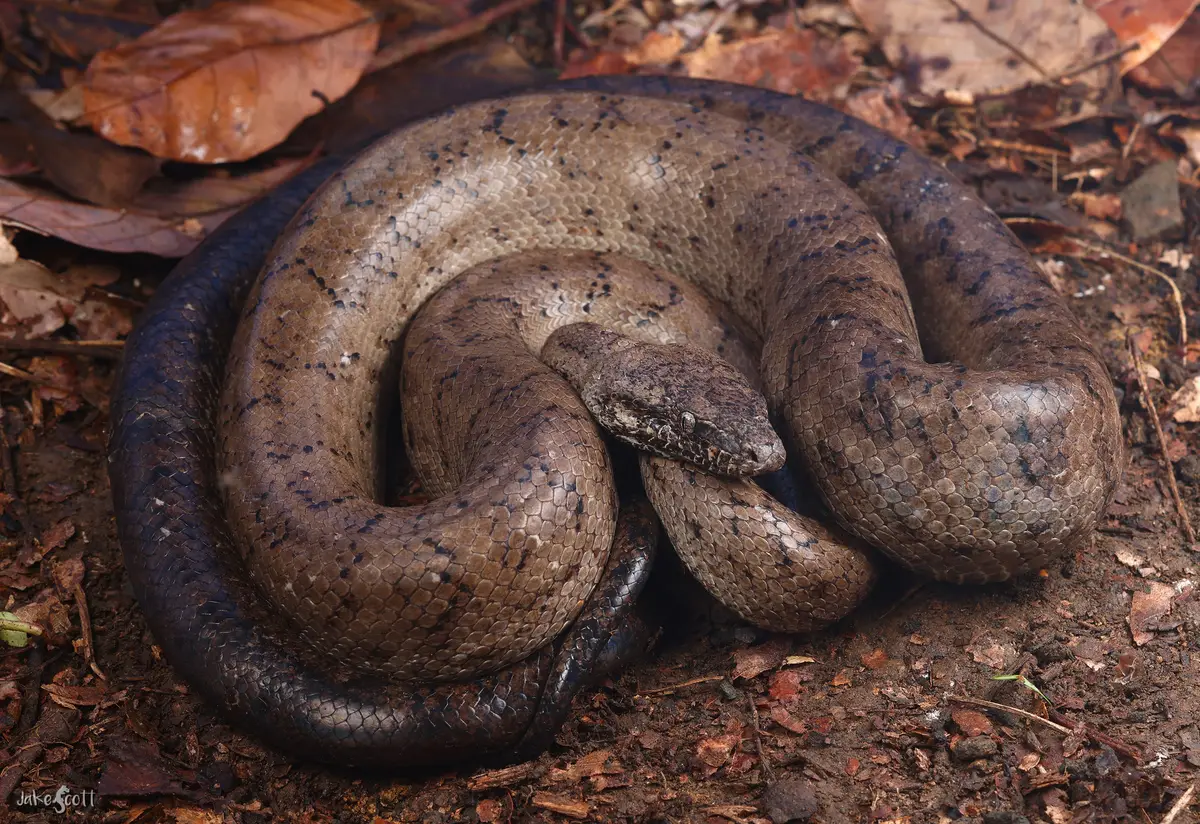
Puerto Rican boa
Chilabothrus inornatus · Harmless
Another Chilabothrus from the Greater Antilles. It is brown to gray with darker blotches and lacks the bright yellow front half. It lives only in Puerto Rico.
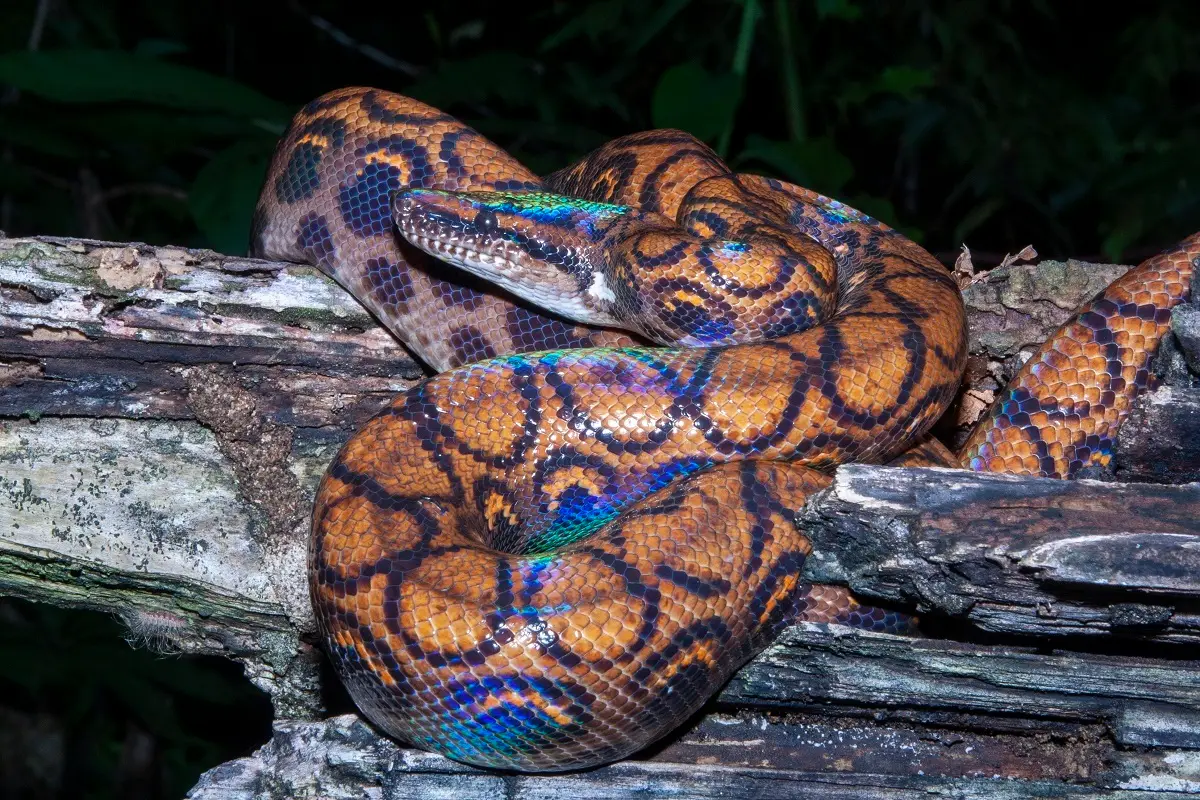
Rainbow boa
Epicrates cenchria · Harmless
The South American rainbow boa also has an iridescent sheen, but it is reddish brown with round, dark-ringed spots and no yellow and black banding.
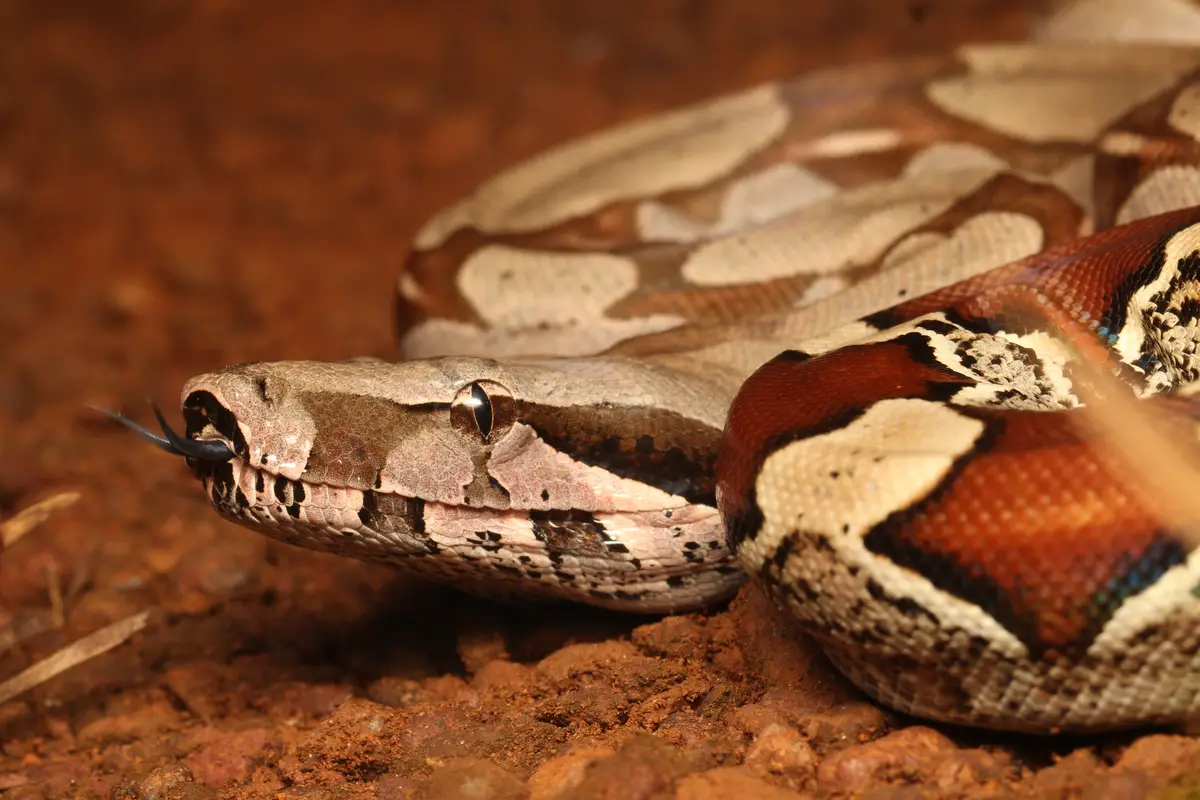
Boa constrictor
Boa constrictor · Harmless
The mainland boa constrictor is far larger and has tan or gray saddles that turn reddish on the tail. It does not live wild in Jamaica.
Reproduction and lifespan
Jamaican boas give birth to live young. They mate in spring, usually between February and April according to the Toronto Zoo, and the young are born in autumn, often in October. Females pick mates partly by scent.
Litters are fairly large for an island boa. Seventeen recorded births compiled by the West Indian Boas project averaged 18.45 young, with a range of 2 to 34; zoos report up to 40 or more. A female kept by Griffith in 1849 gave birth to 23 young on 19 October. Newborns live off yolk until their first shed and then start hunting small lizards and frogs. Cannibalism has been recorded among young kept together.
Jamaican boas can live about 30 years in zoos. The Columbus Zoo probably produced the first captive-bred litter in 1972, and zoos in North America and Europe now run a Species Survival Plan for the species. The European captive population traces back to only 11 wild-caught founders.
Is the Jamaican boa endangered?
The Jamaican boa is rated Vulnerable by the IUCN and is listed as Endangered under the US Endangered Species Act. No reliable count of wild boas exists, but every source agrees the species has shrunk badly since the 1800s.
| Authority | Status |
|---|---|
| IUCN Red List | Vulnerable |
| CITES | Appendix I (commercial international trade banned) |
| US Endangered Species Act | Endangered, listed 2 June 1970 |
| Jamaica | Protected; Jamaica joined CITES in 1997 |
The decline has a long history. People ate boas and used their fat for oil by 1754. Gosse and Hill still called the snake common in 1851, but the small Indian mongoose, released in 1872 to control rats in cane fields, hit Jamaica's native snakes and lizards hard. By about 1910 Thomas Barbour found the boa close to extinction.
Today the main threats are forest clearing, bauxite mining in some of the best remaining habitat, killing by people, and introduced predators including mongooses, pigs, cats and dogs. Research in Cockpit Country has tested moving boas short distances out of harm's way, and zoos keep an assurance population in case the wild one fails.
Jamaican boa FAQ
Is the Jamaican boa venomous?
No. The Jamaican boa has no venom and kills its prey by constriction. A large one can bite if grabbed, leaving small cuts that should be washed and watched for infection. Jamaica has no dangerously venomous snakes, so the boa and every other snake on the island is harmless to people who leave it alone.
How big do Jamaican boas get?
Adults are usually 5 to 7.5 ft (1.5-2.3 m) long and can weigh close to 5 kg (11 lb), according to the Toronto Zoo. The West Indian Boas project gives a maximum snout-vent length of about 200 cm (6.6 ft). Older reports of 8 to 10 ft boas from the 1800s have not been confirmed in modern times.
What is the yellow snake in Jamaica?
The yellow snake is the Jamaican boa, Chilabothrus subflavus, also called the nanka. Its front half is golden or yellowish with black bands, fading to an almost black tail. It is the largest native land predator in Jamaica and is completely harmless to people.
Where can you see a Jamaican boa?
Wild boas live mainly in Cockpit Country, the Hellshire Hills, the Blue Mountains, Portland Bight and the Yallahs area of Jamaica. They are nocturnal and well hidden, so sightings are uncommon. Several zoos in North America and Europe, including the Toronto Zoo and Belfast Zoo, keep them as part of breeding programs.
Why is the Jamaican boa endangered?
The boa has lost most of its forest, is killed by people who fear it, and is eaten by introduced mongooses, which arrived in 1872. It now survives in about 20 isolated pockets covering less than 10% of Jamaica. The IUCN rates it Vulnerable and the US lists it as Endangered.
What do Jamaican boas eat?
Adults eat mostly rats, birds, bird eggs and bats, which they catch at cave entrances and from branches. Young boas eat small lizards and frogs. Unusual records include a young Jamaican iguana, a mongoose and a cane toad, whose toxins killed the boa.