PUERTO RICANBOA
Chilabothrus inornatus · Family Boidae
KEY TAKEAWAYS
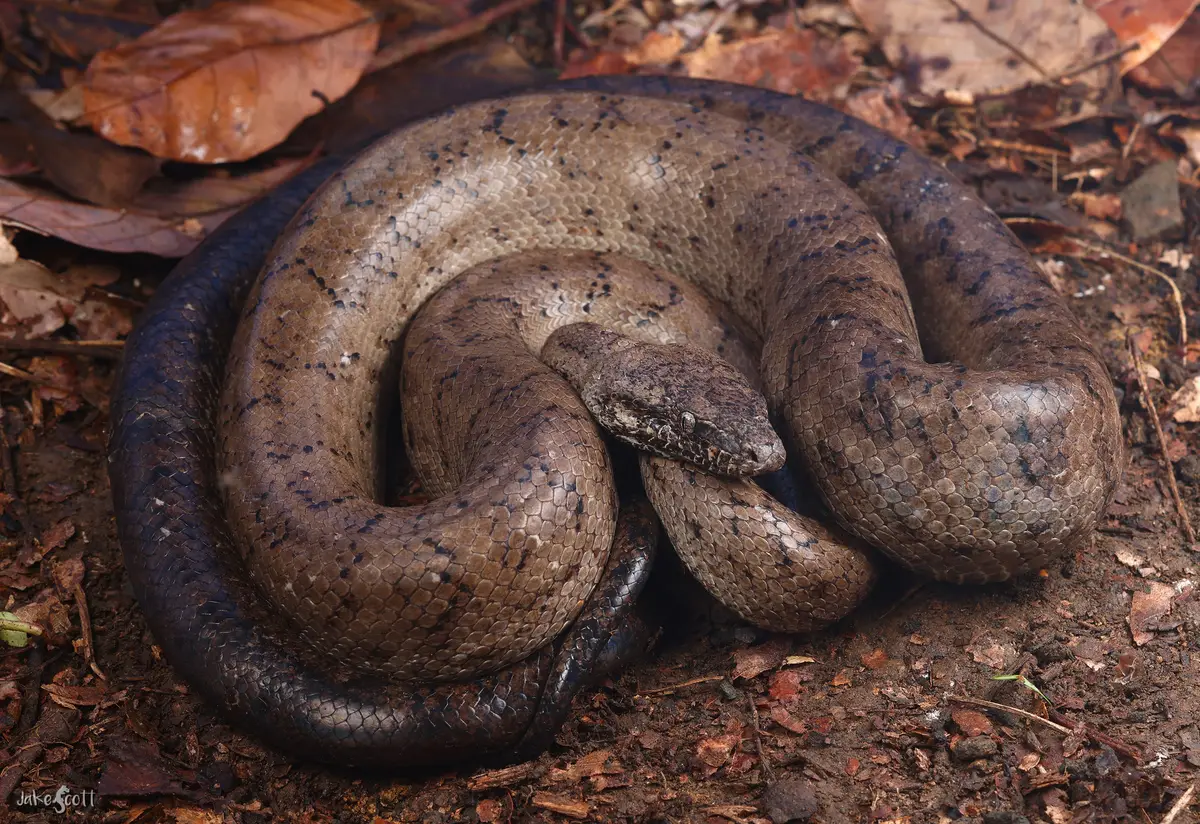
The Puerto Rican boa (Chilabothrus inornatus), known locally as the culebron, is a brown boa found only in Puerto Rico. It is not venomous and is no danger to people, though it is the island's largest native snake.
- It is not venomous. It kills rats, birds and bats by constriction.
- Most adults are under 6 ft (186 cm) from snout to vent. The largest on record was 7 ft 11 in (241 cm) long.
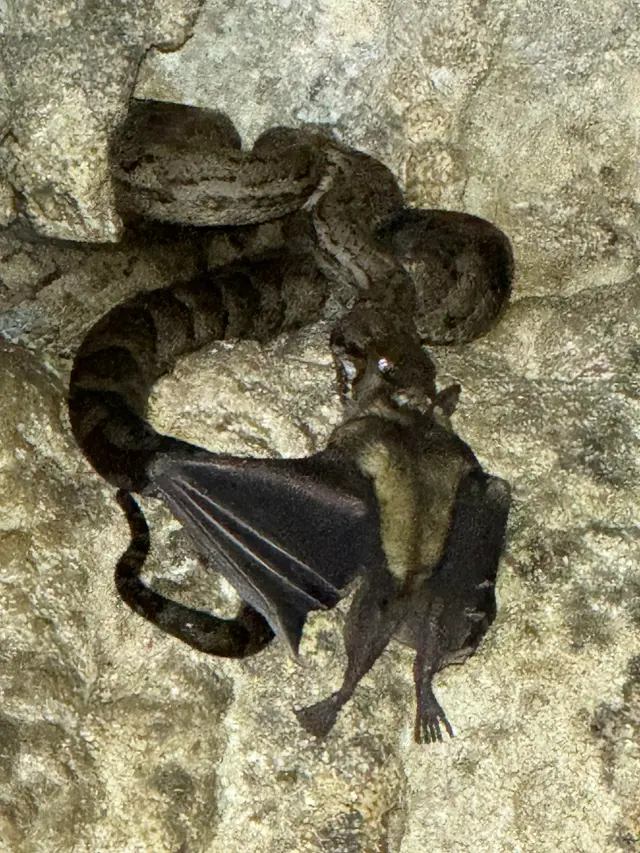
- At some caves boas gather at dusk and catch bats as they fly out of the entrance.
- It has been on the US endangered list since 1970. In 2022 the US Fish and Wildlife Service proposed removing it from the list because it has recovered.
Puerto Rican boa quick facts
| Common name | Puerto Rican boa, culebron |
|---|---|
| Scientific name | Chilabothrus inornatus (Reinhardt, 1843); formerly Epicrates inornatus |
| Family | Boidae (boas) |
| Venomous | No, a constrictor |
| Adult length | Usually up to about 6.1 ft (186 cm) snout-vent; record 7 ft 11 in (241 cm) total |
| Range | Puerto Rico main island only, sea level to about 3,450 ft (1,050 m) |
| Habitat | Wet karst, rain forest, dry forest, caves, plantations and some suburbs |
| Diet | Black rats, mice, birds, bats, lizards and frogs |
| Reproduction | Live-bearing, 12-37 young per litter after about 180 days |
| Lifespan | At least 28 years in zoos |
| Conservation | IUCN Least Concern; CITES Appendix II since 2023; US Endangered, proposed for delisting in 2022 |
How to identify a Puerto Rican boa
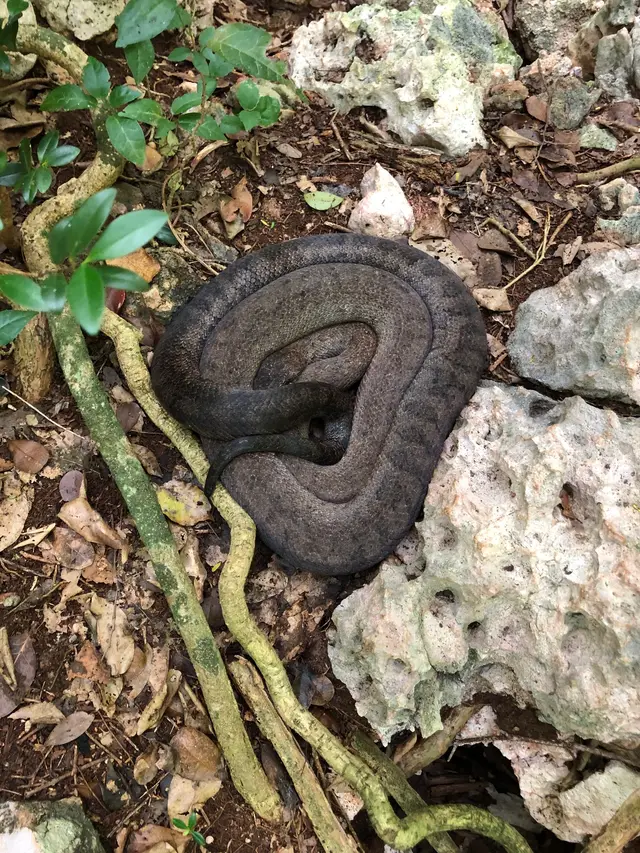
A Puerto Rican boa is a large, plain brown snake. Its species name, inornatus, means "unadorned", and that fits. The West Indian Boas project describes it as light to dark brown with darker brown angular blotches, sometimes edged in black. Some are grayish. Reddish or yellowish forms turn up in a few small areas, and old boas may lose almost all their pattern.
- 1Brown with faint blotches: a light to dark brown body with darker angular blotches that fade with age.
- 2Size and bulk: adults are several feet long and much heavier than any other native snake in Puerto Rico.
- 3Heat pits on the lips: small pits in the lip scales sense warm prey. Puerto Rico has no pit vipers, so no other snake there has a single large pit by the eye.
- 4Smooth, glossy scales: the skin has a soft sheen in sunlight, as in other West Indian boas.
- 5Spurs by the vent: two small claw-like spurs beside the vent are the remains of hind legs.
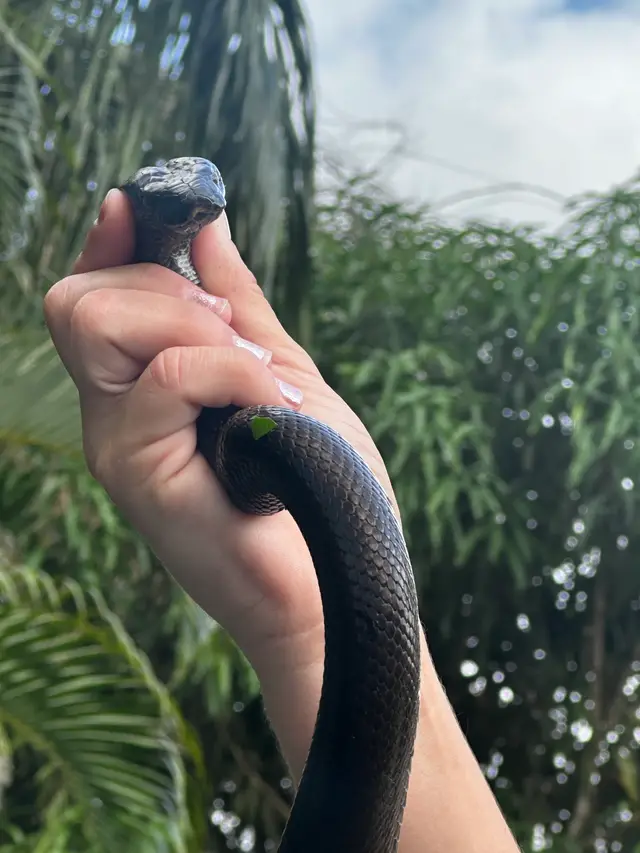
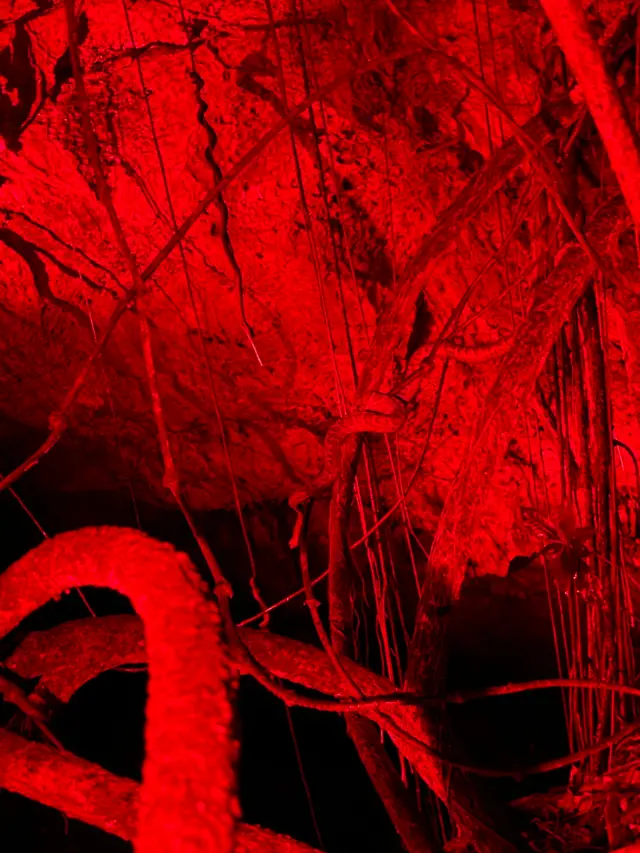
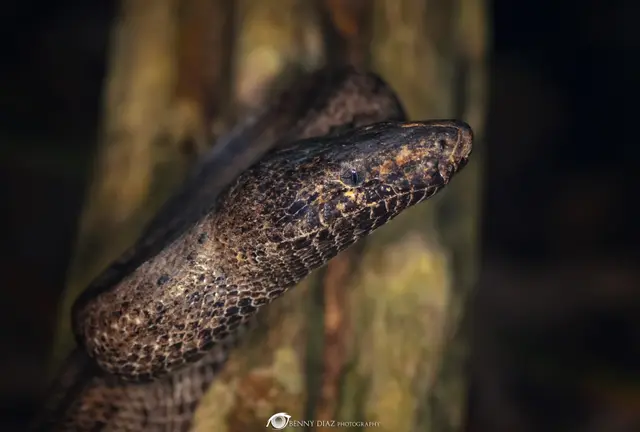
Older sources call it Epicrates inornatus. In 2013 the West Indian boas were moved to their own genus, Chilabothrus, which also holds the Cuban boa and the Jamaican boa.
How big do Puerto Rican boas get?
Most adult Puerto Rican boas are under about 6 ft (186 cm) from snout to vent. The largest one recorded, measured by James Wiley, was 241 cm (7 ft 11 in) long in total, with a snout-vent length of 205 cm (6 ft 9 in). The West Indian Boas project calls this "most likely the upper size limit" for the species.
| Measure | Figure |
|---|---|
| Record total length | 241 cm (7 ft 11 in), Wiley |
| Record snout-vent length | 205 cm (6 ft 9 in) |
| Typical maximum snout-vent | About 186 cm (6 ft 1 in) |
| Smallest pregnant female (wild) | 108 cm (3 ft 7 in) snout-vent, 685 g (1.5 lb) |
| Newborns | About 28-44 cm (11-17 in) long |
Females tend to outgrow males of the same age. Size at first breeding varies: one long-term keeper, Tom Huff, put the minimum at 160 cm snout-vent in captivity, while Wiley found a pregnant wild female of just 108 cm.
Where do Puerto Rican boas live?
Short answer: Puerto Rican boas live only on the main island of Puerto Rico. They are not found on the nearby cays, Vieques or Culebra, and there is no wild population anywhere else.
The US Fish and Wildlife Service describes it as widely distributed across the island but not equally common everywhere. The agency has records from 62 municipalities, and the boa is especially common in the northern karst belt. It ranges from sea level to about 1,050 m (3,450 ft) in El Yunque. Other places it is known from include the Rio Abajo, Guajataca, Cambalache, Vega and Maricao forests and the El Convento Caves reserve. See how it fits with other snakes on the world snake map.
Habitat
The Puerto Rican boa is a habitat generalist. The Fish and Wildlife Service lists coastal forest, wet karst and mountain forest, plus rural, suburban and some urban areas. The West Indian Boas project adds dense dry forest and plantations.
Caves matter most. They give boas shelter and a reliable food supply in the form of bats. Radio-tracked boas spent about 53% of their time in live broadleaf trees and about 35% on or under the ground, so a boa is as likely to be overhead as underfoot.
Bat hunting and behavior
Puerto Rican boas are mostly nocturnal and spend much of their time in trees. They are ambush hunters that wait for prey rather than chase it.
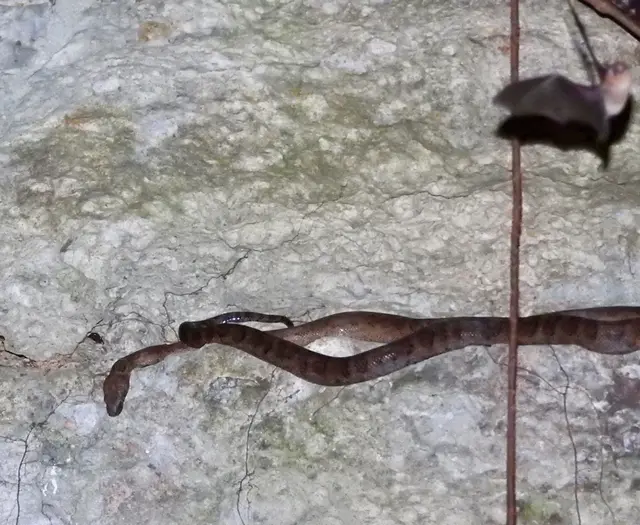
Their best-known habit is catching bats. At Cueva de los Culebrones, whose name means "cave of the boas", researchers watched boas hang at the entrance and grab bats as they left to feed. The snakes arrived several minutes before the bats began streaming out, which suggests they had learned the timing. The same study recorded the first case of a Puerto Rican boa eating carrion, a dead bat.
Males move more from April to June, during the mating season, and females move most in July. At least seven bird species have been recorded mobbing boas. Young boas strike readily when handled and stay irritable unless handled often from an early age.
What do Puerto Rican boas eat?
Adult Puerto Rican boas eat mostly introduced black rats. In Wiley's study of 29 boas' stomach contents, black rats (Rattus rattus) made up 61.8% of prey. Mice, birds including chickens, bats, lizards and frogs fill out the menu.
| Prey | Records |
|---|---|
| Rats and mice | Black rats were the most common prey in Wiley's sample |
| Bats | Caught in flight at cave entrances; dead bats also eaten |
| Birds | Chickens and wild birds, including an egg and a chick from a cattle egret nest |
| Reptiles and frogs | Lizards, including an iguana, and tree frogs; young boas start on anoles |
| Other boas | One 100-150 cm boa ate a 50 cm juvenile at Sabana Seca |
Because black rats arrived with Europeans, the boa's diet today is very different from what it ate before colonization. A boa near a farm or village is often there for the rats.
Is the Puerto Rican boa venomous or dangerous?
No, the Puerto Rican boa is not venomous and is not dangerous to people. It has no venom glands and kills prey by constriction.
It can bite if grabbed, and young ones are quick to strike. A bite leaves small puncture wounds. Clean it with soap and water and see a doctor if it turns red or swollen over the next few days. The snakebite FAQ has basic first aid.
Puerto Rico has no snakes that are dangerously venomous to people. The Puerto Rican racer has a mild venom it uses on lizards, but it is not a medical threat. The boa is also legally protected, so killing, capturing or harming one is against US and Puerto Rican law.
Snakes confused with the Puerto Rican boa
The most important look-alike in Puerto Rico today is an invasive one. Large boas seen around Mayaguez in the west may be introduced boa constrictors rather than the native species.
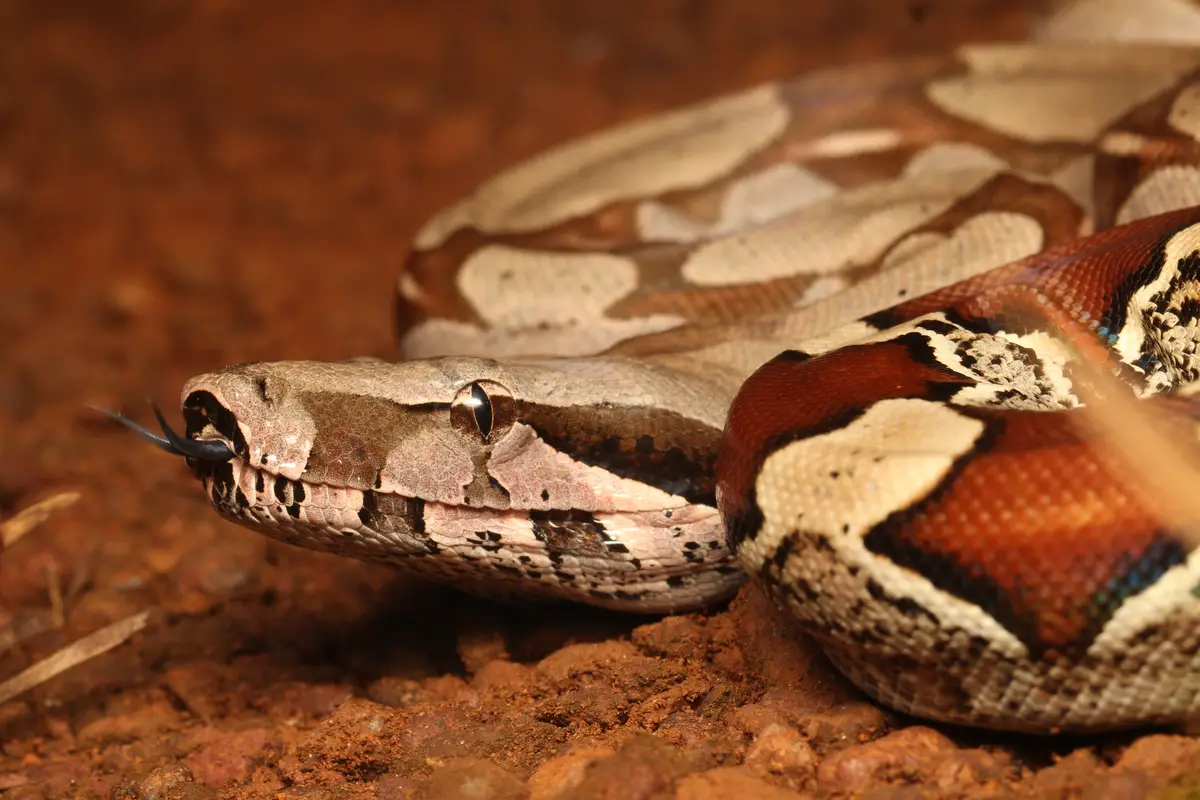
Boa constrictor (introduced)
Boa constrictor · Harmless, invasive
A breeding population of non-native boa constrictors has lived around Mayaguez since the early 1990s, according to a USGS genetic study. They have bold saddles that turn reddish toward the tail and a dark stripe through the eye. The native boa is plainer brown with no red tail.
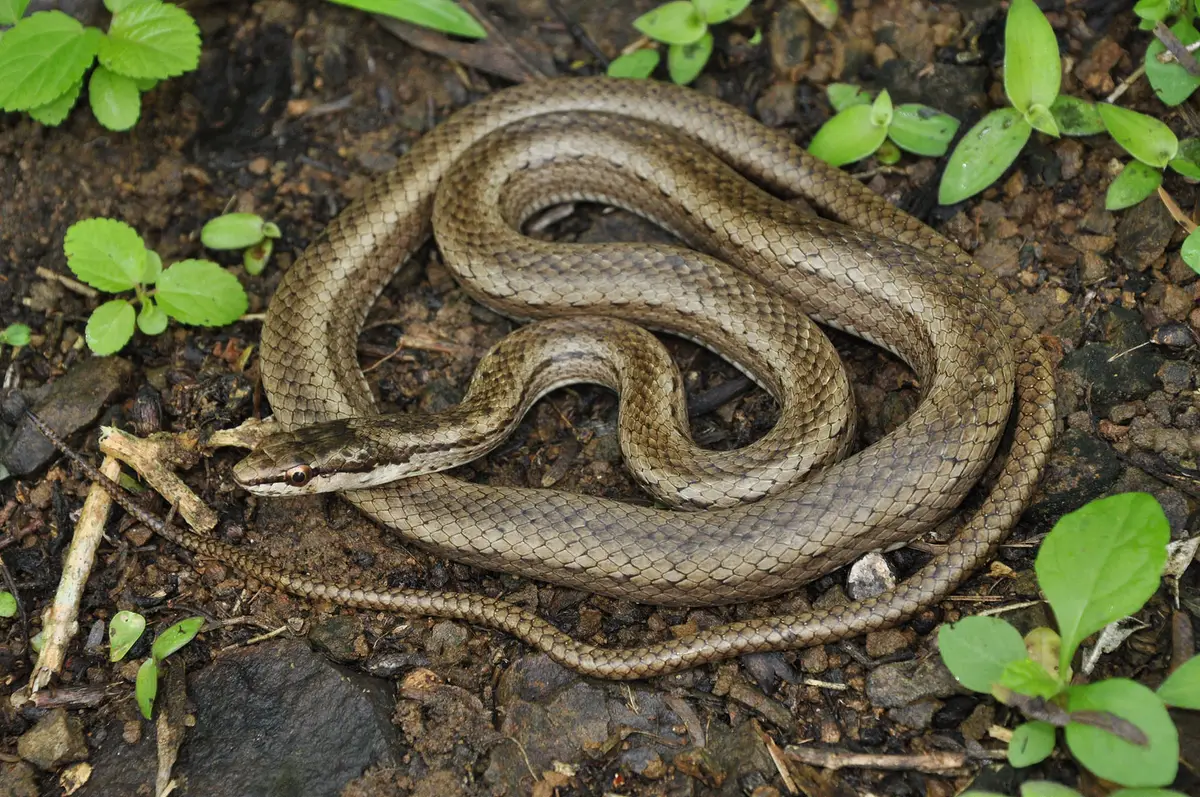 Photo: (c) johnwilliams, some rights reserved (CC BY-NC), uploaded by johnwilliams · via iNaturalist
Puerto Rican racer
Borikenophis portoricensis · Mildly venomous
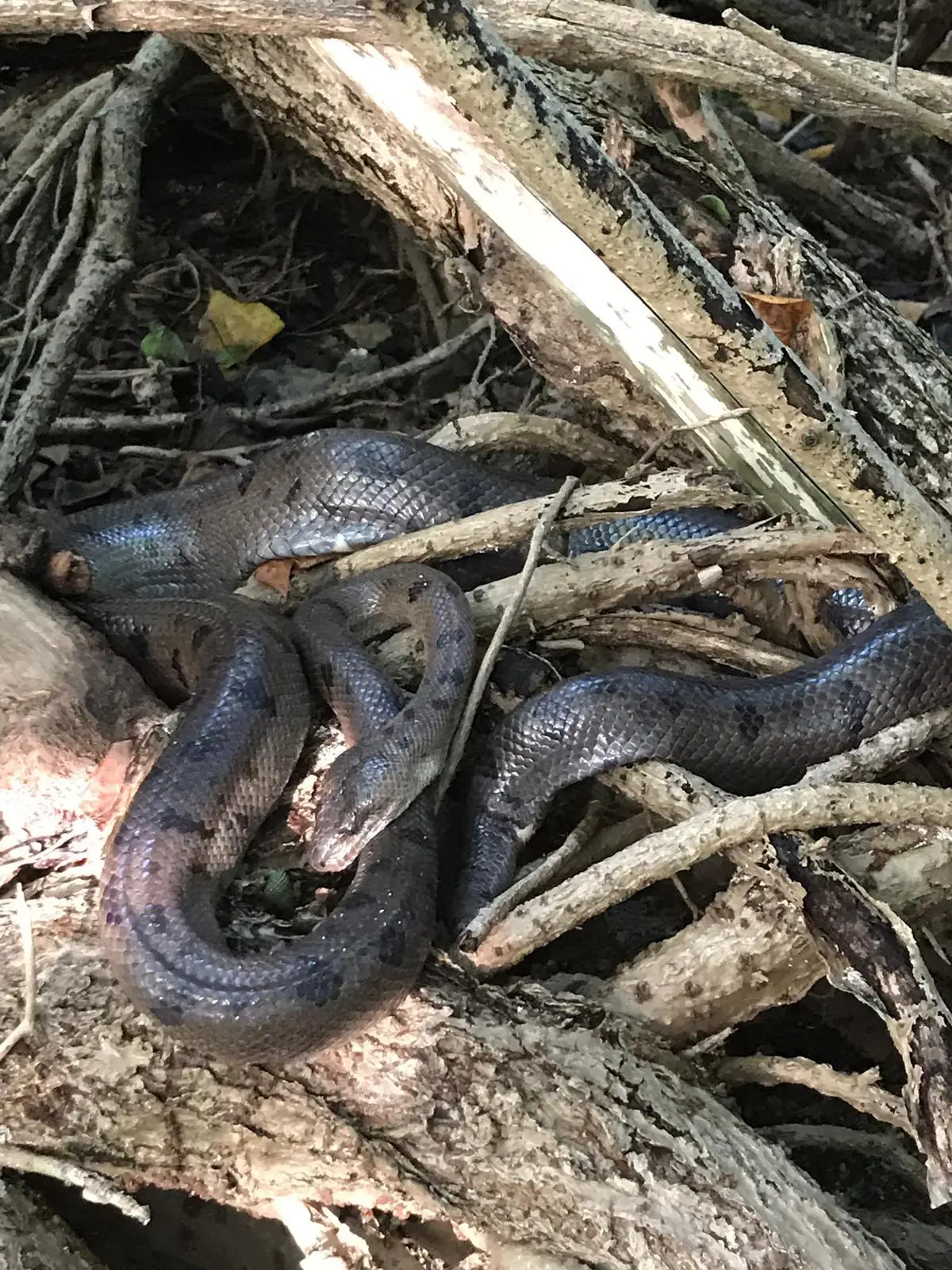
A slim, fast, daytime snake found across much of Puerto Rico, per the Reptile Database. It has a narrow head and long tail and is far thinner than any adult boa.
Jamaican boa
Chilabothrus subflavus · Harmless
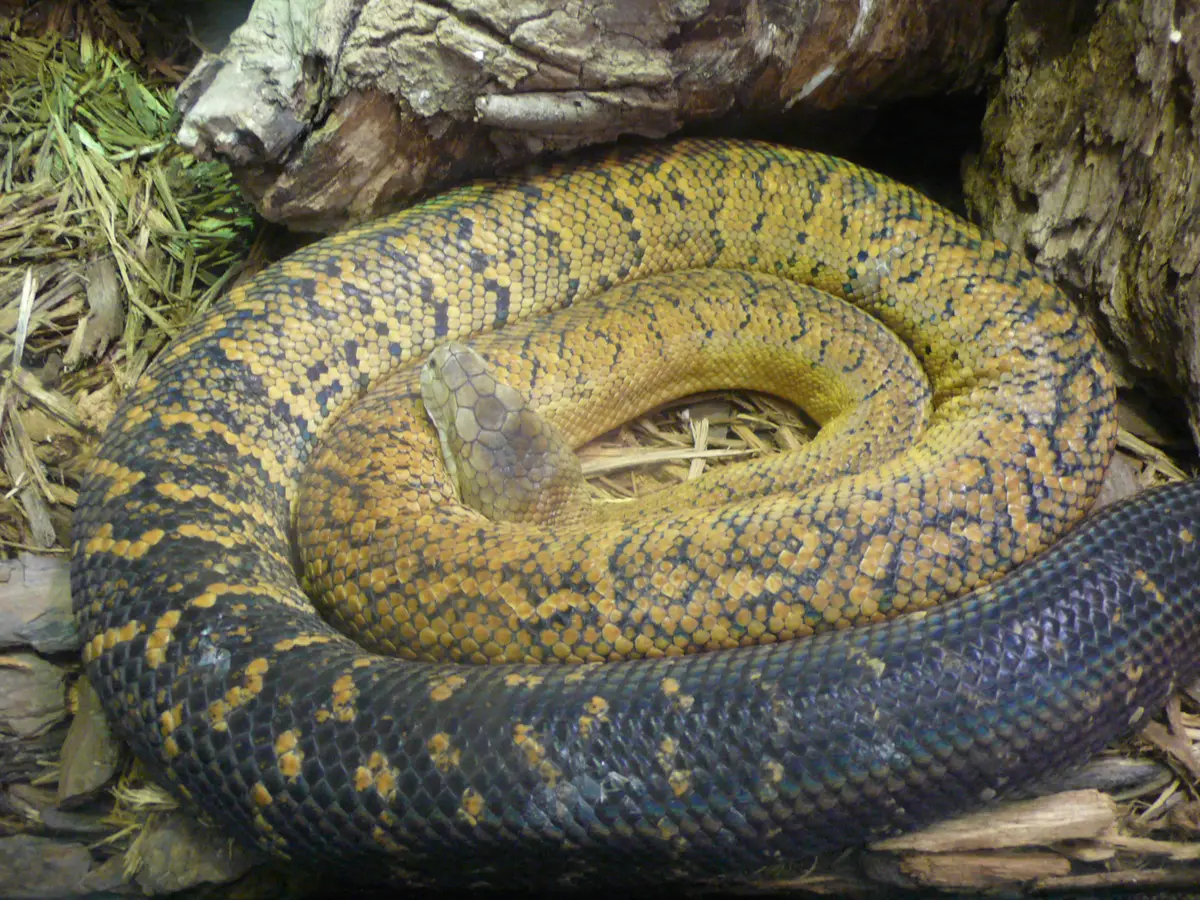
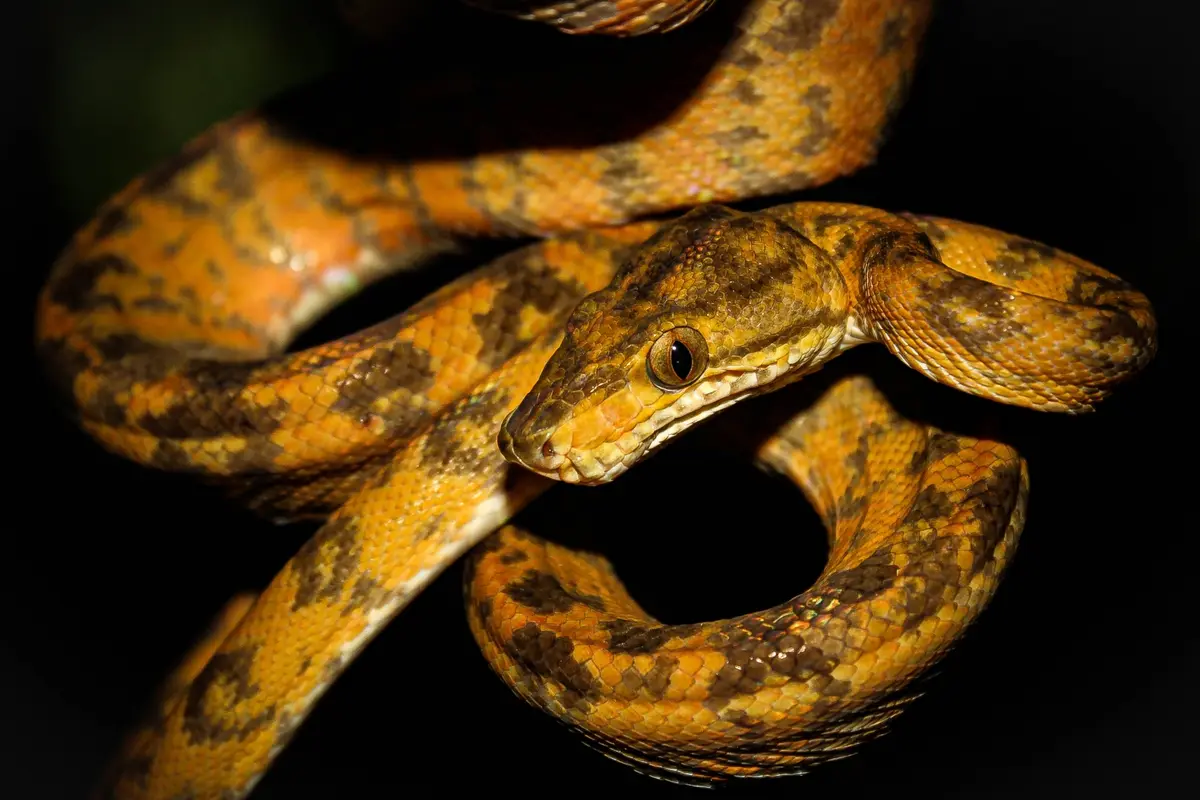
A close relative from Jamaica. The Jamaican boa has a yellow front half crossed by black bands, very different from the plain brown Puerto Rican boa.
Cuban boa
Chilabothrus angulifer · Harmless
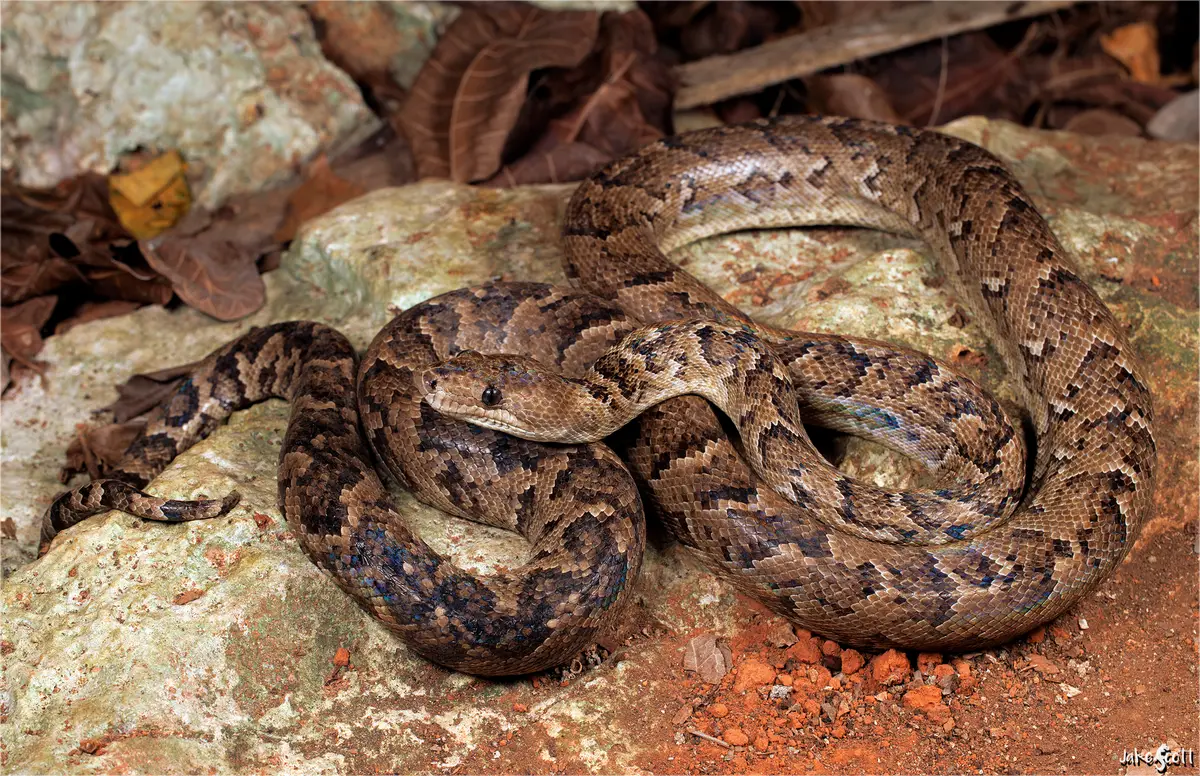
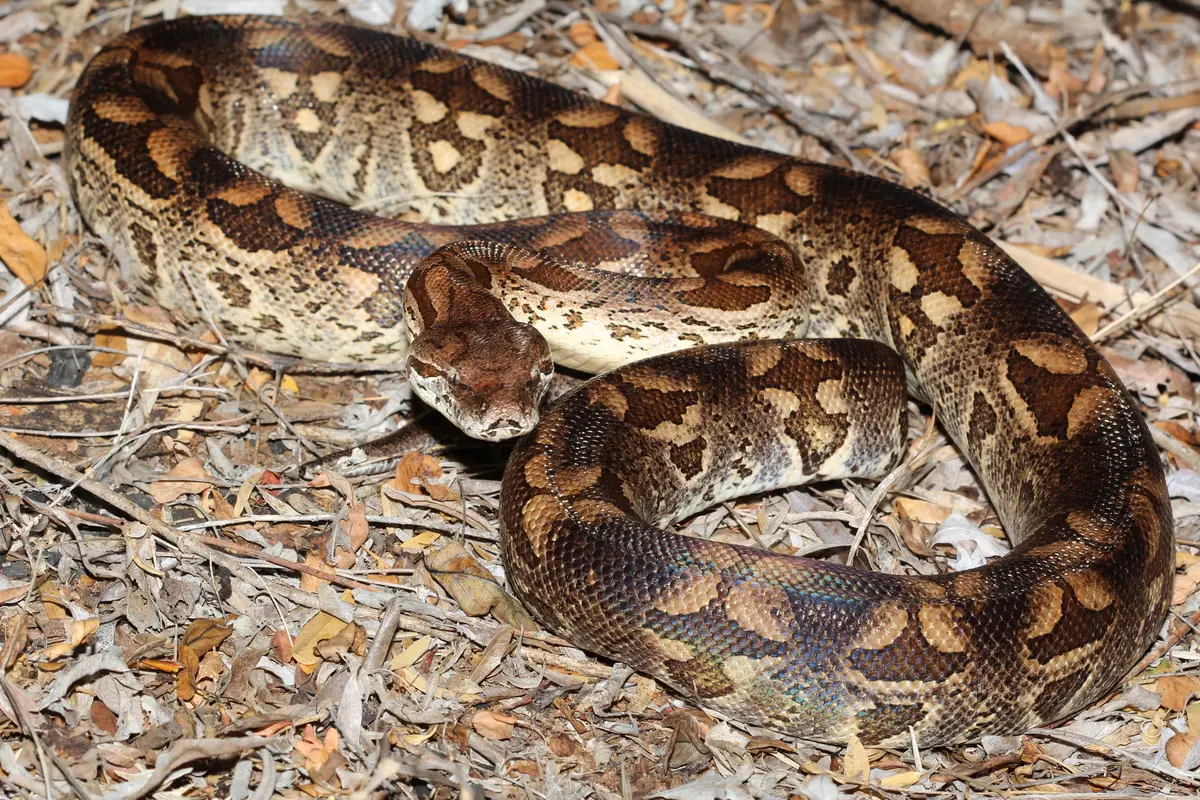
The Cuban boa is larger, with bold dark angular blotches on a tan body. It lives only in Cuba.
Reproduction and lifespan
Puerto Rican boas give birth to live young. Reports of the mating season run from February to May, and gestation takes about 180 days. Litters hold 12 to 37 young; Huff's captive females averaged 12-14, and Wiley counted 13-30 embryos in wild females.
Captive females usually breed every other year. Newborns are about 28 to 44 cm long and start out eating anoles and tree frogs before switching to rodents. A zoo-bred female born in 1992 was still alive at 28, so the species can live a long time.
Is the Puerto Rican boa endangered?
The Puerto Rican boa is still listed as Endangered in the US, but it is no longer considered at risk by most other authorities. The IUCN rates it Least Concern, and in July 2022 the Fish and Wildlife Service proposed removing it from the federal list, saying it "has recovered".
| Authority | Status |
|---|---|
| US Endangered Species Act | Endangered since October 1970; delisting proposed July 2022, final decision pending in the latest federal records found |
| IUCN Red List | Least Concern |
| CITES | Appendix II since 23 February 2023 (moved from Appendix I) |
| Puerto Rico DNER | Vulnerable (since 2004) |
Its decline came with the forests. By the early 20th century about 80% of Puerto Rico had been cleared, mainly for sugar cane, and people killed boas to render their fat into "snake oil". Introduced mongooses added to the pressure. Around 1970 the species was thought to be close to extinction.
Forests have since grown back over much of the island, and about 16% of Puerto Rico was protected by 2018. The Fish and Wildlife Service credits habitat recovery, moving boas out of harm's way, and outreach that changed attitudes "from persecution to protection". Not everyone agrees the job is done: the Center for Biological Diversity and a group of boa researchers opposed delisting in 2023, arguing that no reliable population estimate exists.
Puerto Rican boa FAQ
Is the Puerto Rican boa venomous?
No. The Puerto Rican boa has no venom and kills its prey by constriction. It may bite if handled, leaving small puncture wounds that should be washed with soap and water. Puerto Rico has no snakes that are dangerously venomous to people, and the boa is legally protected, so it should be left alone.
How big do Puerto Rican boas get?
Most adults are under about 186 cm (6 ft 1 in) from snout to vent. The largest one recorded, measured by James Wiley, was 241 cm (7 ft 11 in) in total length with a 205 cm snout-vent length, which the West Indian Boas project considers close to the species' upper limit.
What is a culebron?
Culebron is the local Spanish name for the Puerto Rican boa, Chilabothrus inornatus. The word is a form of culebra, Spanish for snake, and means roughly "big snake". Cueva de los Culebrones is named for the boas that hunt bats at its entrance.
Do Puerto Rican boas eat bats?
Yes. At caves such as Cueva de los Culebrones, boas hang at the entrance and catch bats in flight as they leave to feed. Boas arrived several minutes before the bats emerged, which suggests they learn the bats' timing. They also eat dead bats, the first carrion feeding recorded for the species.
Is the Puerto Rican boa still endangered?
It has been federally listed as Endangered since 1970. In July 2022 the US Fish and Wildlife Service proposed removing it from the list because it has recovered, and a final decision was still pending in the latest federal records found. The IUCN rates it Least Concern, and CITES moved it to Appendix II in 2023.
Are there invasive boas in Puerto Rico?
Yes. Non-native boa constrictors have bred around Mayaguez in western Puerto Rico since the early 1990s, according to a USGS genetic study. They have a reddish tail and bolder saddles than the plain brown native boa, and are considered a threat to native wildlife.
Related snakes
Sources
- West Indian Boas project: Chilabothrus inornatus
- US Fish and Wildlife Service (2022), Service proposes removal of Puerto Rican boa from list
- Federal Register (2022), Proposed removal of the Puerto Rican boa
- Reginfo.gov (2024), Regulatory agenda entry for the Puerto Rican boa final rule
- USGS: Genetic analysis of a novel invasion of Puerto Rico by an exotic constricting snake
- Reptile Database: Puerto Rican racer (Borikenophis portoricensis)
- iNaturalist: Chilabothrus inornatus observations